

Seeing your perennial olive trees and fragrant citrus plants shed their leaves as the cold creeps in is a nightmare for every dedicated garden enthusiast. But overwintering Mediterranean plants in an orangery isn't about…
Overwintering Mediterranean Plants in an Orangery: A Guide to Botanical Aesthetics and Expertise
10 juli 2026
Seeing your perennial olive trees and fragrant citrus plants shed their leaves as the cold creeps in is a nightmare for every dedicated garden enthusiast. But overwintering Mediterranean plants in an orangery isn't about stowing them away in a dark storage room; it's a botanical art form where architectural precision meets biological expertise. You've invested both time and soul into creating a Mediterranean oasis, and the concern that winter dormancy might mean the end for your most exclusive specimens is fully understandable. It's a delicate balancing act to reconcile the technical requirements of temperature and humidity with the desire to maintain the orangery's timeless aesthetic.
In this guide, you will learn how to take full control of climate and care, so that your winter garden remains a place of rejuvenation and elegance even during the darkest months of the year. We promise to give you the tools needed for your plants to not only survive but actually thrive in their protected environment. We explore the critical factors for irrigation and nutrition during the dormancy period, and show you how to preserve the orangery's unique atmosphere with professional precision and artisanal care.
Key Takeaways
- Master the golden rule of winter climate by balancing light exposure and temperature to create optimal conditions for plant dormancy.
- Learn the specific requirements for successfully overwintering Mediterranean plants in an orangery, with particular focus on the needs of both citrus trees and olive trees.
- Explore professional strategies for irrigation and hygiene that prevent fungal attacks and preserve plant vitality during the dark months.
- Discover how an architect-designed orangery combines timeless aesthetics with the technical function required to create a safe botanical sanctuary.
- Understand the historical significance of the orangery and how the right material choices in its construction ensure a sustainable environment for your valuable investments.
The Orangery as a Botanical Sanctuary: History and Function
The orangery carries a rich history dating back to European courts during the 17th and 18th centuries, where it served as a prestigious symbol of power and botanical knowledge. Its primary purpose was to protect valuable citrus trees from the cold Nordic winters, a tradition that has shaped our view of The History and Function of the Orangery as a place where architecture and biology meet in perfect harmony. Unlike a simpler greenhouse, which is often optimized for seasonal cultivation of annual crops, an architect-designed orangery is built for permanence. It is a building that requires careful consideration in the choice of materials and proportions to house large, old trees that demand stability and a controlled climate.
Overwintering Mediterranean plants in an orangery requires an environment that can regulate both light exposure and temperature with great accuracy. It's about creating a botanical sanctuary that also serves as an aesthetic extension of the dwelling's architecture. By integrating the orangery as part of the home, a seamless transition between outside and inside is created, where the evergreen leaves become part of the home's interior. The choice of a robust steel and glass construction ensures that the climate remains stable, which is a prerequisite for the most exclusive plants to maintain their vitality year after year. This indoor garden can be further beautified by incorporating fresh floral designs from Flower Studio, creating a layered and vibrant botanical experience.
For a deeper understanding of how to best care for your plants before winter, we recommend watching this informative video:
Why the Mediterranean Climate Requires Coolness Rather Than Heat
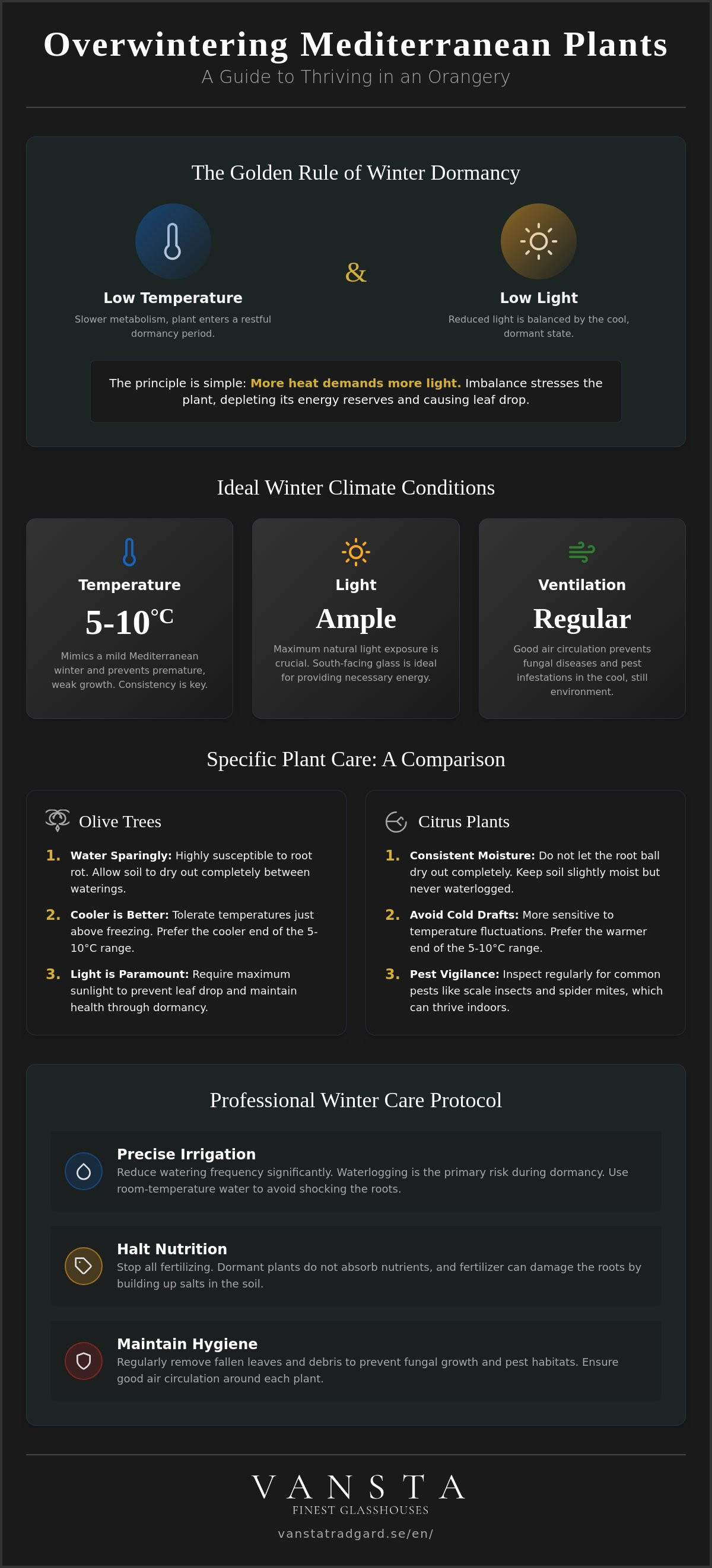
Mediterranean plants undergo a natural dormancy period, known as botanical dormancy, which is absolutely crucial for their health and future flowering. In an orangery, temperatures between 5 and 10 degrees Celsius are sought, mimicking the mild winter of the Mediterranean. If the temperature becomes too high, the plant risks being stressed into premature growth. This drains its energy reserves and often results in weak, pale shoots that cannot bear fruit or flowers. It is this coolness, combined with ample light, that constitutes the golden rule for successful overwintering.
The Aesthetics of the Evergreen Garden
An orangery during the winter months is far more than just a storage space; it's an opportunity to create a living tableau. By arranging your plants with care, you can create a beautiful view that can be enjoyed from inside the home even when snow falls outside. Placing your olive and citrus trees in exclusive pots from Haddonstone gives the environment a sense of timeless elegance and gravitas. For those who wish to delve deeper into how to create these environments, we recommend our article Orangery: A Complete Guide to Timeless Architecture, where we explore how form and function interact to realize garden dreams.
Critical Success Factors for the Winter Climate in Your Orangery
Creating the ideal environment for overwintering Mediterranean plants in an orangery involves a subtle balance between the laws of physics and the plants' biological clock. The absolute basic rule, often called the golden rule of overwintering, dictates that the higher the temperature, the more light the plant requires. In a cool orangery, metabolism slows down, and the plant enters a much-needed dormancy. If the temperature is allowed to rise without a corresponding increase in light, the plant is forced to deplete its stored energy reserves, often leading to extensive leaf drop and weakened branches.
To maintain this balance, reliable thermostat control is required to eliminate harmful temperature fluctuations. A consistent temperature between 5 and 10 degrees Celsius is often the ideal target for most species from the Mediterranean region. Unlike simpler solutions with bubble wrap and makeshift heaters, a well-constructed orangery with high-quality insulated glass offers a stable thermal mass. This creates a secure environment where plants are not exposed to sudden frost or unwanted overheating. Well-planned professional care during the winter months also includes carefully monitoring humidity; in an enclosed glass space, moisture can easily rise to levels that promote fungal attacks if one is not vigilant.
The Role of Light During the Dark Season
Swedish winter daylight is rare and often insufficient, even in an all-glass building. Despite large glass surfaces, the number of light hours and the intensity of light can fall below the critical threshold for plant survival during the darkest months. Placing the orangery in a south or southwest-facing position maximizes natural light inflow, but during December and January, it is often necessary to supplement with dedicated plant lighting. By using fixtures with the correct spectrum, you ensure that the plants receive the energy they need without raising the ambient temperature in a way that disrupts the dormancy period.
Ventilation and Air Movement
Air circulation is an often overlooked but absolutely critical factor in preventing mold and botrytis. Stagnant air combined with moisture emitted from the soil is a breeding ground for pests. On clear, sunny winter days, the temperature in an orangery can rise surprisingly quickly, making it necessary to ventilate out excess heat. Automatic window openers are an excellent aid, but human presence and a feel for the microclimate can never be fully replaced. It's about creating an environment with movement without generating icy drafts that stress delicate leaves.
When investing in a botanical environment, it is the construction details that determine the final outcome for your plants. If you dream of a place where aesthetics and function meet in perfect harmony, you can explore our architect-designed greenhouses & orangeries which are created to meet these high demands for a stable winter climate.
Plant Selection and Specific Requirements: From Olive Trees to Citrus
The diversity in a Mediterranean garden is its greatest strength, but it also demands the grower's keen intuition. Overwintering Mediterranean plants in an orangery means navigating between different species' specific tolerance levels with great care. While an old, characterful olive tree can handle short periods of near-zero temperatures, a lemon group is significantly more demanding when it comes to thermal stability. It's about understanding each plant's origin and how its unique physiology reacts to the limitations of the Nordic winter.
Research on Critical Success Factors for Winter Climate often emphasizes the importance of protecting the root system in potted plants. In an orangery, it is precisely the roots that are most vulnerable, as they do not have the insulating mass of the ground to rely on. By grouping plants with similar needs, small microclimates can be created that facilitate daily supervision. This not only creates a better environment for the plants but also contributes to a more cohesive visual aesthetic in the room.
The Unique Needs of the Olive Tree
Olea europaea, the iconic olive tree, requires a cool environment and soil with exceptional drainage. The most common reason olive trees lose their vitality during winter is not the cold itself, but overwatering combined with low temperature. The roots must never stand wet, as oxygen deprivation quickly leads to root crown damage. Early signs of imbalance are often dull leaves or leaves starting to curl along the edges. For those who wish to integrate these botanical treasures into a larger architectural context, our guide on Winter Gardens: A Guide to Architectural Elegance provides further inspiration on how the space can be optimized for both humans and plants.
Citrus Trees' Demand for Stability
The citrus family is known for its sensitivity to the phenomenon often called "cold feet." If the roots become too cold while the crown is illuminated by strong winter sun, physiological stress occurs where the roots are unable to deliver water to the active leaves. Discreet underfloor heating set to a very low temperature can be a crucial investment here to keep the root ball a few degrees warmer than the air. During this period, all nutrient supply should cease completely. This forces the plant into deep dormancy and lays the foundation for abundant flowering and fruiting in the next season.
For more sculptural elements, such as palms and agave, humidity and circulation are the most crucial factors. These plants require air to move freely to avoid moisture accumulation in the leaf rosettes. Mandevilla and nerium may sometimes shed some leaves upon moving indoors, which is a natural reaction to the change in light. By maintaining a high level of hygiene and consistently removing withered leaves, you minimize the risk of pests and ensure that the orangery retains its botanical elegance throughout the winter season.
Professional Care During the Winter Months
As autumn's last golden rays fade and the plants have found their place, the period begins that demands the most patience and botanical expertise from the grower. Overwintering Mediterranean plants in an orangery is an exercise in restraint and vigilance. Your role now shifts from active gardener to watchful observer, maintaining the balance in the closed ecosystem with subtle means. Care during these months is less about growth and more about preserving the vitality that the plants have built up during the summer, which requires a deep understanding of the subtle signals of each individual tree.
The Art of Sparse Watering
The greatest threat to successful overwintering is often well-intentioned but excessive watering. In the cool air of an orangery, water evaporates slowly, and the plants' needs are minimal when they are dormant. Your intuition is your most important tool here; stick a finger into the soil to feel. It should be cool and slightly moist at depth, but the surface should be allowed to dry out between waterings. Always use water that has been allowed to stand in the orangery to reach room temperature. Ice-cold water directly from the tap can cause thermal shock to the roots, leading the plant to shed its leaves in pure self-preservation. Ensure that water never stands in the saucers, as oxygen deprivation in the soil quickly leads to root rot.
Preventative Plant Protection
A clean environment is the foundation for a healthy winter garden and a prerequisite for maintaining the orangery's elegance. Withered leaves allowed to remain on the soil or caught in the branches quickly become a breeding ground for gray mold and other fungal diseases. Make the weekly inspection an enjoyable routine where you gently clear away dead material. This is also the perfect opportunity to look for the first signs of pests. The dry climate during winter can sometimes attract scale insects or spider mites, especially on citrus trees. By detecting them early, you can often manage the situation with natural methods, such as wiping the leaves with a mild soapy water solution, before they spread to the rest of the collection.
As the light returns in February, the gradual process of awakening the plants begins by slowly increasing the amount of water. If you have not yet created the perfect architectural framework for your botanical interest, you can explore our exclusive Greenhouses which are designed to give your plants the absolute best conditions year-round.
Vansta Orangeries: The Ultimate Environment for Botanical Treasures
When considering the challenge of overwintering Mediterranean plants in an orangery, one quickly realizes that the quality of the building is directly crucial to the outcome. A beautiful exterior is not enough; the physical laws governing light, insulation, and thermal stability must be built into the very foundation. An architect-designed orangery from Vansta is not just an aesthetic triumph but a finely tuned instrument where every detail in steel and glass is optimized to protect your most precious botanical investments. By combining historical craftsmanship with modern glass technology, we create environments where your olive and citrus trees can rest safely while winter storms rage outside.
A construction resting on a stable foundation of expertise allows for a controlled microclimate that mimics the plants' natural habitat. The material choices in our orangeries are carefully selected to combine function with a timeless design that ages with dignity. It's about creating a place where technical precision never comes at the expense of atmosphere, but rather serves as its invisible backbone. Investing in a top-class orangery is a long-term commitment to both the well-being of your plants and your own quality of life, where the boundary between the wild beauty of the garden and the secure architecture of the home blurs.
Technical Precision Meets Craftsmanship
Within our collections, such as Vansta Classic orangeries and THE ROSE greenhouse collection Greenhouses, we view architecture as an integral part of the plant's life cycle. We understand that demanding Mediterranean plants need more than just a roof over their heads; they need an environment where ventilation and heating are integrated invisibly and efficiently. By concealing the technical systems within the classic profile, we maintain botanical elegance without compromising the climate. For those seeking a deeper understanding of how these constructions can be customized, we recommend our article Architect-Designed Greenhouses: A Guide to Exclusive Garden Architecture, where we explore the art of building for the future.
Create Your Personal Paradise
An orangery should be a place of rejuvenation even during the harshest days of January. By furnishing the room with care, you can create a living oasis where the lush greenery beautifully contrasts with the winter landscape. Combine your evergreen trees with timeless garden art, such as sculptural pots and statues from Haddonstone, or integrate high-quality artificial plants from Nova Lignum to give the room gravitas and character. It is in the encounter between organic forms and classic craftsmanship that true magic arises. We gladly invite you to a personal consultation where we can together realize your vision and create a botanical sanctuary that remains beautiful for generations.
Realize Your Botanical Dream Year-Round
Successfully overwintering Mediterranean plants in an orangery is a rewarding journey that unites biological responsiveness with architectural beauty. By mastering the balance between light and temperature, and by applying meticulous hygiene, you give your olive trees and citrus collections the best conditions to awaken with renewed vigor when the spring sun returns. It's about creating an environment where technical precision and artisanal aesthetics collaborate to preserve life during the darkest hours of the year.
Vansta Orangeries is a family-owned company with a deep passion for craftsmanship and timeless elegance. With over 20 years of expertise in exclusive garden architecture, we create architect-designed solutions specifically adapted to meet the demands of the Nordic climate. We view each project as a unique work of art, a lasting investment in your quality of life, and a place for continuous rejuvenation.
Let your passion for cultivation and beautiful environments flourish regardless of the season. Explore Vansta's exclusive orangeries and create your own winter oasis. We look forward to helping you transform your vision into a lasting and living reality.
Common Questions About Overwintering in an Orangery
What is the optimal temperature for overwintering Mediterranean plants in an orangery?
The ideal temperature is between 5 and 10 degrees Celsius for most species from the Mediterranean region. At this cool temperature, the plants enter a natural botanical dormancy that conserves their energy for the next growth period. It is important to avoid higher temperatures if light is limited. If the orangery becomes too warm, the plants risk being stressed into premature growth, resulting in weak and pale shoots.
Do I need supplementary lighting even if my orangery has large glass sections?
Yes, supplementary lighting is often a necessity for successfully overwintering Mediterranean plants in an orangery during the darkest winter months in the Nordics. Despite large glass surfaces, the intensity of light and the number of light hours are rarely sufficient to maintain the plants' health during December and January. By using dedicated plant lighting with the correct spectrum, you ensure that your trees retain their vitality and leaves until spring.
How often should I water my olive trees during winter?
Olive trees require very sparse watering during winter dormancy, and the soil should be allowed to dry out thoroughly between waterings. Check the moisture by sticking a finger a couple of centimeters into the soil; it should feel cool but not soaking wet. Overwatering combined with low temperature is the most common cause of root rot. Always use room-temperature water to avoid shocking the roots on the few occasions you water.
Can I overwinter citrus trees and geraniums in the same space?
It is perfectly fine to let citrus trees and geraniums share space as they have similar requirements for a cool and bright winter climate. Both groups thrive in the temperature range of 5 to 10 degrees and appreciate the stable environment that an orangery offers. Ensure that the plants are spaced out for good air circulation. Good air circulation around both foliage and pots reduces the risk of moisture retention causing problems with mold or pests.
What do I do if my plants start losing leaves in the orangery?
Leaf drop is a warning sign often due to an imbalance between light and temperature or incorrect watering. If the orangery is too warm in relation to the available light, the plant sheds leaves in pure self-preservation. Check that the temperature is kept down and that you are not overwatering. An olive tree losing green leaves may often suffer from overly wet soil, while dried-up leaves can indicate that the root ball has become too dry.
Is it necessary to insulate the orangery with bubble wrap if it is architect-designed?
No, in an architect-designed orangery with high-quality insulated glass, bubble wrap is completely superfluous and should be avoided. The technical precision of the glass construction makes it possible to overwinter Mediterranean plants in an orangery without obscuring the building's beautiful architecture. Furthermore, bubble wrap degrades important light transmission and creates a confined environment. A stable construction maintains a consistent temperature and protects your plants in a significantly more aesthetic and effective way.
When is it safe to move Mediterranean plants out of the orangery in spring?
Wait until the risk of night frost is completely over, which usually occurs in late May or early June depending on your location. The transition should be gradual to avoid shocking the plants with direct sunlight and wind. Place them in a sheltered and shaded location for the first few days. This gives the leaves time to adapt to the strong outdoor UV radiation and prevents unsightly sunburn on the foliage.
How do I prevent the orangery from becoming too humid during winter?
Regular ventilation is the most effective way to control humidity and prevent fungal attacks. Take the opportunity to ventilate on clear winter days when the sun warms up the glasshouse, or use automatic window openers for hassle-free regulation. Also, keep surfaces clean from withered leaves and dead material that would otherwise retain moisture. Good air circulation creates a healthy microclimate where both plants and architecture thrive throughout the winter season.