

The most inviting greenhouse is not necessarily the one that holds the most furniture. A thoughtful interior design for a greenhouse is rather about allowing function, materials, and atmosphere to interact, so that the s…
Greenhouse Interior Design with Furniture, Flooring, and Harmonious Colors
18. nov. 2026
The most inviting greenhouse is not necessarily the one that holds the most furniture. A thoughtful interior design for a greenhouse is rather about allowing function, materials, and atmosphere to interact, so that the space feels just as natural for cultivation as for a quiet moment among the plants.
The furniture should be beautiful, but also functional in the daily life of the greenhouse. Moisture, shifting light, and the need for clear walkways influence which choices are suitable. At the same time, the flooring material and surrounding colors can tie the greenhouse together with the architecture of the house and the character of the garden.
Here, you will find inspiration for seating, furniture, and details that help you create a greenhouse with both function and personality. We explore how flooring, colors, storage, and plants can contribute to the overall impression, from rustic materials to a more restrained palette. With a few carefully chosen elements, the greenhouse becomes a natural extension of the garden, without the need to fill every square foot.
Key Takeaways
- Choose seating based on how the greenhouse is used, and keep walkways clear to allow easy movement between cultivation and socializing.
- Create a foundation with flooring and rustic details that enhance the character of the greenhouse and complement the garden's aesthetic.
- Unify color choices around shades that recur in the surroundings for a more harmonious transition between greenhouse and garden.
- Zone the space by function and utilize storage, shelving, and work surfaces to optimize the area.
- Let plants, lighting, and curated details build atmosphere without compromising the room's practical use.
1. Seating areas and furniture in the greenhouse
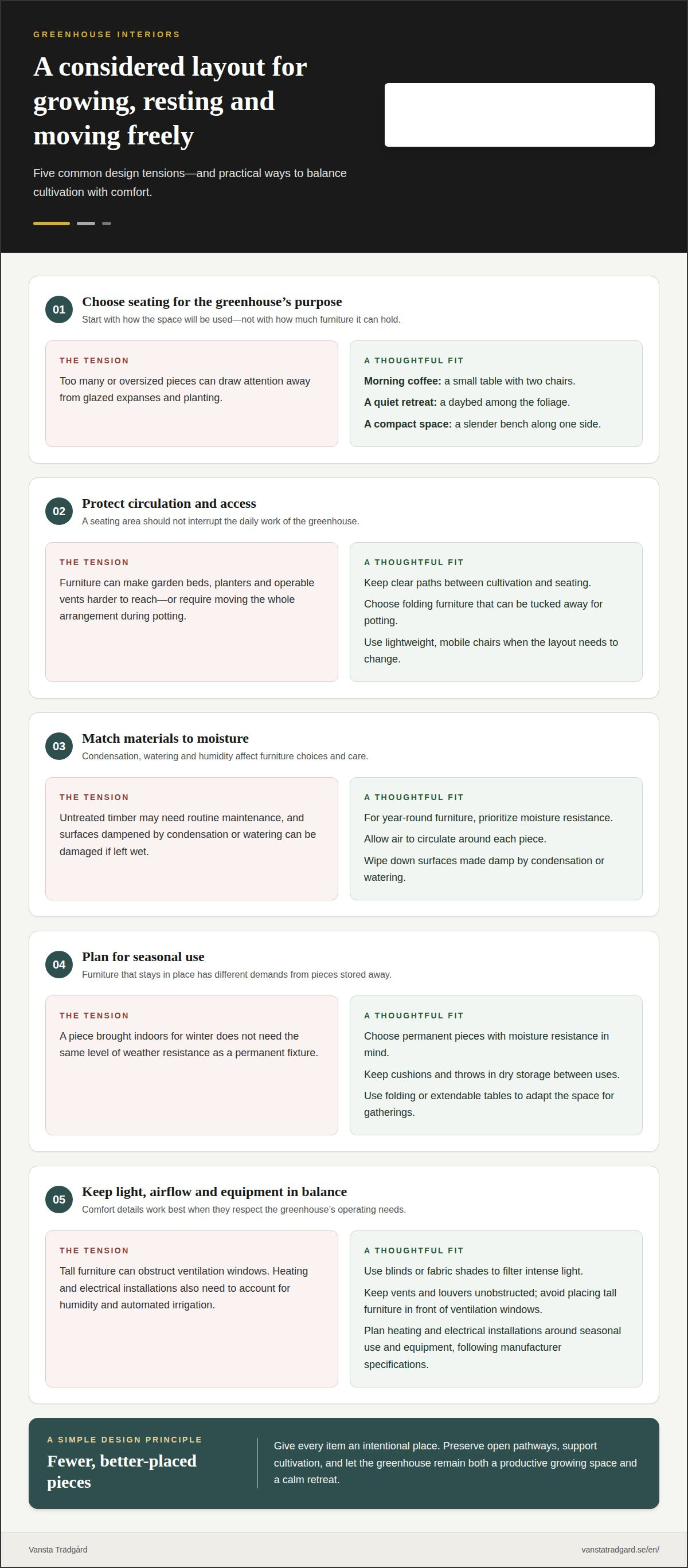
A seating area makes the greenhouse usable even when cultivation is not the sole focus. Begin by determining its primary function: a small table with two chairs is ideal for morning coffee, while a daybed creates a restful retreat among the foliage. Scale the furniture to the proportions of the structure so that glazed expanses and plantings retain their rightful prominence. In a more compact greenhouse, a slender bench along one side provides seating without dominating the room.
Plan the arrangement with walkways in mind. Position tables and chairs so that garden beds, planters, and operable vents remain easily accessible without the need to reposition the entire seating ensemble. Foldable furniture can be tucked away during potting sessions or brought out when entertaining guests. Lightweight, mobile chairs also make it effortless to follow the sun or clear floor space for a wheelbarrow filled with soil and seedlings.
Repurposing vintage pieces lends distinct character to the interior while honoring enduring craftsmanship. A pre-owned table can be given new life through careful restoration and a surface finish suited to the greenhouse's humid climate. An antique chair or weathered bench provides an elegant counterpoint to contemporary planters. Select pieces carefully based on condition and location, particularly if they will reside where condensation or rainfall might reach them.
Choose furniture tailored to how the greenhouse functions across the seasons. Pieces brought indoors for winter do not require the same rigorous weather resistance as permanent fixtures. For items that remain year-round, moisture resistance is essential. Timber requires care, and untreated surfaces may demand routine maintenance. Cushions and throws are best preserved when kept in dry storage between uses. A removable seat cushion introduces an intentional accent of color without overpowering the spatial harmony.
Plan electrical installations and heating based on the structural design, seasonal use, and chosen equipment. Adhere strictly to manufacturer specifications and position systems so that humidity, automated irrigation, and furnishings present no hazards.
Blinds or fabric shades can provide gentle shading by filtering intense overhead or lateral light. Ensure operable vents and louvers remain unobstructed for optimal airflow, avoiding the placement of tall furniture directly in front of ventilation windows.
Mitigate the risk of mildew and moisture damage by selecting furniture engineered to withstand high humidity, keeping textiles stored dry when not in use. Ensure adequate air circulation around all pieces and promptly wipe down surfaces dampened by condensation or watering.
An airy layout ensures the greenhouse transitions effortlessly between a productive growing house and an elegant retreat. Base your selections on genuine functional requirements and assign every piece an intentional place, rather than crowding the perimeter. Maintain unhindered pathways by curating fewer, higher-quality items. Adaptable, lightweight furniture easily accommodates shifting seasonal needs, while extendable or folding tables simplify hosting gatherings. Even a daybed can find its natural place without diminishing the primary horticultural identity of the space.
Reclaiming and restoring architectural salvage or auction finds infuses the setting with narrative depth and individuality. A daybed can become an architectural focal point in an orangery or greenhouse. Furniture destined for winter storage need not withstand harsh weather to the same extent as permanent fixtures—factor this operational rhythm into your design choices.
2. Greenhouse flooring and rustic details
The choice of flooring defines both the architectural aesthetic of the greenhouse and the ease of maintenance after potting. Reclaimed brick laid in a herringbone pattern imparts a timeless, rustic warmth while gracefully guiding the eye through the interior. This pattern is particularly well suited to spaces conceived for both plant care and refined lounging. Plan the bond pattern to comfortably accommodate planters, urns, and generous walkways.
Define functional zones before selecting materials. The area surrounding the potting bench will naturally encounter soil, water, and tools, whereas main walkways prioritize stable, slip-resistant, and easily swept surfaces. Sketching out the work zones, seating, and circulation lines makes it simple to determine where brick, natural flagstone, or gravel will perform best.
Brick introduces rich, earthy tones and a tactile texture, though mortar joints and minor irregularities influence routine upkeep. Fine potting soil can settle into recesses, making regular sweeping after planting advisable, alongside prompt drainage of standing water. A herringbone pattern provides visual structure without necessitating additional ornamentation. Aligning the pattern along the central axis of the greenhouse creates an elongated, cohesive perspective.
Which materials endure the humidity and seasonal freeze-thaw cycles of a greenhouse? Select flooring and masonry designed for fluctuating temperatures and moisture levels, adhering to dedicated care guidelines. Brick and natural stone provide exceptional thermal mass and durability, yet adequate sub-base preparation and proper drainage slopes are vital to prevent standing water and frost damage.
Greenhouse flooring achieves optimal practicality when aligned with daily horticulture. A central walkway of dressed stone or hard-fired brick can lead from the entrance to the work bench, while staging areas must accommodate water runoff. Elevating planters on stone plinths or trays protects the floor from persistent dampness. Heavy cast stone planters provide a robust architectural counterweight to smaller brick formats, introducing sophisticated vertical variation.
Rustic details achieve their greatest impact when tethered to function. A low brick retaining edge can neatly delineate an internal ground bed, while a solid timber potting bench provides durable utility adjacent to the workspace. Maintain restraint in your material palette: weathered brick, seasoned timber, and metal harmonize effortlessly, whereas an excess of contrasting surfaces risks visual clutter. Echoing a primary material—such as brick—in both the floor and structural plinths creates a unified design language.
For a seamless aesthetic, choose pots and accessories for the greenhouse that complement the tonal depth and texture of the floor. When the materiality of planters and garden urns recurs throughout the interior, cultivation areas and walkways blend naturally. This remains one of the finest design principles for achieving a grounded, curated environment without unnecessary ornamentation.
3. Colors that harmonize with the garden
Color serves as the unifying bridge between the greenhouse interior, exterior borders, gravel paths, and the primary residence. Organic greens, warm terracottas, muted beiges, charcoal, and deep graphite settle comfortably into the landscape without competing with vibrant plant life. Begin by observing the tones already established outdoors: a weathered fieldstone wall, dark powder-coated window frames, or silvered garden furniture offer natural points of departure.
Establish a foundational palette with one dominant grounding tone and two complementary accents. A warm stone shade on a bench or tiered plant stand provides a bright, calming base, while verdigris or moss-green planters harmonize with climbing vines. Slate gray can echo paving elements, while black accents emphasize ironmongery, shelving brackets, or structural framework. Repeating these tones creates visual rhythm and spatial tranquility.
Material texture fundamentally shapes how color is perceived. Unfinished timber offers an organic warmth that sits comfortably alongside soil and lush leaves, whereas dark, patinated metal delivers crisp architectural definition against the glass. A matte finish feels understated alongside rustic masonry, while a glazed vessel captures and reflects the shifting daylight. Always review material and paint swatches within the greenhouse itself, evaluating them against the specific light and surrounding foliage.
Living botanicals provide an ever-changing color layer. The deep green foliage of citrus trees, the ripening red of heritage tomatoes, and dark compost create seasonal contrasts that shift month by month. A neutral architectural background on large furnishings allows blossoms and harvest to command attention. If the greenhouse leans more toward an entertaining space, tailored linen textiles can introduce subdued accents while keeping permanent vessels understated.
The character of the space also evolves with the garden's shifting light. On brilliant sunny days, soft beiges and limestone tones appear luminous, while darker accents lend grounding structure. Observe your chosen palette at varied intervals—in the soft morning light and under the golden hue of late afternoon sun. This ensures the contrast against perimeter hedging, garden walls, and the main residence remains deliberate and refined.
For a traditional orangery aesthetic, combine warm brick reds with oiled timber and muted sage greens. A more contemporary, architectural expression may draw upon monochromatic grays, graphite, and sculptural green specimens. Avoid introducing divergent colors with every new vessel. Instead, group vessels of similar tonal families and introduce interest through variations in height and contour, allowing the botanical collection to bring the room to life within a serene frame.
Test the selected palette by staging a few portable elements in their intended locations. A terracotta urn, a zinc tray, and a stone planter will quickly demonstrate how the tones interact with natural light, foliage, and masonry. If a shade feels disproportionate, adjust smaller accents first. Subtle refinements anchor the greenhouse within its garden context while retaining its unique architectural soul.
4. Interior design and inspiration for greenhouses
A successful interior begins with a well-conceived spatial program. Artfully divide the greenhouse into distinct zones: active growing, practical preparation, and leisurely retreat. This zoning allows potting trays, soil, and tools to remain gathered near the work table, while the seating area occupies the quietest, most scenic vantage point. Inspiration can be drawn directly from the home's architectural heritage, surrounding estate materials, or traditional glasshouse craftsmanship.
Plants should actively sculpt the interior architecture rather than simply produce a harvest. Grapevines, climbing squash, cucumbers, and cordoned tomatoes thrive in designated ground beds along perimeter walls. Compact chilies and architectural cardoons can be showcased in freestanding pots for effortless reconfiguration. Training espaliered plants or cucumbers along a structural side wall creates a lush, living curtain that subtly delineates the cultivation zone.
Position botanical specimens according to their natural habit and the specific spatial function they serve. A vigorous vine can provide high-level canopy shading, while lower containers frame seating nooks. Blend vessels of varying heights to generate dynamic, multi-layered greenery without obscuring the structural glass framework. Where production is paramount, give priority to fruiting crops while preserving comfortable clearance for daily maintenance.
Timeless greenhouse design relies on authentic materials that resonate with both the garden and main residence. A classic brick floor pairs gracefully with a bespoke timber staging table and lush botanical foliage. When a greenhouse rests on a brick base wall, extending the masonry into the flooring alongside cast roof cresting accentuates its classic Victorian character. Conversely, a minimalist aesthetic lets structural aluminum profiles, vast glass panes, and singular architectural specimens command the space.
Integrated storage and robust work surfaces elevate an inspiring greenhouse into a pleasure to maintain. A potting bench with built-in shelving neatly conceals terracotta pots, twine, and hand tools, while slender wall-mounted brackets lift smaller propagation trays off the floor. Position staging shelves so they never impede access to automated roof vents or operable side louvers. A generous utility surface adjacent to the planting beds ensures transplanting remains orderly and efficient.
Allow a few thoughtfully curated details to define the character of the space. A cluster of handcrafted garden urns of varying scales can frame the portal, while warm task lighting transforms the seating nook at twilight. Keep utility counters clean and assign every tool a permanent home. In doing so, the greenhouse becomes a harmonious sanctuary for horticulture, restful contemplation, and timeless garden living.
Adopting an architectural, timeless design philosophy ensures your greenhouse remains enduringly functional and graceful. Let the structural proportions dictate the interior furnishings. Multipurpose benches with concealed storage conserve floor space, offering dedicated space for hand tools, seed boxes, and twine. Treating utility and aesthetics as twin disciplines ensures every functional element contributes positively to the visual atmosphere.
Staging shelves mounted directly to structural glazing bars maximize vertical volume while elevating delicate plants and vintage tools off the ground. When styled with potted pelargoniums or herbs, they introduce natural privacy and soften intense sunlight. Wall staging thus organizes essentials while subtly defining interior zones without encroaching on walkway space. Consider supplementary potting areas outside the structure for heavier prep work, keeping the interior clean for refined gardening and hospitality.
5. Interior details for a cozy atmosphere
Refined details imbue the greenhouse with an inviting, personal atmosphere without distracting from the craftsmanship of the glass, frame, and botanical collection. Consider a woven rattan pendant suspended above the dining table, a low zinc display tray, and a handcrafted terracotta vessel by the entrance. When every piece possesses an intentional purpose, the room feels curated rather than crowded. Quality materials and warm illumination that harmonize with the architecture create an effortlessly welcoming retreat.
How do you light a greenhouse for enchanting evenings? Direct warm illumination downward toward seating and dining areas, avoiding harsh overhead glare that creates intense reflections in the glass. A weather-rated cable with warm-white LED filament bulbs can trace the structural tie bars for an architectural glow, while a tactile pendant over the dining table grounds the social space.
Incorporate layered lighting rather than relying on a single, dominant source. A discreet light string along a horizontal tie rod highlights the roof pitch, while a rechargeable lantern provides intimate reading light beside an armchair. Position luminaires carefully to minimize mirror-like evening reflections across glazed surfaces. Review the lighting balance at dusk, adjusting fixtures so you preserve the serene visual connection to the illuminated garden beyond.
Textiles introduce essential softness against structural metal, brick, and glass. A tailored linen seat cushion or a soft wool throw provides inviting tactile contrast, while botanical woven patterns echo the flora outside. Maintain a restrained color palette, allowing a singular textile to introduce an accent tone. Store soft furnishings in dry storage boxes when not in use to preserve their freshness against evening condensation.
Planters and ornamental urns can be curated as sculptural still lifes. Arrange a trio of weathered pots of varying scale against a brick wall, letting trailing foliage soften the edges of the tallest vessel. Alternatively, a singular, classical garden urn can anchor a central sightline or frame the doorway. Leave ample space around each composition so the individual craftsmanship of both plant and vessel is celebrated.
Personal touches are most successful when they celebrate garden craft. A shallow shelf can display a copper watering can, a stoneware bowl for freshly harvested fruit, or heirloom seed packets in a wooden box. Rotate these vignettes with the seasons while keeping the structural layout constant. In this way, the greenhouse evolves alongside the horticultural calendar while maintaining its tranquil order.
Choose accessories with uncompromising care, prioritizing craftsmanship over volume. A robust stoneware planter, an artisanal lamp, and an exquisite linen throw are sufficient to transform a seating area into an irresistible haven. To discover interior details for the greenhouse that elevate the space, evaluate every piece through the lens of material honesty, durability, and atmosphere.
Vansta Trädgård
Vansta Trädgård approaches every greenhouse and orangery as an integral component of the property's architectural ensemble, never as an isolated outbuilding. When planning a bespoke glasshouse, the choice of structural profile, placement, and architectural heritage fundamentally dictates how furniture, flooring, and plantings unite within the room.
With custom, architect-designed greenhouses and bespoke orangeries, every detail is engineered to respect the historic character of your residence while fulfilling your ambitions for cultivation and entertaining. Vansta Orangeries, Vansta Classic orangeries, THE ROSE greenhouse collection, and our custom freestanding glasshouses offer distinguished foundations for creating a timeless garden sanctuary.
Contact Vansta Trädgård to discuss how a bespoke greenhouse can be harmoniously integrated into your home and landscape.
Give the greenhouse a clear direction
Envision how the space will feel in daily use, rather than merely how it appears on an architectural plan. Is it conceived as a quiet sanctuary for morning coffee, an ambient gathering room for long dinner parties, or a dedicated horticultural haven where rare plants take center stage? This vision will guide your priorities, enabling you to curate an interior that seamlessly unites function, material integrity, and landscape aesthetics.
Allow the architecture of your home and the topography of the garden to steer the design language. A historic façade pairs naturally with traditional proportions, narrow-pane glazing, and classic brickwork, whereas a modern home invites sleek lines and an understated palette. When these elements align, the greenhouse becomes a natural, enduring extension of the estate that matures gracefully over time.
Are you ready to take the next step and craft a distinguished greenhouse interior? Explore inspiration for greenhouse interiors and let your personal vision take root with care and precision.
Frequently asked questions about greenhouse interiors
Which furniture is best suited for a greenhouse?
Furniture crafted from materials that naturally endure humidity and temperature shifts—such as powder-coated aluminum, synthetic all-weather weave, and dense, rot-resistant hardwoods like teak or cedar—is best suited for a greenhouse. High-quality construction and appropriate surface treatments are critical. A slender wooden bench provides ample seating without crowding floor space, while a table with a wipeable stone or metal top performs effortlessly near irrigation areas. Select each piece based on its exact position and function.
How do you plan seating and dining areas in a greenhouse?
Begin by establishing whether the space will host seated dinners or primarily serve as an informal setting for tea and potting breaks. Mock up the table and chairs in place, pulling the chairs out as though guests were seated. Ensure there remains generous, unobstructed clearance to the entrance, operable vents, and planting beds. An elongated table arranged parallel to the longest glazed side often preserves far better central circulation than a centrally positioned round dining suite.
How do you furnish a small greenhouse efficiently?
In a compact greenhouse, prioritize multifunctional, architectural pieces. A potting bench with integrated lower cabinets doubles as an elegant buffet surface, while narrow work staging can run along the shortest end wall. Mount hanging rail systems and brass hooks along structural uprights to keep pruners and hand tools off the ground. Preserve a continuous central walkway and select a curated few high-quality, purposeful items rather than cluttering surfaces with decorative excess.