

Bei der Einrichtung einer Orangerie zum geselligen Beisammensein geht es um weit mehr, als nur schöne Möbel unter einem Glasdach zu platzieren; Es ist ein architektonischer Balanceakt, bei dem das wechselnde Licht und die Haptik der Materialien den Zusammenhalt schaffen …
Einrichtung einer Orangerie zum geselligen Beisammensein: Schaffen Sie einen exklusiven sozialen Raum 2026
8. Jul 2026
Die Einrichtung einer Orangerie für gesellige Zusammenkünfte ist weit mehr als nur die Platzierung schöner Möbel unter einem Glasdach; es ist ein architektonisches Balanceakt, bei dem das wechselnde Licht und die Haptik der Materialien die Grundlage für Gespräche schaffen, die noch lange nach Sonnenuntergang andauern. Vielen fällt es schwer, die Sehnsucht nach üppigem Grün mit dem Bedürfnis nach einem repräsentativen Gemeinschaftsraum in Einklang zu bringen, da die Angst, die Einrichtung könnte vor den schlichten Glaswänden deplatziert wirken, oft die Kreativität hemmt. Diese Zurückhaltung ist verständlich, denn die besonderen Bedingungen eines Gewächshauses stellen hohe Anforderungen an die Stabilität seiner Konstruktion und seine ästhetische Harmonie.
Hier lernen Sie, wie Sie Ihre Orangerie durch bewusste Raumaufteilung und die Auswahl exklusiver Materialien, die nicht nur dem besonderen Klima standhalten, sondern auch mit Würde altern, in eine zeitlose Oase der Geselligkeit verwandeln. Wir zeigen Ihnen, wie Sie die Trends für nachhaltigen Luxus bis 2026 und die neuesten Bauvorschriften für Nebengebäude nutzen können, um ein Ambiente zu schaffen, das sich wie eine natürliche Erweiterung Ihres Zuhauses anfühlt. Durch die Verbindung von traditioneller Handwerkskunst und technischer Präzision schaffen wir einen Ort für Repräsentation und Familienleben, der sowohl Ihre Lebensqualität im Alltag als auch den langfristigen Wert Ihrer Immobilie steigert.
Wichtigste Erkenntnisse
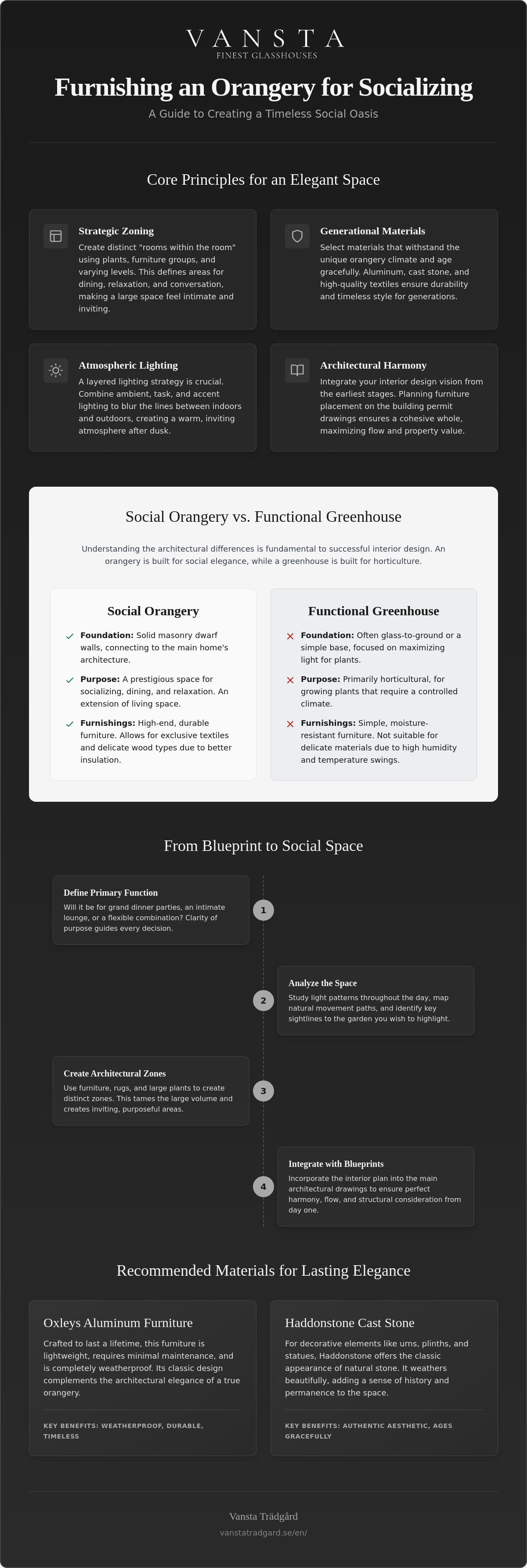
- Erfahren Sie, wie durch strategische Zonierung mit Pflanzen und unterschiedlichen Ebenen natürliche Räume im Raum entstehen, die sowohl zum Essen als auch zum Entspannen geeignet sind.
- Entdecken Sie, warum die Wahl von Materialien wie Aluminium bei Oxleys Möbeln und Kunststein entscheidend ist, um eine Orangerie für gesellige Zusammenkünfte stilvoll einzurichten und so Generationen zu überdauern.
- Erhalten Sie Einblicke, wie die richtige Beleuchtungsstrategie und dekorative Elemente von Haddonstone die Grenze zwischen Innen- und Außenbereich auch nach Einbruch der Dunkelheit verwischen.
- Verstehen Sie die Bedeutung der Integration der Innenarchitekturvision bereits in die Baugenehmigungszeichnungen, um ein harmonisches architektonisches Gesamtbild und einen maximalen Immobilienwert zu gewährleisten.
Die Kunst, eine Orangerie für gesellige Zusammenkünfte einzurichten: Eine Vision von Eleganz
Die Orangerie stellt eine einzigartige architektonische Verbindung dar, wo die wilde, unverfälschte Schönheit des Gartens auf die raffinierte Eleganz des Hauses trifft. Sie ist nicht nur ein verglaster Raum, sondern ein Ort der Erholung und geselligen Zusammenkunft, der auf einer reichen Tradition beruht. Um eine Orangerie für gesellige Zusammenkünfte gelungen einzurichten, bedarf es eines tiefen Verständnisses für die Seele des Raumes und sein historisches Erbe. Wenn man die Geschichte der Orangerie, Schnell wird deutlich, dass diese Gebäude seit jeher als repräsentative gesellschaftliche Räume dienten, in denen die Grenze zwischen Innen und Außen auf raffinierte Weise verschwimmt. Wir bei Vansta betrachten jedes Bauwerk als lebendiges Kunstwerk, in dem das Licht die Hauptrolle spielt.
Die Wahl eines Gestaltungskonzepts für eine Vansta-Orangerie unterscheidet sich deutlich von der Einrichtung eines einfacheren Polycarbonat-Gewächshauses. Hier gibt die Architektur den Ton an und bestimmt die Rahmenbedingungen. Die klassischen Proportionen und die Wahl solider Materialien erfordern eine Inneneinrichtung, die den Charakter des Gebäudes nicht überlagert, sondern vielmehr seine handwerklichen Details hervorhebt. Weniger ist oft mehr.Indem man dem Raum und den großen Glasfronten Raum zur Entfaltung gibt, schafft man ein Ambiente, das sowohl Autorität als auch Wärme ausstrahlt. Es ist eine langfristige Investition in Lebensqualität, bei der jedes Möbelstück und jede Pflanze zu einem harmonischen Ganzen beiträgt.
Um Ihr Verständnis dafür zu vertiefen, wie eine Orangerie in einen lebendigen sozialen Treffpunkt verwandelt werden kann, empfehlen wir Ihnen diesen inspirierenden Film:
Der Unterschied zwischen einem Gewächshaus und einer Orangerie für gesellige Zusammenkünfte
Die architektonischen Unterschiede zwischen einem funktionalen Gewächshaus und einer geselligen Orangerie sind grundlegend für die Inneneinrichtung. Eine echte Orangerie zeichnet sich oft durch niedrige Mauern aus, die optisches Gewicht verleihen und eine natürliche Verbindung zur Ästhetik des Hauptgebäudes herstellen. Wenn die Wahl einem von uns zufällt Wintergarten Dank der hohen Wärmedämmung ändern sich die Anforderungen an Ihre Möbelwahl grundlegend. Hier können Sie bedenkenlos exklusivere Textilien und edlere Holzarten verwenden, die sonst durch Feuchtigkeit beeinträchtigt werden könnten. Ästhetische Langlebigkeit wird durch die Wahl von Materialien gewährleistet, die mit Würde altern und den Test der Zeit bestehen, sei es sengende Sonne oder winterliche Kälte draußen.
Den Zweck Ihres sozialen Raums definieren
Bevor Sie auch nur das erste Sitzmöbel aufstellen, ist es entscheidend, die Hauptfunktion des Raumes zu analysieren. Soll die Orangerie für große Dinnerpartys genutzt werden, als gemütliche Lounge zum Entspannen dienen oder vielleicht beides? Ein geselliger Raum braucht Freiraum; man neigt leicht dazu, ihn mit zu vielen Gegenständen vollzustellen. Analysieren Sie den Lichteinfall zu verschiedenen Tageszeiten, um die Sitzgruppen optimal zu platzieren. Eine gut geplante und eingerichtete Orangerie sollte sowohl für ein erfrischendes Frühstück in der Morgensonne als auch für ein stimmungsvolles Treffen unter dem Sternenhimmel gleichermaßen einladend wirken. Berücksichtigen Sie bei Ihrer Planung die folgenden Aspekte:
- Bewegungsmuster: Wie bewegen sich Gäste auf natürliche Weise zwischen den verschiedenen Sitzbereichen?
- Sichtlinien: Welche Teile des Gartens möchten Sie vom Sofa oder Esstisch aus hervorheben?
- Flexibilität: Lässt sich der Innenraum problemlos vom Familienleben an formelle Anlässe anpassen?
Räume im Raum schaffen: Architektonische Zonierung
Die gelungene Einrichtung einer Orangerie für gesellige Zusammenkünfte erfordert ein Gespür dafür, wie man große Räume optimal nutzt, ohne die gewünschte Weitläufigkeit zu beeinträchtigen. Ein Gewächshaus kann schnell hallend oder unzugänglich wirken, wenn man nicht gezielt mit Zonierungen arbeitet. Durch die Schaffung klar abgegrenzter Bereiche innerhalb des Raumes verwandelt sich der offene Raum in eine Reihe einladender Bereiche, die jeweils einem bestimmten Zweck dienen. Es geht darum, den Besucherfluss und den Blick zu lenken und die Architektur den Gast vom einladenden Essbereich zur gemütlichen Lounge-Ecke führen zu lassen.
Ein erfolgreicher modernes Orangerie-Design Oft werden diese sozialen Abläufe bereits in der Planungsphase berücksichtigt. Niveauunterschiede im Boden sind ein wirkungsvolles architektonisches Mittel, um den Essbereich auf natürliche Weise vom Wohnbereich abzugrenzen. Durch die Kombination verschiedener Bodenbeläge, wie beispielsweise kühler Kalkstein mit warmem Ziegelstein, entstehen optische Grenzen, die keine physischen Wände erfordern. Um das Gefühl von Intimität zu verstärken, können große Pflanzen vorteilhaft als natürliche Raumteiler eingesetzt werden. Eine Gruppe von Zitrusbäumen oder hohen Palmen in schönen Töpfen spendet Duft und sorgt für angenehme Abgeschiedenheit, sodass sich die Gäste geborgen fühlen.
Der Essbereich als Herzstück der Orangerie
Der Essbereich sollte so platziert werden, dass er die schönste Aussicht bietet und gleichzeitig eine optimale Erreichbarkeit des Haupthauses für das Servieren gewährleistet. Die Wahl des Tisches ist entscheidend, da das Material intensiver Sonneneinstrahlung standhalten muss, ohne sich zu verziehen oder ungleichmäßig auszubleichen. Rechteckige Tische verleihen größeren Gesellschaften ein formelles und repräsentatives Ambiente, während runde Tische bei kleineren Treffen oft eine dynamischere und ungezwungenere Atmosphäre schaffen. Ein Kamin im Essbereich erweitert nicht nur dessen Nutzungsmöglichkeiten, sondern bildet auch einen natürlichen Blickfang, der in der Abenddämmerung eine behagliche Wärme verströmt.
Der Loungebereich: Komfort trifft auf Natur
Der Loungebereich ist der ideale Ort für entspannte, vertrauliche Gespräche, bei denen Gemütlichkeit im Vordergrund steht. Die Sitzmöbel sollten so platziert werden, dass sie den Blick auf die umgebende Natur hinter den Glaswänden optimal freigeben. In einem Raum mit überwiegend harten Oberflächen stellt die Akustik eine ständige Herausforderung dar. Daher ist der Einsatz großzügiger Teppiche aus Naturmaterialien entscheidend, um den Schall zu dämpfen und eine behagliche Atmosphäre zu schaffen. Durch die strategische Platzierung der Sitzgruppe entstehen Sichtachsen, die den Blick auf die Blickfänge des Gartens lenken, beispielsweise auf einen Brunnen oder eine Statue. Benötigen Sie Unterstützung bei der optimalen Gestaltung Ihres Raumes? Unsere Experten beraten Sie gerne individuell. Baugenehmigungszeichnungen und -anträge die sowohl ästhetische Form als auch soziale Funktion berücksichtigt.
Möbelauswahl, die Ästhetik und Langlebigkeit vereint
Die Wahl der Möbel in einer Orangerie ist eine direkte Fortsetzung der architektonischen Sprache des Gebäudes. Es geht darum, ein Gleichgewicht zwischen optischer Leichtigkeit und der notwendigen Stabilität zu finden, um dem besonderen Klima eines Gewächshauses standzuhalten. Bei der Einrichtung einer Orangerie für gesellige Zusammenkünfte ist die Beständigkeit der Materialien gegenüber direkter Sonneneinstrahlung und schwankender Luftfeuchtigkeit absolut entscheidend für das Gesamterlebnis. Es ist ein Raum, in dem Ästhetik niemals auf Kosten der Langlebigkeit gehen darf, da die großen Glasflächen jedes Detail den Naturgewalten aussetzen.
Laut internationalen Erkenntnissen Gestaltung einer ganzjährig nutzbaren Orangerie, Der Fokus sollte auf Möbeln liegen, die als fester Bestandteil der Wohnung dienen, und nicht auf temporären Gartenmöbeln. In diesem Zusammenhang erweisen sich Gussaluminium und Gussstein als besonders geeignet. Diese Materialien sind von Natur aus korrosions- und farbbeständig und bewahren so ihre Eleganz über Jahrzehnte. Durch die Kombination dieser zeitlosen Materialien mit sorgfältig ausgewählten Antiquitäten entsteht ein anspruchsvoller Stil, der sowohl persönlich als auch tief in der Geschichte verwurzelt wirkt.
Exklusive Outdoor-Möbel von Oxleys
Die Outdoor-Möbel von Oxley zeichnen sich durch eine handwerkliche Qualität aus, die perfekt mit Vanstas Stil harmoniert. von Architekten entworfene Gewächshäuser. Ihre Kollektionen aus Aluminiumguss bieten britische Eleganz von nahezu unverwüstlicher Qualität. Der besondere Reiz von Oxleys liegt in der Möglichkeit der individuellen Gestaltung: Die Möbel können farblich exakt an die Konturen der Orangerie oder die umliegende Architektur angepasst werden. Für einen einladenden Aufenthaltsraum ist die Wahl der Textilien ebenso wichtig. Hochwertige, UV-beständige Stoffe sorgen dafür, dass Sofas und Kissen ihren Glanz behalten und auch bei intensiver Sonneneinstrahlung durch das Glas nicht ausbleichen.
Materialien, die mit Würde altern
In einer exklusiven Orangerie sollte man konsequent auf Kunststoff und billige Holzarten verzichten, da diese unter dem Einfluss von Feuchtigkeit und Wärme schnell ihren Charme verlieren. Stattdessen empfiehlt es sich, natürliche Materialien wie Stein, Keramik und Schmiedeeisen zu wählen.Diese Materialien sind äußerst pflegeleicht und entwickeln mit der Zeit eine wunderschöne Patina, die den Charakter des Gebäudes unterstreicht. Die Patina zeugt vom Lauf der Zeit und verleiht dem Raum Authentizität und Beständigkeit. Indem man im Interieur Materialien wählt, die mit Würde altern, schafft man ein Ambiente, das nicht nur heute schön ist, sondern mit jedem Jahr an Reiz gewinnt. Das ist die Essenz einer langfristig orientierten Einrichtung für gesellige Zusammenkünfte in einer Orangerie.
- Aluminiumguss: Pflegeleicht, rostfrei und zeitlos.
- Kunststein: Verleiht Gewicht und eine klassische architektonische Anmutung.
- Schmiedeeisen: Erzeugt schlanke, elegante Silhouetten, die das Licht nicht rauben.
- UV-Textilien: Notwendig, um die Farbbrillanz in einer Gewächshausumgebung zu erhalten.
Details, die die Atmosphäre verbessern: Beleuchtung und Dekoration
Mit Einbruch der Dämmerung durch den Garten vollzieht das Gewächshaus eine eindrucksvolle Verwandlung. Um eine Orangerie für gesellige Zusammenkünfte einzurichten, ist eine durchdachte Beleuchtung unerlässlich, damit die großen Glasflächen nicht zu „schwarzen Fenstern“ werden, die leicht ein Gefühl von Unzugänglichkeit und Kälte erzeugen können. Durch den Einsatz verschiedener Lichtebenen entsteht eine behagliche Atmosphäre, in der die Grenzen des Raumes angenehm verschwimmen. Es geht darum, visuelle Geborgenheit zu schaffen, die Gäste noch lange einlädt, nachdem die letzten Sonnenstrahlen hinter dem Horizont verschwunden sind.
Ein oft übersehenes Detail bei der Gestaltung eines exklusiven Ambientes ist die Bedeutung von Düften für das soziale Wohlbefinden. Durch die Planung eines multisensorischen Erlebnisses werden das Gefühl von Luxus und Präsenz verstärkt. Jasmin- oder Zitruspflanzen, die ihren dezenten Duft in der warmen Abendluft verströmen, fördern die soziale Interaktion auf beinahe poetische Weise. Der Kontrast zwischen den harten Glasoberflächen und den weichen, haptischen Textilien aus Naturmaterialien wie Leinen und Wolle trägt zusätzlich zu einer ausgewogenen Harmonie bei, die die Akustik dämpft und zum Berühren einlädt.
Lichtgestaltung im Gewächshaus
Dezente, in die Deckenkonstruktion integrierte Strahler bilden eine funktionale Basis, doch erst die stimmungsvollen Stehlampen und Kerzen verleihen dem Raum Seele. Durch die Beleuchtung der Pflanzen von unten entstehen faszinierende Schattenspiele an den Mauern, die dem Raum unerwartete Tiefe und einen lebendigen Charakter verleihen. Massive Laternen im klassischen Design werden tagsüber zu wunderschönen Skulpturen und verbreiten bei intimen Abendgesprächen ein sanftes, flackerndes Licht. Im Zusammenspiel von gerichtetem Licht und sanftem Schein entfaltet sich der wahre Zauber der Orangerie.
Gartenkunst aus Haddonstone
Gartenkunst muss nicht an der Schwelle enden; oft findet sie ihren natürlichsten Platz innerhalb der schützenden Mauern der Orangerie. Durch die Aufstellung einer Statue oder eines kleinen Brunnens im Inneren der Orangerie entsteht ein Blickfang, der den Raum in einer alten europäischen Tradition verankert. Produkte von Haddonstone aus Kunststein verleihen dem Raum eine historische Schwere, die nur wenige andere Materialien erreichen. Ein sanft plätschernder Brunnen trägt zudem zu einer friedvollen Klangkulisse bei, die unerwünschte Außengeräusche überdeckt und das Gefühl einer privaten Oase verstärkt. Hier erfahren Sie mehr darüber, wie Sie den richtigen Brunnen auswählen. Haddonstone-Brunnen um einen einzigartigen Blickfang in Ihrem sozialen Umfeld zu schaffen.
Die aus Steinguss gefertigten Töpfe dienen als architektonische Ankerpunkte, die dem Raum Struktur und ein Gefühl von Beständigkeit verleihen. Durch ihre Fähigkeit, mit der Zeit eine schöne Patina zu entwickeln, fügen sie sich harmonisch in die Architektur der Orangerie ein.Stöbern Sie gerne in unserer sorgfältig zusammengestellten Auswahl. Töpfe und Statuen aus Haddonstone um die Details zu finden, die Ihre Vision eines exklusiven gesellschaftlichen Raums vervollständigen.
Vom Entwurf zum fertigen sozialen Raum
Der Weg zur perfekten Orangerie beginnt lange vor dem Einbau der ersten Glasscheibe. Um eine Orangerie erfolgreich als Treffpunkt für gesellige Zusammenkünfte einzurichten, muss die Vision für den Gemeinschaftsraum bereits in den ersten Entwürfen berücksichtigt werden. In dieser Phase werden die unsichtbaren, aber so wichtigen Details festgelegt: die Platzierung von Steckdosen für die stimmungsvolle Beleuchtung, die Wasserversorgung für einen kleinen Brunnen und die Planung der Infrastruktur, die den Raum das ganze Jahr über einladend macht. Indem die Bedürfnisse des Innenraums die technische Planung leiten, lassen sich Kompromisse vermeiden, die später das soziale Potenzial und die ästhetische Harmonie des Raumes beeinträchtigen könnten.
Mit den neuen Vorschriften für Nebengebäude, die am 1. Dezember 2025 in Kraft traten, haben sich die Möglichkeiten, großzügige Räume ohne Baugenehmigung zu schaffen, verändert und oft vereinfacht. Eine Fläche von bis zu 30 Quadratmetern innerhalb eines Bebauungsplans bietet ideale Voraussetzungen für die Einrichtung einer Orangerie, die zum geselligen Beisammensein einlädt und in der sowohl ein Essbereich als auch eine Lounge ausreichend Platz finden. Das Verständnis dieser rechtlichen Rahmenbedingungen gehört zu unserer Expertise bei Vansta. So stellen wir sicher, dass Ihre Investition sowohl rechtlich einwandfrei als auch architektonisch gelungen ist. Es geht darum, langfristig zu denken und jedes Detail dem Ganzen zu dienen.
Architekturberatung und Projektplanung
Vansta Orangeries bietet Ihnen nicht nur den Bau von Orangerien, sondern eine umfassende architektonische Reise von der Planung bis zur Realisierung. Wir begleiten Sie von den ersten Skizzen bis hin zu den fertigen Baugenehmigungsplänen und -anträgen und sorgen so für einen nahtlosen Übergang zwischen Ihrem bestehenden Zuhause und dem neuen Glasbau. Durch die frühzeitige Planung von Strom und Wasser können wir die Installationen professionell verbergen und so die Architektur und das Interieur ungestört zur Geltung bringen. Unser Ziel ist es, ein Ambiente zu schaffen, in dem die Grenzen zwischen Innen und Außen verschwimmen und jeder Quadratmeter optimal für geselliges Beisammensein genutzt wird.
Investieren Sie in Lebensqualität
Qualität bis ins kleinste Detail zu wählen, ist ein Statement für die Zukunft. Eine architektonisch gestaltete Orangerie ist nicht nur ein geselliger Raum für die Bedürfnisse von heute, sondern ein Erbe, das von zukünftigen Generationen bewahrt werden kann. Sie ist eine werterhaltende Investition, die den Marktwert der Immobilie steigert und vor allem das Leben ihrer Bewohner bereichert. Qualität zahlt sich langfristig immer aus, insbesondere in Umgebungen, in denen die Materialien den Einflüssen der Natur ausgesetzt sind. Wenn Sie Ihr Wissen über die Gestaltung dieses zeitlosen Ambientes vertiefen möchten, empfehlen wir Ihnen unseren umfassenden Leitfaden zu einem exklusiven Orangerie. Gerne können Sie uns für ein persönliches Beratungsgespräch kontaktieren, in dem wir gemeinsam Ihren Traum von einer sozialen Oase verwirklichen, die sich durch Authentizität und Beständigkeit auszeichnet.
Verwirklichen Sie Ihre Vision einer zeitlosen sozialen Oase
Die Gestaltung eines sozialen Raums unter Glas ist eine Kunstform, die sowohl technische Präzision als auch ein intuitives ästhetisches Gespür erfordert. Wir haben untersucht, wie die richtige architektonische Zonierung und die Wahl von Materialien, die mit Würde altern, die Grundlage für eine Umgebung schaffen, in der Gespräche gedeihen können. Durch strategische Einrichtung einer Orangerie für gesellige Zusammenkünfte Mit Fokus auf handwerkliche Qualität und durchdachtes Lichtdesign wird das Gebäude zu einem integralen Bestandteil des Zuhauses; ein Ort der Repräsentation und der Ruhe, der über Generationen Bestand hat.
Vansta Trädgård steht Ihnen als zuverlässiger Berater während des gesamten Projekts zur Seite. Als exklusiver Partner renommierter Marken wie Oxleys und Haddonstone und mit umfassender Expertise in Baugenehmigungsverfahren und Genehmigungsprozessen stellen wir sicher, dass Ihre Vision kompromisslos verwirklicht wird. Unsere architektonisch gestalteten Lösungen sind wertbeständige Investitionen, die sowohl die Lebensqualität als auch den Charakter Ihrer Immobilie steigern.
Entdecken Sie die exklusiven Orangerien von Vansta und vereinbaren Sie einen Beratungstermin. Beginnen Sie Ihre Reise hin zu einer geselligen Oase, in der jedes Detail zeitlose Eleganz ausstrahlt. Lassen Sie uns gemeinsam einen Raum gestalten, der nicht nur das Licht einfängt, sondern auch zum Mittelpunkt Ihres sozialen Lebens wird.
Häufig gestellte Fragen zur Einrichtung einer Orangerie für gesellige Zusammenkünfte
Welche Möbel eignen sich am besten für eine Orangerie zum geselligen Beisammensein?
Für dieses besondere Ambiente eignen sich Möbel aus Aluminiumguss oder Kunststein am besten. Diese Materialien sind von Natur aus beständig gegen große Temperaturschwankungen und intensive Lichteinstrahlung, ohne dabei an ästhetischer Schärfe einzubüßen. Mit handgefertigten Möbeln von Herstellern wie Oxleys schaffen Sie eine langlebige Basis, die sich harmonisch in die Architektur des Gebäudes einfügt.
Wie kann ich die Orangerie im Winter warm halten, um dort gesellige Stunden zu verbringen?
Ein integrierter Kamin oder eine wassergeführte Fußbodenheizung sind die effektivsten Lösungen, um in den Wintermonaten eine angenehme Temperatur zu gewährleisten. Bei Orangerien, die ganzjährig genutzt werden sollen, sind der Dämmwert der Glasscheiben und die Wahl der Wintergartenkonstruktion entscheidend. Es ist wichtig, diese Wärmequellen bereits in der Planungsphase der Baugenehmigung zu berücksichtigen, um ein gleichmäßiges und einladendes Raumklima zu schaffen.
Wie kann ich verhindern, dass Möbel in einem Gewächshaus ausbleichen?
Hochwertige, UV-beständige Textilien sind unerlässlich, um Kissen und Polster vor dem Ausbleichen durch starke Sonneneinstrahlung zu schützen. Materialien wie Aluminiumguss und Naturstein sind von Natur aus unempfindlich gegenüber Sonnenstrahlen und benötigen keinen Schutz. Durch strategisches Einsetzen von UV-beständigen Textilien kann die UV-Beständigkeit von Polstermöbeln und Kissenbezügen deutlich verbessert werden. Einrichtung einer Orangerie für gesellige Zusammenkünfte Mit diesen langlebigen Materialien reduzieren Sie den zukünftigen Wartungsaufwand und erhalten die Eleganz des Raumes.
Kann ich in einer Orangerie, die auch zum Anbau genutzt wird, einen Essbereich einrichten?
Ja, es ist durchaus möglich, Anbau- und Aufenthaltsbereiche durch eine durchdachte architektonische Zonierung zu verbinden. Große Pflanzen in schönen Töpfen dienen als natürliche Raumteiler und schaffen im Essbereich Intimität und Abgeschiedenheit. So entsteht ein wohnliches Ambiente, in dem der Duft von Zitrusblüten und Grünpflanzen das Esserlebnis bereichert und eine einzigartige Atmosphäre für Ihre Gäste schafft.
Welche Art von Beleuchtung empfiehlt sich für späte Abende in der Orangerie?
Eine Kombination aus dezenter Akzentbeleuchtung und sanftem Umgebungslicht in mehreren Ebenen schafft nach Einbruch der Dunkelheit die beste Atmosphäre. Durch die Beleuchtung größerer Pflanzen von unten entsteht eine optische Tiefe im Raum, die dem Eindruck schwarzer Fensterscheiben im Kontrast zur Dunkelheit entgegenwirkt. Lebende Kerzen in massiven Laternen im klassischen Design verleihen dem Wohnbereich den letzten Schliff an Wärme und Behaglichkeit.
Benötige ich eine Baugenehmigung, um meinen Wintergarten als Wohnzimmer einzurichten?
Für die Einrichtung selbst ist keine Baugenehmigung erforderlich, Größe und Lage des Gebäudes unterliegen jedoch den neuen Vorschriften für Nebengebäude, die im Dezember 2025 in Kraft getreten sind.Bis zu 30 Quadratmeter große Gebäude können innerhalb eines Bebauungsplans unter bestimmten Voraussetzungen oft ohne Baugenehmigung errichtet werden. Wichtig ist jedoch, festzulegen, ob es sich um einen Anbau an das Wohnhaus oder um ein freistehendes Gebäude handeln soll.
Wie schaffe ich eine gute Akustik in einem Raum mit so viel Glas?
Die Akustik lässt sich am effektivsten durch griffige und weiche Oberflächen verbessern, die Schallreflexionen an den Glaswänden dämpfen. Großzügige Teppiche aus Naturmaterialien, üppiges Grün und hochwertige Textilien sind unerlässlich, um eine angenehme Gesprächsatmosphäre zu schaffen. Diese Elemente brechen die Schallwellen und verwandeln den hallenden Glassaal in einen gemütlichen und ruhigen Aufenthaltsraum.
Welche Pflanzen tragen am besten zu einer geselligen Atmosphäre bei?
Duftende Pflanzen wie Jasmin, Zitrusfrüchte und alte Geraniensorten eignen sich hervorragend, um eine einladende, gesellige Atmosphäre zu schaffen. Ihre dezenten Düfte tragen zu einem multisensorischen Erlebnis bei, das soziale Interaktionen unvergesslicher und entspannter macht. Einrichtung einer Orangerie für gesellige Zusammenkünfte Mit Grünpflanzen, die sowohl visuelle Schönheit als auch Duft bieten, wird ein unmittelbares Gefühl von Luxus und Wohlbefinden für alle Anwesenden geschaffen.