

Imagine your home not just ending at the outer wall, but extending into an environment where the boundary between classic architecture and the tranquility of the garden has been completely blurred. Many homeowners face t…
Orangery or Conservatory: A Guide to the Differences and How to Choose the Right One in 2026
2026. júl. 29.
Imagine your home not just ending at the outer wall, but extending into an environment where the boundary between classic architecture and the tranquility of the garden has been completely blurred. Many homeowners face the challenge of understanding the exact orangery or conservatory difference that determines whether the building becomes a temporary seasonal solution or a value-preserving investment in the soul of the house. It's natural to feel uncertain about insulation classes, material choices, and how the new building permit rules for 2026 affect the possibilities on your specific plot.
We understand that the choice is about finding a balance between technical precision and an almost poetic atmosphere. In this guide, you will learn to navigate the aesthetic and technical differences to find the optimal glass building for your lifestyle. We give you a clear picture of how to integrate the construction architecturally and explain how the updated rules for extensions of up to 30 square meters give you greater freedom than ever before. By combining traditional craftsmanship with modern expertise, we guide you towards a decision that exudes timeless elegance and long-term quality.
Key Takeaways
- Understand the fundamental orangery or conservatory difference that determines whether your vision requires an architectural masterpiece for year-round use or a lighter seasonal extension of the home.
- Learn how technical choices regarding U-values and frames in steel or aluminum create an optimal climate for both Mediterranean plants and human well-being throughout all seasons.
- Navigate the updated building permit rules for 2026 and discover how the expanded square meters for permit-exempt projects simplify your journey from sketch to finished glasshouse.
- Gain insight into how exclusive collections like THE ROSE and Vansta Classic combine historical craftsmanship with modern precision to create a value-preserving investment for your home.
What is the actual difference between an orangery and a conservatory?
When considering the glazed structures that adorn our Nordic gardens, the question of identity emerges as central. Is it a place for plants, an extension of the living room, or an architectural work of art in itself? Understanding the actual orangery or conservatory difference means looking beyond the glass panels and instead focusing on the building's purpose, its construction, and its historical heritage. The choice you make affects not only how you spend your evenings but also how the building harmonizes with your home's architecture and its future market value.
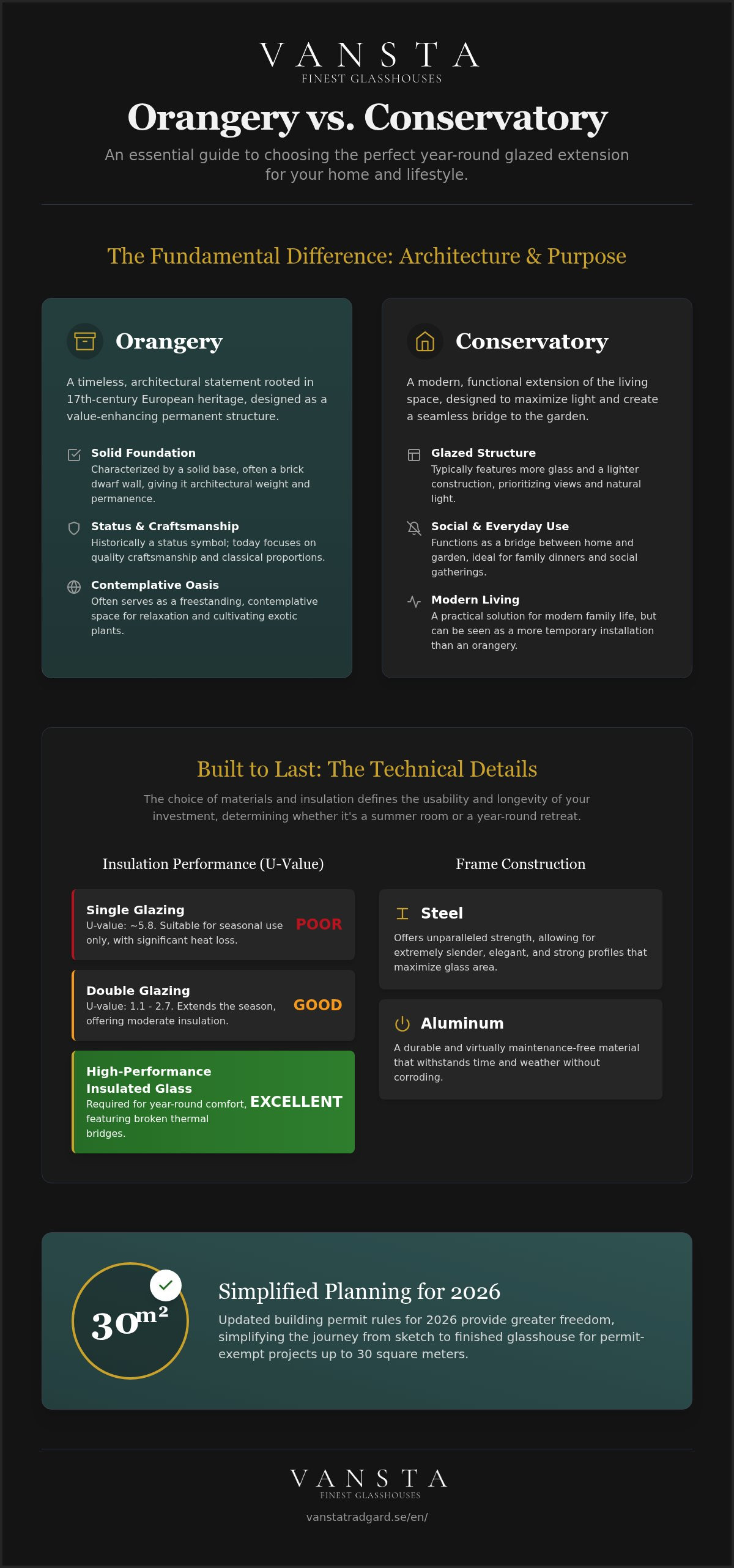
To truly understand what an orangery is, we need to look back to the European courts of the 17th century. Here, the building was a status symbol, created to preserve exotic citrus trees through cold winters. Today, this tradition has transformed into a modern lifestyle where craftsmanship and aesthetics meet. The conservatory, on the other hand, functions more as a functional bridge between the home's interior and the garden's greenery. It is an extension of the living space that prioritizes light and immediate accessibility from the heart of the house.
The Orangery's Aesthetics and Historical Heritage
A true orangery, such as those found in the Vansta Classic or THE ROSE collections, is characterized by its classical proportions and often a brick dwarf wall. This solid base gives the building a weight and architectural anchoring that a typical conservatory often lacks. It is a structure that exudes timeless elegance and is regarded as a permanent part of the garden landscape rather than a temporary extension. Here, craftsmanship is in focus; every detail in steel or aluminum is designed to reflect a European tradition where quality always precedes quantity.
The Conservatory as a Modern Social Space
The conservatory is, by its nature, more focused on everyday social needs. It is a place for family dinners and late summer evenings where the focus is on maximizing light and creating a seamless transition to the house. The difference between a simpler glazed conservatory and a fully insulated winter garden, however, is significant. While the simple conservatory extends summer, the winter garden is a technically advanced structure that can handle all seasons. It is a practical solution for modern family life but often lacks the orangery's specific character of being a freestanding, contemplative oasis.
It is worth reflecting on how terminology affects your investment. An architect-designed orangery is often considered a value-enhancing permanent building, while a simpler conservatory can be seen as a more temporary installation. This distinction becomes particularly important when we look at the new building permit rules for 2026, where the demarcation between an ancillary building and an extension determines how smoothly your vision can be realized.
Technical Aspects: Insulation, Glass, and Construction
When we delve into the technical orangery or conservatory difference, it quickly becomes clear that the glass's U-value is the single most important factor for the building's function. Single glazing often has a U-value around 5.8, meaning that heat passes almost unhindered into the winter cold. For those seeking an extended season, double glazing with U-values between 2.7 and 1.1 is required. If the goal is an environment that thrives year-round, one should invest in high-performance insulated glass. An academic study on conservatory design from the University of Cambridge highlights how material choices and thermal performance directly impact how we use these rooms socially and how they integrate into our daily lives.
The frame constitutes the building's backbone, and the choice between steel and aluminum is about both aesthetics and longevity. Steel profiles, which we use in our most exclusive constructions, offer unbeatable strength that allows for extremely slender and elegant profiles. Aluminum, on the other hand, is a material that is virtually maintenance-free and withstands the test of time without corroding. Regardless of material choice, a stable foundation and correct drainage are fundamental, especially for orangeries resting on a brick dwarf wall. Without a frost-free foundation, settlements risk damaging the large glass sections.
Winter Gardens for Year-Round Use
To create a room that feels pleasant even when snow swirls outside, constructions with completely broken thermal bridges are required. This means that cold from outside cannot be conducted through the frame into the room. By combining underfloor heating with well-planned ventilation, a stable indoor climate is created that protects both sensitive citrus plants and lounge furniture. You can read more about our exclusive winter gardens and how they transform the home into a place for constant recuperation.
Material Choices That Define Quality
In a world where mass production is often prioritized, we choose to stick with materials that age with dignity. Polycarbonate and plastic roofs do not belong in an environment where aesthetics and craftsmanship are central. Plastic yellows over time and lacks the optical clarity that only tempered safety glass can offer. The Vansta Classic collection rests on this philosophy, where every architectural detail is designed to create visual harmony. If you are planning a new building, it may be wise to explore our architect-designed solutions to ensure that technical precision meets your personal vision.
Climate control is about more than just heat. During the summer months, a glasshouse quickly becomes very hot, requiring sophisticated ventilation solutions. Automatic roof vents that react to both temperature and rain are often a necessity to maintain a fresh atmosphere. It is this balance between technology and poetry that transforms a glass structure from a simple shell into a living part of the home.
Uses: Cultivation, Socializing, or Relaxation?
Stepping into a glasshouse on an early morning when dew still rests on the grass is an experience that speaks to all senses. Here, one quickly understands that the practical orangery or conservatory difference is primarily manifested in how the room breathes and how it invites different types of quality of life. Many believe that one must choose between a flourishing cultivation environment and an elegant social area. The truth is that in a well-planned orangery, these two worlds live in a rare symbiosis where the scent of citrus blossoms blends with the aroma of freshly brewed coffee.
Planning the space requires an intuitive understanding of how light and space affect our well-being. A conservatory intended for dinner parties should have a natural proximity to the kitchen, while a freestanding orangery can function as a contemplative oasis further out in the garden. To create an environment that withstands the test of time, luxurious outdoor furniture is required, combining British craftsmanship with the specific demands of the Nordic garden. It's about furnishing with items that are not only functional but also constitute architectural details in the room themselves.
Climate for Plants and People
In an orangery, humidity and temperature balance are crucial for Mediterranean plants to thrive. It's about creating a climate that mimics their natural habitat without feeling stuffy for us humans. A cast-iron stove not only spreads a pleasant warmth during cool spring evenings but also becomes a visual anchor point that reinforces the feeling of a room that lives year-round. By integrating automatic irrigation and discreet fans, you can enjoy the greenery without letting maintenance overshadow relaxation.
Interior Design as an Extension of the Feeling
The most beautiful aspect of these glass buildings is their ability to blur the line between indoors and outdoors. It is a place where you can sit protected from the rain yet still feel as though you are in the midst of nature's spectacle. Ultimately, choosing the right path is about defining what kind of moments you want to create more space for in your life.
Planning and Building Permits: From Vision to Finished Project
The journey towards a finished glasshouse begins long before the first stone is laid. It involves a meticulous process where aesthetic desires meet technical requirements and legal frameworks. Understanding the actual orangery or conservatory difference is absolutely crucial here, as legislation differs depending on whether the building is part of the main dwelling or a freestanding oasis. A well-considered placement in the garden not only optimizes sunlight for your plants but can also be the difference between a simple approval and a complicated process with the building committee.
Since the new regulations came into force on December 1, 2025, the possibilities for homeowners have expanded significantly. You can now erect an extension of up to 30 square meters without a traditional building permit, which is a significant increase from previous levels. For freestanding ancillary buildings, such as a classic orangery, a total area of 45 square meters now applies within a detailed development plan area and a full 65 square meters outside. These simplifications mean that the dream of an architect-designed glasshouse is closer than ever before in 2026.
Architect-Designed Solutions vs. Standard Kits
Many are tempted by simple standard kits but risk losing architectural harmony with the main building. By choosing architect-designed greenhouses, you ensure that every detail, from roof pitch to glazing bars, reflects the soul of the house. A custom-designed structure not only enhances your quality of life; it also serves as a value-preserving investment that increases the property's total market value. It is the craftsmanship and customization that make the building feel like an obvious part of the home rather than an attached element.
Navigating the Building Permit Process
Despite the new, more generous rules, there are pitfalls. If you build closer to the property line than 4.5 meters, written consent from neighbors is always required. For projects requiring the installation of water, sewage, or a stove, a building notification to the municipality is still needed. This is where our expertise becomes your security. We at Vansta Trädgård assist with professional drawings and support you throughout the entire application process. Having correct and aesthetically pleasing documentation is often the key to a smooth authority decision, especially in culturally and historically sensitive environments where adaptation requirements are high. Planning to realize your vision this year? Let us help you with your building permit drawings and application for a result that endures for generations.
Why an Orangery from Vansta Is an Investment for Life
As we move towards the end of this guide, it becomes clear that the most significant orangery or conservatory difference is not just about insulation or building permits; it's about your view on sustainability and aesthetics. For us at Vansta, the glasshouse is not merely a building, but a craft that should age with dignity and bring joy for decades. This philosophy permeates everything from our Vansta Classic orangeries to the exclusive THE ROSE greenhouse collection. It is a world where every architectural detail is regarded as a work of art, created to meet the challenges of the Scandinavian climate without ever compromising on elegance.
The craftsmanship behind our constructions rests on a solid foundation of expertise and a passion for materials that endure over time. By choosing the highest quality steel and aluminum, combined with precision-crafted finishes, we create environments that require minimal maintenance but offer maximum beauty. It's about a holistic experience where the glasshouse harmonizes with the garden's other elements. We look beyond the frame itself and offer a complete concept that includes everything from Oxleys furniture outdoor furniture to statues and fountains from Haddonstone, creating a cohesive and exclusive atmosphere.
To further enhance this botanical lifestyle, you can read more about handcrafted greeting cards featuring real preserved roses, which capture the elegance of the garden in a lasting form.
A Personal Journey Towards Your Dream Room
Every project we undertake is a unique journey that starts from your specific garden and personal lifestyle. We don't believe in standard solutions, but in responsive advice where we jointly explore how light, space, and architecture best interact on your plot. Our passion for aesthetics means we place great importance on the construction feeling like a natural extension of your home. If you wish to delve deeper into our view of these architectural masterpieces, you can read more about the perfect orangery and how we transform garden dreams into reality.
The Complete Vansta Experience
Choosing Vansta means you get a dedicated partner throughout the entire building journey, from the initial sketches to the final finish. We combine classic architecture with exclusive garden art to create a place that is not only functional but also a source of constant recuperation. The value of such an investment is measured not only in currency but in the quality of life created when form and function meet in perfect harmony. This is our invitation to you: to create a place for generations, where historical craftsmanship meets the future's need for beauty and tranquility.
Realize Your Vision of the Perfect Glasshouse
Choosing the right glass structure for your home is a journey that unites personal lifestyle with architectural craftsmanship tradition. We have seen how the actual orangery or conservatory difference is about everything from technical U-values and insulation classes to how the building integrates into the garden landscape. With 2026's generous building permit rules, you now have greater freedom than ever to create a place for both cultivation and social gatherings that will last for generations. It is an investment in both the property's value and your own quality of life.
As Sweden's leading expert in orangeries and winter gardens, we at Vansta Trädgård have over 20 years of experience in transforming exclusive garden dreams into reality. We are a family-owned company with a deep passion for quality and craftsmanship in every detail. Let us guide you through material choices and architectural design to ensure a solution that harmonizes with your home's unique soul. Book a personal consultation for your dream project with Vansta Trädgård and take the first step towards an oasis where indoors and outdoors meet in total harmony.
Your garden deserves a place for recuperation that is as timeless as it is beautiful.
Frequently Asked Questions About Orangeries and Conservatories
What is the biggest difference between an orangery and a conservatory?
The biggest orangery or conservatory difference lies in the building's architectural purpose and its historical heritage. An orangery is traditionally a freestanding, aesthetically emphasized building with a brick dwarf wall, created to protect exotic plants and offer a place for contemplation. A conservatory, on the other hand, is more of a functional extension of the dwelling's living space that prioritizes maximum light and a seamless transition from the house's interior directly out to the garden.
Is a building permit always required to build an orangery?
No, a building permit is not always required, thanks to the simplified rules that came into force on December 1, 2025. Today, you can erect an extension of up to 30 square meters or a freestanding ancillary building of up to 45 square meters within a detailed development plan area without a building permit. However, it is fundamental to always check local regulations and obtain written consent from neighbors if you plan to build closer to the property line than 4.5 meters.
Can I use my orangery as a year-round winter garden?
Yes, it is perfectly possible if the construction is carried out with broken thermal bridges and high-performance insulated glass. By integrating underfloor heating or an elegant stove, a comfortable indoor climate is created even during the coldest midwinter days. This transforms the room into a permanent part of the home where you can enjoy the garden's beauty regardless of the season, rather than just seeing it as a temporary seasonal extension during the summer months.
Which material is best for the frame of a glasshouse?
Aluminum and steel are the primary material choices for those seeking a combination of timeless elegance and long-term durability. Aluminum offers a virtually maintenance-free surface that withstands the Nordic climate without corroding, while steel allows for extremely slender and sophisticated profiles for a classic architectural feel. The choice depends on whether you prioritize a modern, easy-to-maintain material or a more traditional, handcrafted aesthetic that ages with dignity.
How does the choice of glass affect the room's temperature?
The glass's U-value determines how effectively the room retains heat and resists cold from outside during the winter months. A lower U-value means better insulation, which is absolutely crucial for creating a stable environment for both people and sensitive Mediterranean plants. During the summer, the right type of insulated glass also helps filter out the strongest solar energy, preventing overheating and creating a pleasant atmosphere even on the warmest days.
What does it cost to build an architect-designed orangery?
The cost of an architect-designed project varies significantly depending on factors such as size, material choices, and the complexity of ground works. Since each construction is adapted to your specific environment and unique wishes, the price is based on the project's scope and the technical requirements. An investment in high-quality materials and professional project planning ensures a value-preserving building that increases the property's total market value and brings joy for many decades to come.
How do I care for plants in an orangery during winter?
Plants thrive best in a temperature between 5 and 10 degrees Celsius during the winter half-year to enter their natural dormancy. It is important to combine the right temperature with good ventilation to avoid moisture-related problems and mold growth on sensitive leaves. Discreet frost guards and automatic irrigation systems can facilitate the care of your citrus and olive trees, ensuring they remain vibrant and healthy until the next season's bloom.
Which garden placement is best for a glasshouse?
A south or southwest orientation is often optimal to maximize sunlight during the bright hours of the year and harness the sun's natural warmth. It is however important to balance light exposure with natural shade from trees or sophisticated ventilation solutions to ensure the room does not become too hot during high summer. The placement should also be planned based on the house's existing architecture to create visual harmony and a natural flow in the garden.