

A garden without water lacks a living soul, but a bird bath that cracks at the first frost or topples in the wind is nothing but a broken promise. For those seeking lasting harmony between nature and architecture, a cast…
Cast Stone Bird Bath: A Buyer's Guide for Timeless Garden Architecture 2026
31/07/2026
A garden without water lacks a living soul, but a bird bath that cracks at the first frost or topples in the wind is nothing but a broken promise. For those seeking lasting harmony between nature and architecture, a cast stone bird bath is not just a functional vessel; it is a sculptural investment that anchors the entire outdoor environment. We understand the frustration with materials that look artificial in a historic setting or lose their luster after just one season. You deserve an element that, like classic English estates, only grows more beautiful with each passing year.
In this guide, you will learn how to choose the perfect bird bath that combines aesthetic elegance with vital benefits for the garden's biodiversity. We explore how handmade details from renowned manufacturers like Haddonstone create a stable sanctuary for both birds and bees, while also serving as an architectural exclamation point. By understanding the interplay of weight, material quality, and timeless design, you can transform your garden into a place for both relaxation and long-term value that lasts for generations.
Key Takeaways
- Discover why cast stone is the ultimate material choice for resisting frost and wind while aging with a natural patina, much like natural stone.
- Learn how a strategically placed cast stone bird bath creates a safe oasis for biodiversity and strengthens the garden's ecosystem year-round.
- Gain insights into choosing the right scale and style to harmonize with your garden's architecture, whether you seek a classic pedestal bath or a low sculpture.
- Explore the thermal benefits of artisanal cast stone, which keeps water cool and inviting for the garden's winged guests on warm summer days.
- Master simple but effective care tips that preserve the craftsmanship's quality and ensure your investment becomes a beautiful legacy for the future.
What is a Cast Stone Bird Bath and Why is it the Heart of the Garden?
A cast stone bird bath is far more than a simple water container; it is an architectural anchor point that gives the garden both structure and life. Cast stone, as it is called in the ancient British craft tradition, is a material that combines the best of two worlds. It possesses the weight and tactile surface of natural stone, but allows for a precision in detail that can only be achieved through skillfully designed craftsmanship. When you place a cast stone bird bath in your outdoor environment, you choose the enduring over the ephemeral. It is an investment that not only withstands the test of time but is actually refined by it through natural patination.
The difference between a mass-produced ornament and a genuine cast stone element is immediately noticeable in the garden's atmosphere. The weight of the material creates a sense of history and authority, making the bath feel like an integrated part of the property's architecture rather than a loose object. It becomes a place where human design meets nature's needs, a focal point where movement and stillness coexist.
The Importance of Water for Birds and Bees
Water is the single most important element for inviting life into your garden. A Bird Bath serves as a vital oasis, especially during dry summers or cold winters when natural sources can dry up. For birds, access to clean water is crucial for both hydration and feather maintenance. By washing away dirt and parasites, they maintain the insulating properties of their feathers, which is vital for their survival.
It's not just birds that are drawn to the glint of water. Pollinators like bees and bumblebees also need to drink, but they require shallow areas to land safely. The naturally rough surface of cast stone provides excellent grip for small feet, reducing the risk of drowning. By offering a stable water source, you create a functioning ecosystem that teems with activity through all four seasons.
Cast Stone as a Sculptural Element
In classical garden planning, one often speaks of a point de vue, a focal point that guides the eye and creates balance in the space. A cast stone bird bath on a beautiful pedestal is the perfect example of this. It can mark the end of a sightline, center a circular planting, or stand as a welcoming sentinel at the entrance to an orangery. The connection to classic British garden design is clear, where brands like Haddonstone have for decades defined how handmade details elevate an entire environment.
The value of the handmade cannot be overstated. Each casting bears traces of the craftsman's hand, giving each piece a unique character. Unlike plastic or thin ceramic, which often feel like foreign elements in a lush environment, cast stone blends in and becomes part of the natural palette. It is a discreet luxury that does not scream for attention, but rewards the observer who takes the time to study its details.
Material Choice: Cast Stone vs. Cast Iron and Ceramic
The choice of material for a bird bath is about more than just surface; it's about how the object interacts with its surrounding environment and its inhabitants. While ceramic is often too light and glass can be dazzling, the choice for the conscious garden owner often lies between cast iron and cast stone. A cast stone bird bath offers unique advantages that extend far beyond the purely visual, especially when we consider the garden as a long-term architectural composition.
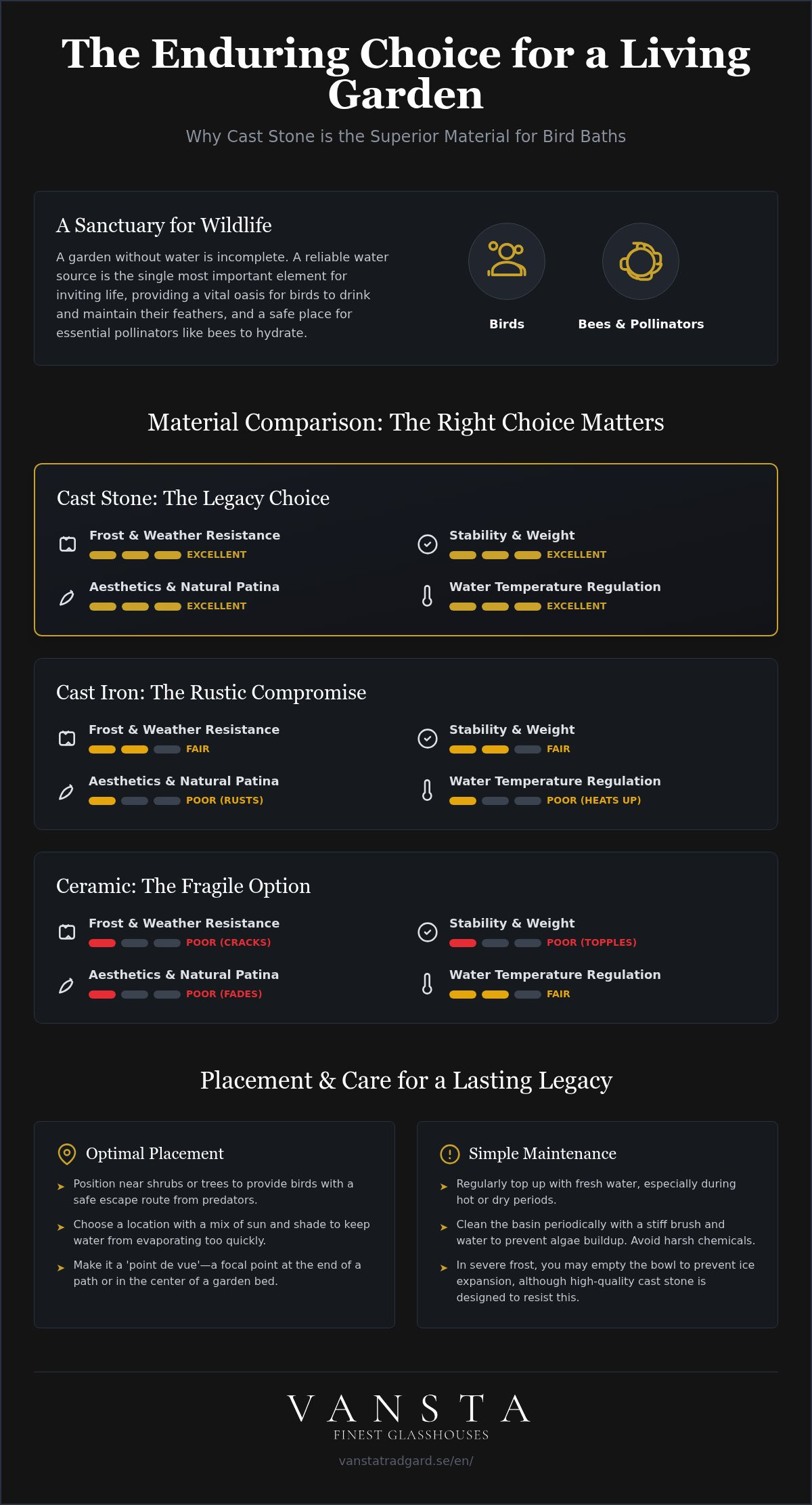
Unlike metallic materials, cast stone has outstanding thermal properties. On scorching summer days, cast iron absorbs heat quickly, which can lead to the water becoming unpleasantly warm for birds. The density and composition of cast stone allow it to act as an insulator, keeping the water cooler and more inviting even during heatwaves. Furthermore, the natural weight of the stone provides unparalleled stability. In the Scandinavian climate, where autumn storms can be merciless, a cast stone bath stands firm without risk of toppling and damaging surrounding plantings or shattering on the ground.
The aesthetic journey of a bird bath in this material is also worth emphasizing. Just as historic cast stone has been used for centuries to mimic and replace natural stone in monumental buildings, these garden sculptures develop a living patina. Mosses and lichens take root in the microscopically porous surface, making the bath appear over time to have grown out of the garden itself. It becomes part of the living landscape rather than a foreign object placed on top of it.
Why Choose Cast Stone Over Cast Iron?
Cast iron is often described as a classic choice, but it requires vigilant maintenance to avoid succumbing to corrosion. Rust can not only affect aesthetics but also risk contaminating the water for birds. Cast stone is practically maintenance-free. It does not need to be repainted or treated against rust; its beauty lies in its ability to age with dignity. It blends naturally among shrubs and next to our Vansta Classic orangeries, where it contributes to an atmosphere of timeless elegance and artisanal quality.
Frost Resistance and the Swedish Climate
One of the most common problems with simpler concrete products or ceramics is that they absorb too much moisture, leading them to crack when water freezes and expands. Haddonstone's cast stone is engineered with a specific material density that minimizes water absorption. This makes them exceptionally frost-resistant, a necessity for enduring Swedish winters without losing their structural integrity. It's about artisanal precision in the mixing and pressing of the material, which distinguishes a genuine premium product from simpler alternatives often sold in mass quantities and rarely surviving more than a couple of seasons.
Choosing the Right Model: Size, Height, and Style
Integrating a bird bath into your garden architecture requires a delicate touch for proportions and balance. It's not just an object placed randomly; it's a component that should speak the same language as its surroundings. When choosing a model of a cast stone bird bath, you should first analyze the scale of your garden. A grand pedestal bath can serve as a vertical axis in an open lawn or as an elegant endpoint to a sightline from your greenhouse. The choice of height, however, is not solely an aesthetic matter. For the garden's winged guests, an elevated bath provides vital security. By lifting the water source from the ground, you create a clear line of sight for the birds, allowing them to spot predators like cats in good time.
To promote a healthy environment, it is important that the model allows for easy cleaning, fully in line with the care guidelines from the Audubon Society that emphasize the importance of fresh water. The surface of cast stone is ideal here; it is smooth enough to be brushed clean yet has the texture required for birds to get a grip. The style should then be chosen with care to reflect the soul of the house. A sleek, minimalist bowl suits a modern villa, while a bath with classic relief patterns and fluted columns becomes a natural complement to a historic setting or a classic orangery.
Pedestal Baths vs. Ground-Level Dishes
The pedestal bath is the aristocrat of the garden. It commands space, requires its own area, and offers a safe haven high above ground-level dangers. On the other hand, a ground-level dish creates a more intimate and forest-like atmosphere, perfect for shyer species that prefer to stay close to the cover of undergrowth. Many garden enthusiasts choose to combine both types to create a dynamic and inclusive environment where different species can thrive on their own terms, while also creating multiple visual levels in the garden space.
Ornamentation and Rich Detail
The beauty of cast stone lies in how the material captures the play between light and shadow. Sculptural details, such as a discreet bird figure on the rim or an intricate relief pattern along the pedestal, become more prominent when the low evening sun sweeps across the garden. These details contribute to the bath being perceived as a work of art even during the months when the water has been emptied for the season. It's about creating a visual harmony that endures, regardless of the season, where every detail in the casting testifies to a craft tradition that does not compromise on quality.
Placement and Care for Optimal Results
Placing a cast stone bird bath in the garden is an act that requires both consideration for wildlife and an eye for spatial composition. It's about finding the subtle balance between the sheltered and the exposed. To create a genuine oasis, the bath should be placed sheltered from the most biting winds, yet maintain an openness that allows birds to have full control over their surroundings. A strategic placement near shrubs is crucial, but maintain a distance of about two to three meters. This gives birds a quick refuge in case of danger, while also preventing cats from using the greenery as a hidden springboard. For smaller species, such as blue tits and robins, you can advantageously create a safe landing strip by placing a few flat natural stones in the bath that break the water surface.
Finding the Perfect Spot
Light plays a major role in both aesthetics and function. By avoiding direct midday sun, the water stays cooler, which is more inviting for birds and simultaneously limits algae growth. Also, consider your own sightlines and how the bath interacts with the home's architecture. There is a special tranquility in being able to observe the bath's spectacle from inside an orangery during a quiet morning. The bath then becomes an extension of the room, a living sculpture that changes character with the light and the visitors who choose to stop by.
Long-Term Maintenance of Cast Stone
The artisanal surface of cast stone requires a gentle hand to preserve its beauty through the decades. When cleaning, avoid high-pressure washers and strong chemicals that can damage the stone's structure or poison the water for small visitors. A soft brush and clean water are usually all that is needed to keep the surface fresh. When it comes to moss and lichen, it's an aesthetic trade-off; many consider this natural patination to be what gives a cast stone bird bath its soul and historical gravitas. If you prefer a cleaner surface, you should brush the stone regularly before vegetation takes too deep a hold. In persistent sub-zero temperatures, it is safest to empty the bath. Although the material is frost-resistant, the expansion of ice in a filled bowl can create unnecessary stress on the structure. See our curated range of Haddonstone garden decor to find models that combine architectural strength with practical durability.
Discover Vansta Trädgård's Exclusive Collection
Choosing a bird bath from Vansta Trädgård is to invite a piece of ancient British garden history into your own outdoor environment. We have carefully curated a selection that represents the pinnacle of craftsmanship and design, where every cast stone bird bath carries its own story of quality and permanence. Through our exclusive collaboration with Haddonstone, we can offer objects that not only serve as practical water sources but as true works of art. These sculptural elements are created to be central, whether placed in a strictly clipped parterre or as a secret discovery in a lush woodland garden.
Every detail in our collection is the result of a craft tradition that prioritizes substance over fleeting trends. When you invest in an element of this dignity, you create a visual bridge between your home's architecture and nature's wild beauty. It is a complete solution for the discerning garden owner who understands that true luxury lies in materials that age with grace and never need to be replaced.
Haddonstone: A Guarantee of Quality
Since its inception in 1971, Haddonstone has established itself as the world's foremost manufacturer of architectural cast stone. Their unique method of blending crushed limestone with specialized binders results in a material that possesses the weight and texture of natural stone, but with superior detail. Every cast stone bird bath is hand-pressed into unique molds, giving each individual piece a unique character. It is this artisanal precision that allows the stone to weather so beautifully; over the years, a patina develops that makes the bath appear to have belonged to the garden for centuries. This is a durability that extends over generations, making the investment a future legacy.
Invest in Your Outdoor Environment
We invite you to explore our world of timeless elegance. Whether you are looking for a sleek modern bowl or a richly decorated pedestal bath, you will find it in our collection of bird baths and bird tables. Every order is handled with the utmost care and expertise, to ensure that your investment reaches you in perfect condition and becomes the centerpiece of the garden you have dreamed of.
Create a Living Legacy in Your Garden
Choosing a cast stone bird bath is making a decision that extends far beyond the next season. It's about understanding how weight, craftsmanship, and material choice interact to create an environment where both aesthetics and biodiversity can flourish. By prioritizing the handmade quality from renowned Haddonstone, you ensure extreme durability that not only defies the Nordic climate but is also refined by it through a beautiful, natural patination.
Explore our exclusive collection of bird baths and bird tables here
Frequently Asked Questions about Cast Stone Bird Baths
Can a cast stone bird bath stay outdoors all year round in Sweden?
Yes, a high-quality cast stone bird bath can stay outdoors all year round, but it requires some care during winter. The material from Haddonstone is extremely frost-resistant thanks to its high density and artisanal manufacturing. However, we recommend emptying the bowl of water during persistent sub-zero temperatures. The expansion of ice in a filled bowl can create enormous pressure that risks damaging even the strongest construction. By keeping it dry during winter, you preserve its beauty for decades.
How deep should a bird bath be to suit most bird species?
The optimal depth for a bird bath is between 2 and 5 centimeters to accommodate the most species. Most small birds prefer shallow areas where they can stand steadily while drinking or bathing. If your bath is deeper, you can easily place a few flat natural stones in the water that break the surface. These serve as safe landing spots and allow even the smallest visitors to approach without fear of drowning in deeper water.
What is the best way to clean my cast stone bird bath?
You clean your bird bath best with a soft brush and clean water without chemical additives. Avoid strong cleaning agents that can damage the stone's surface or be harmful to birds. If algae has taken hold, a mild solution of vinegar and water can be used, followed by thorough rinsing with clean water. Never use a high-pressure washer. The powerful pressure can erode the detailed surface and destroy the material's natural patina that has developed over the years.
Why do birds not choose my bird bath even though I have water in it?
Placement is often the decisive factor if birds avoid your bath. Birds feel insecure if the bath is too exposed or too close to dense shrubs where cats can lie in ambush. The golden mean is a place with clear visibility in all directions but with protective greenery a few meters away. Furthermore, if the water is dirty or if the edges of the bowl are too slippery, the winged guests will seek out safer water sources.
What is the difference between cast stone and regular concrete?
The difference lies primarily in the material's composition, density, and aesthetic finish. A cast stone bird bath is made from a specific mixture of crushed limestone and binders that are pressed to mimic natural stone with high precision. Regular concrete is often more porous, has a coarser texture, and lacks the detail required for classic garden architecture. Cast stone also ages with a beautiful patina that concrete rarely can match, giving it a timeless feel.
Do I need a foundation for my cast stone bird bath?
A stable and level base is necessary because a cast stone bird bath has significant inherent weight. Without a proper foundation, the bath risks sinking unevenly into the soil or tilting, causing the water to run out. We recommend placing the bath on a flat stone slab or a compacted layer of crushed stone. This ensures that your investment stands firm through both frost heave and strong autumn storms without risking tipping over and damaging the material.
How often should the water in a bird bath be changed?
You should change the water every two to three days to keep it fresh and inviting for the garden's guests. During warm summer days, daily refilling and cleaning may be required as heat accelerates algae growth and bacterial formation. Stagnant, dirty water can quickly become a source of disease among birds. By keeping the water clean, you show care for the garden's ecosystem and ensure that the bath remains a healthy gathering place year-round.
Is cast stone environmentally friendly compared to plastic?
Cast stone is a significantly more environmentally friendly choice than plastic from a long-term perspective. It is a natural material with a lifespan of several generations, unlike plastic products that break down from UV light and risk spreading microplastics into nature. When you choose cast stone, you invest in a product that becomes a natural part of the garden's cycle and never needs to burden the environment as waste. It is sustainability in its most elegant and enduring form.