

Cast stone is not reserved solely for grand estate gardens. Cast stone garden furniture can enhance private gardens, balconies, and public parks when dimensions, weight, and silhouette are selected with careful regard to…
Cast Stone Garden Furniture for Gardens, Balconies, and Parks
13/11/2026
Cast stone is not reserved solely for grand estate gardens. Cast stone garden furniture can enhance private gardens, balconies, and public parks when dimensions, weight, and silhouette are selected with careful regard to the scale and architecture of the setting. In a classical setting, traditional motifs can mirror the architectural character of the residence and grounds. In a more minimalist context, the material can provide a striking architectural contrast instead.
The choice is not simply a matter of aesthetic style, but also of how the space will be inhabited and the atmosphere the pieces should foster. A quiet seating nook for calm afternoons demands a different placement than an alfresco dining area or a public park setting. Here, you will find guidance on balancing scale, function, and the architectural whole, demonstrating how cast stone integrates naturally into both period and contemporary settings. You will also discover advice on cleaning and care, ensuring this noble material remains a thoughtfully preserved architectural anchor in your outdoor environment for decades to come.
Key Takeaways
- Select pieces suited to the site dimensions and intended use, ensuring the architectural expression works just as effortlessly on a balcony as in a grand garden or park.
- Compare cast stone with concrete, natural stone, and metal based on material character, tactile quality, and synergy with the surrounding architecture.
- Straightforward routines for cleaning and care help preserve the enduring character and natural patina of the furniture over time.
- Strategic placement and careful consideration of moisture and frost cracking are essential factors when specifying cast stone outdoors.
- Balustrades and columns in cast stone can provide outdoor living spaces with a defined architectural frame, grounding them firmly within a classical tradition.
Furniture for Gardens, Balconies, and Parks
Cast stone furniture lends a garden, balcony, or park an unmistakable visual anchor. Choose forms and placement tailored to how the space will be experienced day to day.
Furniture for Dining and Lounge Areas
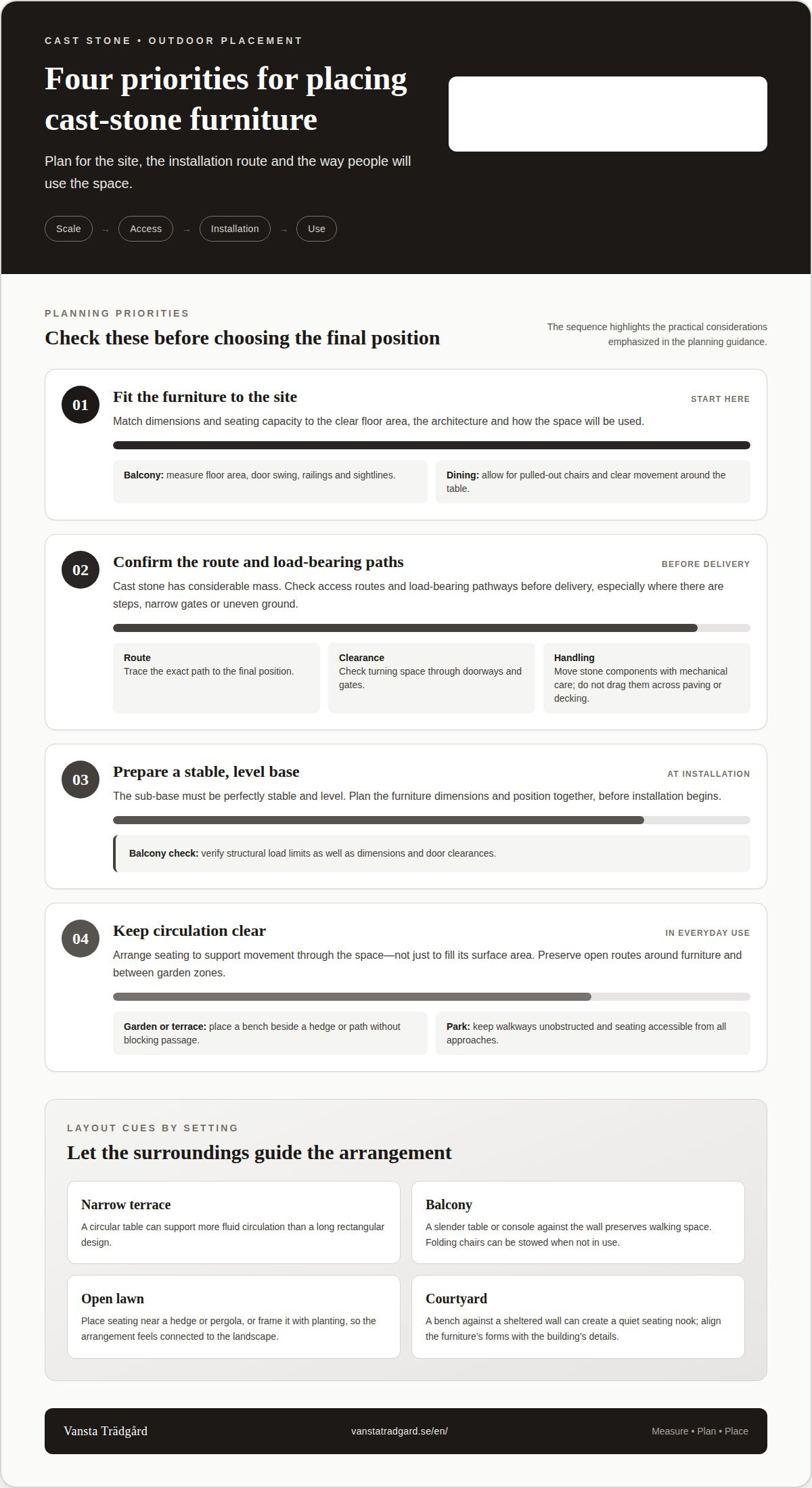
In a dining space, tables and chairs must provide generous clearance for both dining and fluid movement. Measure the table footprint and plan for pulled-out chairs with sufficient circulation space. This ensures passages and tight corners are accounted for during the planning stage. A solid cast stone bench can also gather seating neatly around a generous dining table.
For a lounge setting, low seating arrangements encourage relaxed conversation and repose. For example, position benches opposite one another with a low stone table within easy reach. In a park landscape, the same configuration can establish a serene, sheltered meeting point along a walkway. Ensure the aesthetic expression of the furniture harmonises with surrounding plantings, stone facades, and garden pathways.
Finishes and Material Selections
Traditional linseed oil paint gives hand-finished furniture vibrant colour and an authentic artisanal finish. Select hues that complement the joinery, gates, or window shutters of the main residence. A muted, earthy tone can effortlessly tie into a historic garden, whereas a bolder shade serves as an intentional architectural accent.
Untreated pine furniture offers an understated, organic look that sits naturally against timber decking, raised beds, or an informal terrace. Consider how natural wood patinates and requires care over the seasons. Comparing material samples against paving and masonry in natural daylight will make contrasting textures and subtle colour shifts far easier to evaluate.
Scale, Siting, and Installation
Achieving the right scale depends on the seating capacity required, circulation corridors, and the overall proportions of the site. Carefully measure the clear floor area of a balcony, noting swing doors, railings, and primary sightlines. Folding chairs help preserve space when not in use. In a garden landscape, a bench positioned beside a manicured hedge or gravel path provides rest without obstructing passage.
Plan furniture dimensions and siting simultaneously. Cast stone possesses considerable mass, making it vital to inspect access routes and load-bearing pathways prior to delivery. Steps, narrow garden gates, and uneven terrain complicate transport, increasing the risk of impacts or structural damage. The sub-base must be perfectly stable and level, and the stone components should always be manoeuvred with mechanical care rather than dragged across paving or timber decking.
On a balcony, structural load limits, dimensions, and door clearances are particularly critical. Verify turning radii through doorways and outline the exact route for installation. In public parks, placement must leave walkways open and unobstructed. A well-considered plan eliminates unnecessary heavy lifting and ensures the furniture feels effortless to use.
Garden Furniture for Different Outdoor Spaces
A furniture ensemble should mirror the architectural footprint of an outdoor room, not just its surface area. On a narrow terrace, a circular table often creates more fluid circulation than a long rectangular design. An expansive lawn can accommodate both a dedicated dining setting and a secluded seating corner. Begin by mapping how people move between the house, seating areas, and the various zones of the garden.
In a courtyard bounded by historic brick or lime render, the tactile dialogue between materials becomes exceptionally prominent. A bench nestled against a warm wall establishes a sheltered reading niche, while a table set beside kitchen French doors simplifies alfresco entertaining. Choose pieces that echo fine architectural motifs from the facade, such as rounded curves echoing arched windows or clean, restrained profiles beside smooth render.
An open lawn often requires a deliberate architectural anchor so the seating does not appear adrift. Position a table adjacent to a beech hedge or wrought iron pergola, aligning the chairs toward a scenic vista or the setting evening sun. A more enclosed arrangement works beautifully tucked near dense borders, where layered foliage naturally frames the retreat.
On a balcony, railings, access doors, and available floor area dictate the layout. A slender console or table set against the wall preserves precious walking space compared to central placement. Folding chairs can be neatly stowed away after entertaining, while a low bench functions both as seating and as a display ledge. Tailor the mass and footprint of the furniture to the balcony's specific spatial conditions.
Within a park setting, siting must facilitate both calm rest and unhindered pedestrian flow. A bench set alongside an avenue enables visitors to pause without encroaching on the path. Placed beneath the canopy of a mature tree, stone furniture offers cooling shade and an intuitive focal point. Maintain ample clearance around the seating so it remains effortlessly accessible from all approaches.
Long-term durability is shaped by both material craftsmanship and everyday exposure. On an exposed terrace, sunlight, rainfall, and fallen leaves will guide how surfaces age, whereas a sheltered courtyard offers different microclimatic conditions. Always evaluate the aesthetic weight of the furniture alongside the property’s architectural vernacular and seasonal maintenance requirements. For a classical dining area or an elegant lounge, outdoor furniture from Oxleys offers refined inspiration for integrating timeless furniture with the garden landscape as a whole.
How Does Cast Stone Compare with Concrete, Natural Stone, and Metal?
Cast stone and concrete are both cast, mineral-based materials, yet they differ significantly in aesthetic refinement, aggregate composition, and surface texture. A classical cast stone bench frequently features elegant mouldings, crisp arrises, or refined ornamental relief. A utilitarian concrete bench typically expresses a more austere, modernist simplicity. Always appraise the finished surface texture and detail of the piece, rather than relying solely on the generic material term.
Natural stone, such as granite or limestone, possesses a distinct geological provenance. Unique veining, fossil inclusions, and natural tonal variations ensure that each tabletop or solid plinth is singular. In contrast, cast stone is carefully compacted into handcrafted moulds, allowing for precise architectural uniformity and repeatable classical motifs. In a formal garden setting, a moulded cast stone seat can directly mirror the decorative stonework and mouldings of the residence.
Metal introduces an entirely different aesthetic quality. A wrought iron or cast aluminium chair typically features slender, openwork profiles that occupy far less visual space than solid masonry. This lightness is ideal around a delicate bistro table or on a compact balcony, where transparent forms preserve an open sense of airiness. Cast stone is chosen when a piece is meant to stand as a permanent, grounded architectural anchor within the landscape.
Weight significantly governs both installation and versatility. A heavy stone dining table requires a solidly engineered, frost-free base and careful initial placement. A lightweight metal chair is effortlessly relocated between dining terrace and lawn. Solid natural stone blocks can also be exceptionally heavy, though dimensions and tactile finishes vary by masonry treatment. It is wise to assess tabletop, pedestal, and seating components independently.
Maintenance requirements depend heavily on material porosity and surface contours. A flat concrete surface is quick to sweep clean, whereas deep classical mouldings where wet leaves gather require seasonal attention. Porous natural stone can absorb moisture and organic staining differently than dense, sealed surfaces. Metal furniture features welded joints and filigree where water can linger. For this reason, consider the longevity of the entire construction.
Specify materials according to the atmospheric mood and functional resilience you desire. Cast stone imparts a classical, time-honoured permanence, while natural stone offers the organic drama of geological strata. High-performance concrete suits crisp architectural minimalism, and fine metalwork creates light, graceful silhouettes around an alfresco dining group. Review material swatches against masonry walls, garden paving, and balustrades before confirming your overall scheme.
If the surface character of concrete forms a cornerstone of your design, consider how it will develop over years of exposure. The raw concrete surfaces from Grafitgrå develop an attractive organic patina as they weather. This gradual surface transformation becomes an intrinsic design asset rather than an imperfection to conceal. Consider whether this developing patina aligns harmoniously with your facades, flagstone paving, and surrounding furniture. Note also the aesthetic interplay between concrete and any integrated metal framework, as this hybrid design reads very differently from an all-stone or all-concrete installation. Evaluate silhouette and textural finish based on the architectural atmosphere you wish to curate.
Grafitgrå's outdoor collections are crafted from concrete with hot-dip galvanised steel underframes, specifically engineered to withstand year-round outdoor exposure without requiring winter indoor storage. They are built to endure harsh climatic extremes. This resilience is a valuable benchmark when contrasting them with furniture lines intended for seasonal storage. Furthermore, their indoor and outdoor concrete collections share an identical design language, allowing you to create seamless transitions between interior living spaces and outdoor rooms. Let siting, patina preferences, and architectural cohesion guide your selection among cast stone, concrete, natural stone, and metal.
How to Clean and Maintain Cast Stone Garden Furniture
A simple maintenance routine keeps stone surfaces free from decaying leaves, soil, and airborne pollen. Begin by brushing away dry debris from seats, tabletops, and joints. For modern concrete furniture, such as designs from Grafitgrå, gentle dry brushing serves as an ideal initial step; whether water is advisable depends on any surface treatments applied. This same restrained approach is an excellent baseline for cast stone pieces.
Always work systematically from top to bottom. Employ a soft natural bristle brush around carved profiles, ornamental relief, and joints where organic matter tends to collect. Rinse with clean water if dry brushing proves insufficient and if the material’s surface finish permits. Ensure that rinse water does not pool in recesses, paying particular attention to horizontal tabletop surfaces and decorative rims.
Address organic stains promptly. Fallen leaves, acorns, and soil left sitting on a damp bench can leave noticeable tannin marks, particularly under continuous moisture. Gently lift away debris and brush the area clean before rinsing with lukewarm water. Never use wire brushes or aggressive high-pressure washers, which can etch the delicate surface matrix of cast stone.
Inspect your garden stonework thoroughly during seasonal clean-ups. Check for hairline fissures, shifted components, and the condition of mortar joints. Examine the sub-base beneath: if a heavy table pedestal has settled unevenly, structural stress can be distributed incorrectly across the stone. Re-level the base when necessary, and keep the perimeter around the footings clear of encroaching weeds and decaying mulch.
Routine brushing during the growing season substantially reduces the need for deeper seasonal cleaning. After autumnal gales, twigs and wet foliage quickly gather around bench supports and between seats and backrests. Remove this litter before it compacts into a moisture trap. In shaded woodland clearings or sheltered corners, monitor for lichen and moss growth, cleaning gently when required to preserve the stone's integrity.
Prepare your furniture for winter by carrying out a thorough autumn clean and allowing the stone to dry completely. Store loose cushions and decorative accents indoors to prevent trapped moisture against the stone. If the piece borders flower beds, clear away damp compost and leaf mould around the plinth. Regular, gentle inspections make it straightforward to catch minor issues early, maintaining the distinguished character of your stonework year after year.
Tailor your cleaning method strictly to the surface finish and structural details of the furniture. Begin with a soft dry brush, introduce clean water only when appropriate for the material, and avoid harsh mechanical abrasion. This measured approach serves an unadorned bench as well as an intricately carved table, making seasonal preservation effortless.
How to Protect Cast Stone Furniture from Frost and Weather
Persistent moisture and repeated freeze-thaw cycles represent the greatest threats to outdoor stonework. If moisture penetrates unsealed pores and freezes, catastrophic frost damage can occur. For this reason, regularly inspect tabletops, carved bowls, and decorative joints where standing water might accumulate. Ensuring adequate natural drainage prevents water pooling on the stone.
Microclimate and placement dramatically influence how stone weathers through northern winters. Positioned beneath an architectural roof overhang, a bench receives far less direct snowfall and rain than out on an open lawn. A sheltered alcove also limits the accumulation of damp autumn leaves. At the same time, verify that the piece sits on a free-draining stone or gravel foundation, ensuring ground moisture cannot wick up into the base.
Prior to the onset of sub-zero temperatures, carry out a structured winterisation process:
- Brush away all leaves, soil, and loose organic matter.
- Rinse away stubborn grime where appropriate and allow the stone to dry thoroughly.
- Clear all drainage holes and verify that surface water sheds freely.
- Store loose outdoor cushions and remove decorative items resting directly on the stone.
If you choose to cover your stone furniture, select a breathable, tailored cover that does not sit flush against the entire stone surface. Consistent airflow is essential to allow residual humidity to evaporate, whereas non-breathable plastic tarpaulins trap condensation, creating severe frost risks. Ensure the cover is tensioned so rainwater cannot sag into pooling pockets on tabletops, and secure it firmly against winter storms.
Autumn and winter weather can fluctuate dramatically. Promptly remove wet, rotting leaves from seats and table surfaces, especially where they collect in carved mouldings and corners. Following hard frosts, allow the stone to thaw naturally before gently brushing away surface grime. Never strike frozen stone or use metal scrapers to clear ice.
Conduct a thorough architectural survey once spring arrives. Inspect arrises, mortar joints, and plinths for micro-cracks, settlement, or signs of standing water. If a table has tilted over the winter due to ground movement, re-level the base immediately to ensure weight is evenly distributed. Ensure creeping groundcover and turf are trimmed well back from the base of the stone to prevent prolonged dampness.
Quality cast stone furniture should stand proudly as an enduring sculptural feature in the winter landscape. By keeping surfaces clean, maintaining unhindered drainage, and preventing trapped moisture, you can effectively eliminate climate-induced wear. Adapt your protective measures to the site: an exposed, windswept terrace requires very different seasonal care than a sheltered garden veranda.
When curating garden furniture, evaluate how exposed the setting will be year-round, rather than judging a piece solely in ideal summer weather. Leading garden retailers like Plantagen frequently emphasise durable outdoor furniture engineered for severe weather. For fine cast stone, this means siting and maintenance protocols must be tuned directly to the local microclimate. A piece standing in an open meadow requires a different level of vigilance than one sheltered beneath a veranda, even though flawless drainage remains vital in both locations. Make proactive inspections an effortless habit rather than waiting for spalling or cracking to manifest. Watch for spots where moisture or debris linger, and ensure covers never create trapped pockets of humidity. During dramatic weather shifts, a brief walk-through will confirm whether minor adjustments are required. Always treat architectural stone with care. Avoid creating water traps, and your stone furniture will grace your grounds through every season with timeless elegance.
Vansta Trädgård: Balustrades and Columns in Cast Stone
Vansta Trädgård crafts bespoke balustrades and columns in cast stone designed to frame the wider architecture of your garden. These structural elements can delineate a grand terrace edge, frame a formal flight of garden steps, or lend dramatic definition to level transitions across your landscape. Once your seating arrangements are established, these classical elements complete a harmonious architectural ensemble.
A classical balustrade is ideal when a boundary requires defined visual containment. Along a raised patio, it articulates the outdoor room, drawing an unbroken stylistic line back to the main house. Architectural columns can serve as striking freestanding pedestals, support an overhead pergola, or form part of a balanced classical vista. Proportions should always be chosen with reference to the scale of the residence and adjacent building materials.
Consider how these cast stone features will interact with existing architectural sightlines. For a period manor house, a classical balustrade can echo the window architraves or entrance portico. In a garden enhanced by a glass orangery, stone columns elegantly reinforce the structural threshold between living space and formal garden borders. Let the stonework support and elevate the home’s architecture rather than compete with it.
Map out the comprehensive design before committing to installation. Draw the terrace edges, steps, garden paths, and primary furniture groupings on a clear site plan. Mark where the balustrade will run and where terminal piers or columns can serve as focal anchors or garden urn plinths. This spatial planning ensures the composition maintains symmetry, preserves comfortable walkways, and supports everyday outdoor living.
The visual presence of cast stone demands considered proportions. A low garden terrace benefits from a restrained, understated balustrade profile, while a sweeping carriage drive or wide stone staircase can effortlessly carry substantial plinths and rich mouldings. Study how natural sunlight and directional shadows play across the carved mouldings and ornamental relief throughout the day, ensuring the composition looks captivating from both interior rooms and the garden grounds.
Balustrades and columns provide outdoor environments with the permanence and architectural gravitas that furniture alone cannot achieve. They unite stone terraces, facades, and distinct garden rooms into a cohesive whole without compromising functionality. Contact Vansta Trädgård to explore bespoke balustrades and columns in cast stone for your architectural grounds.
Shaping the Next Step for the Whole Environment
When planning cast stone garden furniture, positioning your seating can become the catalyst for transforming the wider landscape. Identify the key vistas, level changes, and gathering zones you wish to celebrate. An exceptional outdoor space is achieved when noble materials, classical proportions, and architectural details engage in an effortless dialogue with the residence.
If your master plan includes a bespoke garden structure, its placement and architectural proportions should be coordinated seamlessly with your stone elements. Vansta Orangeries, an exclusive glasshouse from THE ROSE greenhouse collection, or a handcrafted Vansta Classic orangery can form the centrepiece of this cohesive design. In such an ensemble, furniture, architecture, and garden layout become enduring expressions of refined craftsmanship.
Take time to define your lifestyle needs, aesthetic preferences, and spatial circulation before breaking ground. This provides a clear, uncompromising foundation for curating an outdoor sanctuary that feels both deeply personal and historically grounded. Contact Vansta Trädgård to take the next step in realizing your garden vision. With a clear architectural direction, you can create a landscape to treasure for generations.