

Greenery is an integral part of interior furnishing, not merely a backdrop behind chairs and tables. Furniture for gardens and orangeries in teak and cast iron can be seamlessly paired with planters, climbing plants, and…
Garden and Orangery Furniture in Teak and Cast Iron
23 ott 2026
Greenery is an integral part of interior furnishing, not merely a backdrop behind chairs and tables. Furniture for gardens and orangeries in teak and cast iron can be seamlessly paired with planters, climbing plants, and refined decorative details. The warm organic presence of timber and the distinct silhouettes of cast iron balance the softer contours of botanical life.
It is easy to appreciate the appeal of creating an inviting sanctuary devoted to both cultivation and social gatherings. Yet the placement and materials of your furniture fundamentally shape how the space is experienced. Thoughtfully curated seating transforms the orangery into a functional setting for dining and quiet retreat, while complementary furniture and plantings outside the glass extend an enticing invitation into the garden.
Below, explore guidance on selecting and positioning teak and cast iron furniture, harmonising materials and tones with surrounding greenery, and pairing seating with garden urns and architectural details. We also examine how to establish a coherent, seamless aesthetic both inside the orangery and across the adjoining grounds.
Key Takeaways
- Select seating arrangements based on how the orangery will be used, allowing the space to comfortably accommodate both entertaining and plant cultivation.
- Allow the warm grain of teak and the defined lines of cast iron to interact harmoniously with the textures, colours, and forms of your plants.
- Create a fluid transition between the orangery and the open garden by positioning furniture and architectural plantings in deliberate dialogue with one another.
- Incorporate planters, climbing flora, and refined accessories to frame your seating naturally.
- Balance spatial proportions and furniture utility when deciding between a versatile dining layout and an intimate lounge area.
1. Flexible Seating and Socialising in the Greenhouse
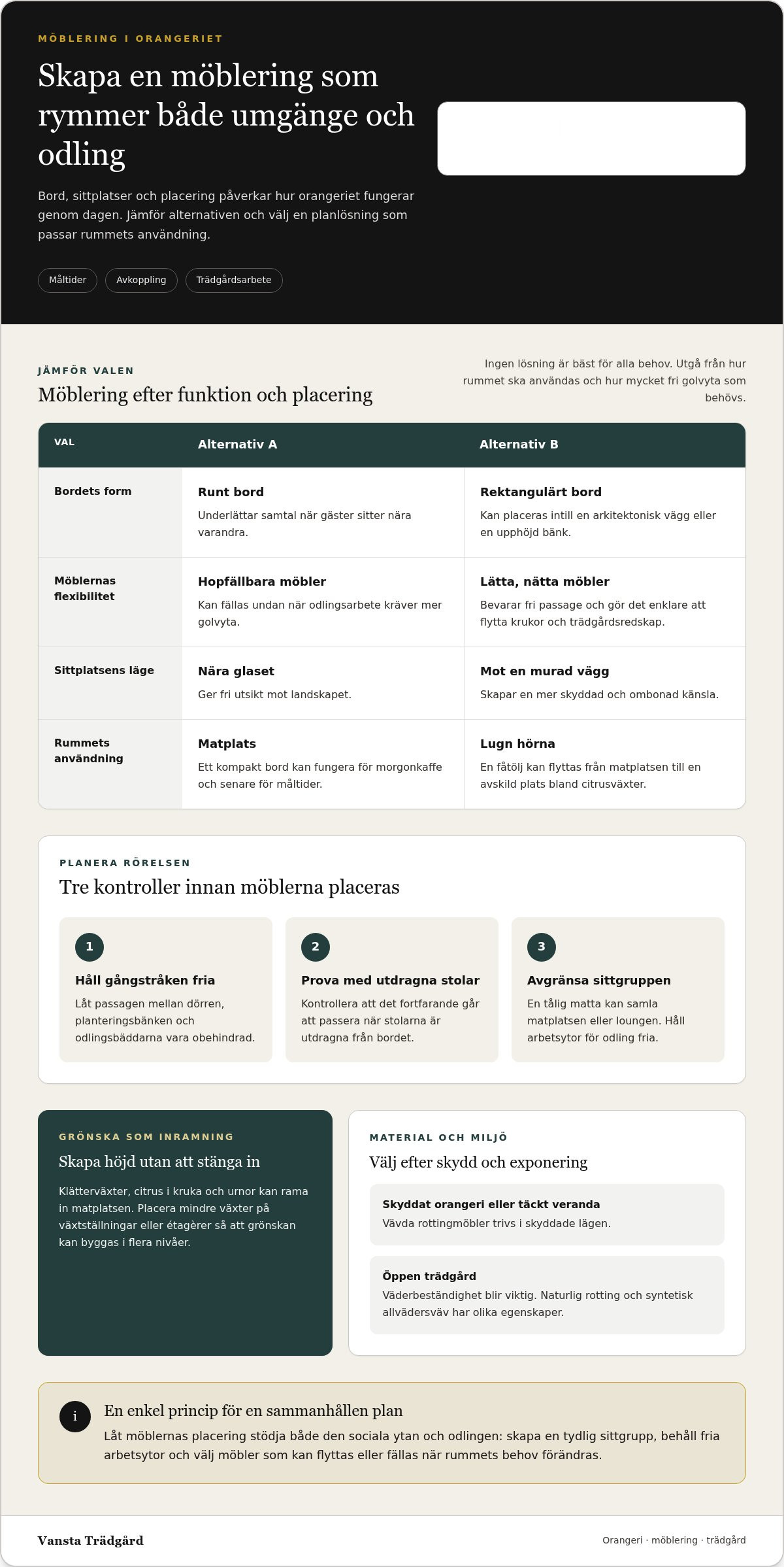
Begin by considering how the glasshouse is utilised throughout the day. A compact dining ensemble can serve for morning coffee and later transform into a tranquil nook for reading. Folding furniture makes it effortless to shift between social entertaining and dedicated gardening tasks. Slender chairs and an understated table preserve ample clearance when planters, pots, or gardening equipment need to be moved.
Arrange seating carefully so it does not obstruct primary circulation paths between the doorway, potting benches, and planting beds. A round table facilitates effortless conversation when guests sit close together, whereas a modest rectangular table sits neatly against an architectural wall or adjacent to a raised bench. Always evaluate the layout with chairs pulled out to ensure unhindered passage.
Discover how classic teak outdoor furniture can be restored to its full beauty in this video:
A textile rug anchors the seating group while softening the harder surfaces of brick, stone, or tiled greenhouse flooring. Select a durable, low-maintenance weave tailored to indoor-outdoor living, especially where garden soil and moisture are routinely tracked inside. Position the rug beneath tables and chairs while keeping working potting areas clear. This creates a distinct visual boundary between dining and horticultural pursuits.
Lush foliage can frame the dining space without visually walling it off from the rest of the interior. Climbers, potted citrus trees, and ornamental urns introduce dynamic vertical tiers, guiding the eye gently toward the lounge area. Place smaller specimens on plant stands or étagères so verdant foliage cascades from floor to eaves, all while keeping tabletops open for daily dining and entertaining.
A well-appointed greenhouse welcomes dining and entertaining well into the autumn, serving far beyond basic seasonal propagation. Seating placed directly against the glass affords unbroken vistas of the landscape, whereas a dining arrangement against a masonry wall provides a sheltered, cocooning atmosphere. During crisper shoulder seasons, heated growing beds support tender crops, allowing you to enjoy early produce weeks ahead of schedule.
Opt for pieces that offer genuine functional versatility. A classic armchair can be carried effortlessly from the dining table to a secluded corner among fragrant citrus trees. A folding table liberates generous floor space whenever expansive potting tasks require room. Throw cushions and woollen throws introduce tactile warmth and subtle colour accents without distracting from the verdant surroundings.
Folding pieces or lightweight chairs and tables establish a versatile social setting inside the greenhouse. Determine how much floor area you wish to reclaim when gatherings conclude. Foldable designs stow away neatly, while delicate silhouettes provide comfortable seating without overwhelming the interior architecture. Keep the layout refined and evaluate it in practical use: pull out the chairs, set the table, and confirm the living zone feels cohesive. When functional requirements fluctuate across the seasons, furniture that can be easily shifted or folded ensures the glasshouse gracefully balances leisurely repose with practical garden craft.
A resilient, easily maintained rug softens acoustic reflections and anchors the social quarter of the glasshouse. Base its dimensions and placement on the footprint of the furniture so the grouping feels intentionally composed. The rug need not span the entire floor; instead, let it define the perimeter of the lounge and demarcate the transition to adjoining work zones. Position it so it can be adjusted when chairs are shifted or tables folded down, ensuring it remains an asset within a flexible interior scheme.
2. Materials and Colours with a Natural Feel
Low-maintenance outdoor furniture relies on materials crafted specifically for enduring exposure, featuring accessible surfaces and streamlined construction where dirt cannot easily collect. Choose joinery and forms that lend themselves to uncomplicated cleaning. Maintenance demands are also dictated by placement: furniture enclosed beneath glass experiences very different atmospheric conditions than pieces exposed on an open garden terrace.
Natural textures create an organic bridge between the orangery and the exterior landscape. Timber, saddle leather, stone, concrete, linen, and weathered wood contribute tactile variety and understated sophistication. A solid wooden chair set alongside a honed stone surface establishes a compelling textural counterpoint, while breathable linen upholstery brings a light, airy elegance. Prioritise a focused selection of authentic materials, granting each architectural surface a defined role.
Rattan’s botanical origin imbues it with unmistakable distinction. The climbing palm vines harvested for authentic rattan rarely exceed 5 cm in diameter yet can extend up to 200 metres in length. This slender, supple tensile structure harmonises beautifully with leafy plants and architectural glazing, where the woven cane introduces an intricate, filigree pattern. Consider whether the piece will reside under the shelter of the orangery or brave the unshielded elements outdoors.
Woven rattan pieces thrive in protected orangeries and covered verandas. In exposed garden locations, weather resistance must guide your choice, as natural organic rattan and all-weather synthetic weaves exhibit distinct physical tolerances. Inside the orangery, a rattan club chair pairs magnificently alongside a specimen olive tree, while an understated flatweave rug visually grounds the arrangement.
Select the exterior and interior joinery colours of your orangery with the surrounding landscape in mind. Compare potential shades against foliage, brickwork, render, and stone paving prior to making a final decision. A soft, muted tone lets architectural plantings and curated furniture take centre stage, whereas a deeper, heritage tone lends the glass structure a commanding silhouette. Always test colour swatches alongside your teak and cast iron pieces.
Curate intentional contrasts rather than attempting to match every finish uniformly. Natural, light linen against dark patinated timber provides crisp definition, while grey architectural stone echoes the grounded weight of ironwork. Potted citrus and olive trees introduce Mediterranean botanic notes. Echoing a dominant tone through a bespoke planter or accent cushion creates a quiet, visually cohesive whole.
Ground your material choices in practical realities by assessing where each piece will sit. Note which zones encounter direct water, potting soil, or concentrated southern sunlight. Choose finishes that allow effortless routine wiping, supplementing with tailored textiles as required. For inspiration on forms and material integrity, explore furniture for gardens and orangeries to observe how varying profiles converse with lush greenery.
Honest materials such as leather, timber, stone, concrete, linen, and driftwood infuse the orangery with authentic outdoor character. Concentrate on crafting a coherent aesthetic direction rather than integrating every texture at once. A disciplined primary tone holds the ensemble together, leaving secondary surfaces to provide subtle tension. For instance, pairing timber and natural stone adds rich visual depth to a seating group without requiring monochromatic uniformity. Always weigh how material textures interact with plant leaves and architectural glazing. A measured palette lets specimen plantings and artisanal craftsmanship shine.
Evaluate your material combinations visually before finalising any layout. Place finish samples side by side, observing them in shifting daylight alongside the existing palette of your property. If a particular surface dominates excessively, temper its footprint and introduce a calmer grounding element. Ensuring that each material feels deliberate and that transitions between textures are natural creates a timeless dialogue between the interior glasshouse and the natural landscape.
3. Teak and Cast Iron Furniture
Teak and cast iron introduce two distinct design languages. Teak delivers an expressive grain and warm tactile presence, while cast iron brings structural permanence and sculpted, architectural lines. Together, these complementary materials yield a balanced composition—such as an artisanal timber table complemented by sculpted metal dining chairs. Proportion is essential: an ornate, substantial cast base requires a tabletop with equivalent visual and physical weight.
Which outdoor materials withstand moisture and fluctuating weather best? Teak and cast iron are celebrated for outdoor longevity, yet they respond to ambient moisture in distinctly different ways. Teak gradually patinates to a distinguished silver-grey, while ironwork relies on protective, durable surface coatings to resist oxidation alongside regular inspection.
The organic patina of teak evolves based on weathering and maintenance routines. This natural maturation enhances the furniture’s charm, particularly when framed by lush foliage and stone paving. The dark, graphic finish of cast iron offers a bold visual contrast against crisp linen textiles and vibrant foliage. Before positioning your furniture, evaluate the pieces against the orangery’s masonry, flagstones, and structural glazing bars to ensure the scale feels grounded rather than visually cumbersome.
Metal finishes directly influence durability and maintenance ease. Inspect joints and the base of chair legs to ensure moisture cannot pool in crevices. Water and potting compost can mark an untreated timber tabletop; resting planters on protective saucers preserves the surface beautifully. Position all furniture so legs do not sit in standing water or damp corners.
When assessing heritage furniture for gardens and orangeries, it is far more discerning to evaluate raw material pedigree, joinery craftsmanship, and site-specific suitability than brand labels alone. A maker’s stamp cannot substitute for how teak and cast iron will genuinely perform and feel within your specific architectural setting.
Plan dimensions by balancing table size, chair seat depth, and unobstructed walkways. Measure your available floor footprint, map out the layout, and verify that dining chairs pull out comfortably without hitting glass panes. Ensure seat heights correlate ergonomically with tabletop heights so arms rest comfortably and legroom remains generous. Testing the layout with existing chairs can provide instant clarity.
In a smaller orangery, an open-profile, filigree cast iron base leaves more floor visible, creating an illusion of greater volume compared to bulky, solid-sided alternatives. Conversely, an expansive teak dining table provides a warm, substantial anchor near lush botanical borders or an integrated greenhouse brick wall. Tailor your selection to your daily lifestyle: assess whether the furniture will be frequently repositioned, how close it sits to irrigation sources, and whether it serves formal dining or tranquil contemplation.
4. Garden Furniture and Greenery Outside the Greenhouse
Placing an outdoor seating group immediately adjacent to the greenhouse extends the living area out into the open garden. A dining table near the double doors facilitates outdoor serving, while a freestanding garden bench set further back provides an idyllic vantage point to admire the glazed architecture. Maintain an unhindered circulation route between the doorways and garden pathways.
How do you best protect garden furniture from rain, harsh sun, and winter conditions? Clean surfaces according to their material needs, utilise breathable covers that prevent trapped moisture, and store soft cushions in dry quarters. As winter approaches, furniture not rated for year-round sub-zero exposure should be relocated to sheltered storage.
A thoughtful layout anchors the greenhouse directly to its surrounding landscape beds. Flank the primary entrance with matching cast stone planters, and train a climbing rose or clematis across an adjacent masonry wall or architectural trellis. Curated garden furniture combined with purposeful border plantings around the glass structure makes the entire setting feel hospitable without obscuring fine architectural details.
Introduce variety through layered planting heights. An ornamental small tree provides comforting vertical shade beside a seating area, while groundcovers soften transitions between stone paths and flower borders. Feature urns are invaluable where ground space is constrained or where an architectural focal point is required. Always allow sufficient breathing room for mature plant growth and easy garden maintenance.
Match outdoor furniture materials to the degree of site exposure. Furniture beneath a pergola or roof overhang receives far less driving rain than pieces placed on an open, unsheltered flagstone patio. Position teak dining sets and cast iron benches with drainage in mind, ensuring feet do not rest in areas where rainwater gathers. Opting for modular or easily movable groupings grants ultimate flexibility as sunlight and entertaining needs shift across the seasons.
Align furniture palettes and lines with the surrounding home architecture. Mirror the dark frames of the glasshouse within the iron framework of your chairs, or select honey-toned timber that complements timber cladding or warm brickwork. A generous, simple stone bench nestled beside a herbaceous border delivers a calm, unified feel compared to a scattering of disparate smaller chairs. Keep the core palette serene, allowing seasonal blooms to provide expressive highlights.
Incorporate evening lighting and sightlines into your design. Angling an armchair toward a lush perennial border invites intimate immersion in the garden, while a table stationed near the greenhouse doors streamlines alfresco dining. Consider how the arrangement reads when viewed from within the main residence. Clear, deliberate connections between patio, glasshouse, and lawn create a harmonious, legible estate.
To achieve a cohesive result, mark out seating footprints on your terrace prior to repositioning heavy urns or furniture. Review circulation clearance, daylight patterns, and natural drainage slopes. Once verified, introduce your chosen bench, low table, or classical garden urn. In this way, your furniture plan evolves naturally from the established landscape structure rather than competing against it.
5. Which Furniture Is Best Suited for Gardens and Orangeries?
Clarify the core ambitions for the space: long convivial dinners, horticultural cultivation, or private restoration. In a compact glasshouse, a tailored café table can nestle close to a staging bench, paired with a reading chair set against the glass. Even modest square footage can elegantly host dining, specimen plants, and artful objects when every element serves a defined purpose.
For entertaining, an expansive refectory-style dining table paired with chairs that slide cleanly beneath ensures fluid circulation. In an orangery designed for grand hospitality, an outdoor kitchen or serving credenza elevates the dining experience. Ensure adequate buffer space between the dining table, exterior doors, and culinary prep stations, allowing guests and hosts to move without hindrance.
Incorporate an upholstered daybed if you seek an unexpected sanctuary for rest within the greenhouse. Align it along a solid wall with an unobstructed perspective across the garden and interior foliage. Because a daybed occupies a larger footprint than a standard armchair, it functions best where plant staging areas are clearly compartmentalised.
Substantial interior pieces, such as curated open shelving or a deep sofa, can find an exquisite home inside a well-ventilated orangery. The protected glass envelope shields materials from harsh sub-zero weather, creating possibilities that open patios cannot accommodate. An architectural bookcase can display terracotta pots, botanical volumes, and hand-blown glass, while a lounge sofa lends the room the relaxed grandeur of an outdoor garden salon.
Harmonise furniture proportions with the scale of the structure. A petite glasshouse will feel overwhelmed by an oversized sofa, whereas a sculptural bench preserves openness and sightlines. In a stately orangery, a commanding central table becomes a magnificent visual anchor. Mapping furniture onto an architectural floor plan prior to installation guarantees effortless spatial harmony.
Textiles introduce bespoke character and comforting softness. Accent pillows can draw out tones from flowering exotics or aged terracotta, while a pure wool blanket offers welcome warmth on crisp evenings. Keep textiles stored nearby in a woven chest or on low shelving, readily accessible when evening calls.
Cultivate balance between decorative furnishing and flourishing horticulture. Position a comfortable armchair beside a flourishing fig or sweet olive tree, yet ensure clear access for watering and pruning. A compact flatweave rug delineates a reading retreat, while pristine stone pathways alongside dining tables facilitate seamless hospitality. Tailor every piece to the architectural character and lived purpose of the space.
To explore pieces tailored to diverse settings, you can explore furniture for gardens and orangeries and discover designs that complement your vision. Start with accurate spatial measurements, decide between an active dining zone or a peaceful lounge, and complete the setting with architectural accessories that elevate everyday living.
Vansta Trädgård: Vansta Orangeries
Vansta Trädgård creates bespoke Vansta Orangeries for those seeking to unite serious horticultural cultivation, luxurious entertaining, and classical architecture in the garden. When designing an orangery, furniture layout forms an inseparable part of the architectural vision. The building's geometry, daylight exposure, and visual dialogue with the main residence dictate how seating and lush botanicals interact.
Vansta Classic orangeries and greenhouses provide inspiring architectural baselines crafted to enhance unique properties and lifestyles. Furthermore, THE ROSE greenhouse collection offers distinguished alternatives when planning how glazed structures meet historic or contemporary gardens. Through cohesive architectural planning, defining interior functions and bespoke furnishings becomes an effortless pleasure.
Visit vanstatradgard.se to explore Vansta Orangeries and discover timeless inspiration for your own architectural garden project.
Shape an Environment That Endures Beautifully Over Time
The primary consideration is envisioning how your garden spaces will be lived in, rather than simply how they appear in photographs. Do you desire a gathering place for unhurried dinners, an intimate library sanctuary, or an elegant architectural bridge connecting interior living to landscaped grounds? Your answer will clarify the exact proportions, materials, and functional qualities your furniture requires.
When curating furniture for gardens and orangeries, ensure the integrity of the materials harmonises with both the residential architecture and surrounding garden plantings. Capture ideas in a measured sketch, evaluating sample finishes and structural forms directly on site. This disciplined approach ensures that every addition resonates with the existing surroundings before broader exterior styling begins.
Discover inspiring outdoor furniture for the garden to establish a timeless aesthetic foundation. A masterfully furnished estate takes shape gradually, creating a welcoming backdrop for both everyday relaxation and memorable entertaining. Allow your garden sanctuary to unfold at its own deliberate pace.
Frequently Asked Questions About Orangery Furniture
Can these pieces be paired with other orangery accessories?
Yes, garden and orangery furniture pairs effortlessly with accessories that enhance the room's function and architectural character. For example, a cast iron seating group can be framed with classical Haddonstone planters, where lush greenery contributes height, colour, and texture. Allocate a distinct place for each feature so decorative objects never clutter circulation or distract from functional seating. Echoing materials or patinas across planters, furniture frames, and architectural fittings creates a cohesive, stately atmosphere.
What should I inspect and verify prior to purchasing?
Verify exterior dimensions, material specifications, and recommended exposure levels before making your investment. Measure door widths, threshold clearances, and interior passages—not just the intended final footprint within the orangery. Examine structural joinery, welds, leg attachments, and feet, especially if pieces will be moved between indoors and outdoors. If pairing armchairs with an existing dining table, carefully compare seat height against the table apron to ensure generous ergonomic comfort.
What defines high-calibre orangery furniture?
True orangery furniture strikes an impeccable balance between functional durability and refined architectural elegance. A substantial dining table invites social gatherings, while an ergonomic armchair can form an intimate private haven. Glazing, botanical foliage, and residential masonry all interact with the colours and profiles of the furniture. Oxleys Furniture outdoor pieces represent a premier choice for those seeking classical proportions and enduring weather resistance for discerning garden and orangery settings.
What factors are crucial during installation and positioning?
Position furniture so casement windows and French doors can swing open completely without obstruction, keeping main walkways clear. Ensure furniture legs rest flat on stable flagstones or brickwork, clear of drainage channels, internal growing beds, or storage hatches. Placing a sofa against an architectural masonry wall keeps the centre of the glasshouse light and open, while stationing dining tables close to serving stations simplifies entertaining. Marking footprints on the floor with painter's tape allows you to test circulation intuitively before settling final positions.
How do I select furniture according to orangery proportions and floor plan?
Begin with a measured floor plan that clearly marks doorways, opening vents, planting borders, and utilities. Choose pieces that comfortably fit within these zones without eclipsing key architectural features. In an elongated, rectangular orangery, a slender refectory table aligns naturally along a wall, whereas in a square, open layout, a generous sofa group can anchor the central entertaining zone. Always remain mindful of visual mass, selecting pieces that let daylight and garden views flow freely throughout the glass structure.