

Özel bir sera için başarılı bir inşaat izni, yasal gerekliliklerin yerine getirilmesinden çok, tüm mülkün değerini artıran bir mimari vizyonun iletilmesiyle ilgilidir. Bir g'nin birçok hayali…
Seralar İçin İnşaat İzni Başvurusu Konusunda Yardım: Mimari Özgürlük Rehberi 2026
26 Haz 2026
Özel bir sera için başarılı bir yapı ruhsatı almak, yasal gereklilikleri yerine getirmekten ziyade, tüm mülkün değerini artıran bir mimari vizyonu iletmekle ilgilidir. Birçok kişi iç mekan ve dış mekan arasındaki çizgiyi bulanıklaştıran bir sera hayal eder, ancak karmaşık detaylı imar planları ve estetik nedenlerle reddedilme korkusu haklı olarak mevcuttur. Sera yapı ruhsatı başvurusunda profesyonel yardım almak, belirsiz bir süreci zamansız bir zarafet yansıtan tamamlanmış bir seraya doğru keyifli bir yolculuğa dönüştürmenin belirleyici adımıdır.
Zamanınızın kıymetli olduğunu ve bahçenizdeki her detayın kişisel tarzınızın bir ifadesi olduğunu anlıyoruz. Yasal hassasiyeti klasik el sanatları geleneklerine dair derin bir anlayışla birleştirerek, yapı ruhsatı çizimlerinizin belediye yetkilileri önünde projeye hakkını vermesini sağlıyoruz. Bu kılavuzda, genişletilmiş ruhsatsız inşaat izni de dahil olmak üzere 2026'nın yeni kurallarında nasıl yol alacağınızı ve kültürel ve tarihi açıdan önemli ortamlardaki özel gereksinimleri nasıl ele alacağınızı öğreneceksiniz. Doğru uzmanlığın, yeni seranızın mevcut mimarinizle mükemmel bir şekilde uyum sağlaması ve geleceğe yönelik kalıcı bir yatırım haline gelmesi için gereken mimari özgürlüğü nasıl yarattığını gösteriyoruz.
Önemli Noktalar
- 2026 için geçerli olan yeni kuralların ve izin gerektirmeyen uygulamanın, gereksiz bürokrasiye takılmadan geniş bir sera alanı oluşturmanız için size nasıl daha fazla özgürlük sağladığını anlayın.
- Sera yapım ruhsatı başvurusunda profesyonel yardım almanın, belediyenin teknik gereksinimlerini estetik vizyonlarınızla uzlaştırmak için neden çok önemli olduğunu öğrenin.
- Mimarlar tarafından doğru ölçekte tasarlanmış dokümantasyonun, işlem süresini kısaltmakla kalmayıp aynı zamanda uyumlu bir mimari bütünlüğü de nasıl sağladığını keşfedin.
- Hem yasal yönleri hem de zanaat mirasını koruyan uzmanlıkla, kıyı koruma ve kültürel-tarihsel gereklilikler gibi karmaşık zorlukların üstesinden güvenle gelin.
- İlk ilham verici konsept çiziminden yasal olarak bağlayıcı bir karara ve tamamlanmış bir hayal projesine kadar tüm süreci net bir şekilde öğrenin.
Sera yapımı için yapı ruhsatına ihtiyaç var mı? Temel kurallar ve istisnalar
Bir sera planlamak, doğayı ışık ve huzur dolu korunaklı bir alana davet etmektir. Ancak, hassas cam panellerin ve sağlam profillerin ardında, dikkatlice değerlendirilmesi gereken yasal bir gerçeklik yatmaktadır. Planlama ve İnşaat Kanunu'na göre, bağımsız bir sera genellikle yardımcı bir yapı olarak tanımlanır; yani, fiziksel olarak eve bağlı olmaksızın konuta hizmet eden bir yapıdır. Vizyonlarınız çizim tahtasında şekillenmeden önce, yerel detaylı imar planlarını incelemek gereklidir. Bu belgeler, mülkünüz için mimari bir çerçeve görevi görür ve çatı açılarından malzeme seçimlerine kadar her şey hakkında özel hükümler içerebilir ve olanaklarınızı doğrudan etkileyebilir.
Her bahçe meraklısının aklındaki temel soru şudur: Sera yapımı için yapı ruhsatına ihtiyaç var mı? Cevap nadiren basit bir evet veya hayır olur; daha çok boyut, toplam yükseklik ve mülk sınırlarına göre konumun bir kombinasyonuna bağlıdır. Sera, mimari bir mücevher olarak işlev görecek daha iddialı bir proje için, sera inşaat ruhsatı başvurusunda uzmanlık ve yardım aramak iyi bir yatırım olabilir. Bu şekilde, başvurunun yalnızca yasal gereklilikleri karşılamasını değil, aynı zamanda projenin estetik niteliklerini belediye yetkililerinin takdir edebileceği şekilde sunmasını da sağlarsınız.
Sera planlaması yaparken nelere dikkat etmeniz gerektiği konusunda daha net bir fikir edinmek için bu bilgilendirici videoyu izleyebilirsiniz:
Ek bina mı yoksa genişletme mi?
Bağımsız bir sera, bahçede üzüm bağları ve incir ağaçları arasında dinlenmek için eşsiz bir alan yaratır. Bunun yerine serayı evin cephesine yaslamayı tercih ederseniz, bu bir eklenti olarak kabul edilir. Bu yasal ayrım çok önemlidir. Bir eklenti, ana binanın hacmini değiştirir ve özellikle seralara şömine veya su tesisatı döşenecekse, yangın koruması konusunda daha katı şartlar getirir. Yerleşim ayrıca ışığın nasıl düştüğünü ve yapının evin orijinal karakteriyle nasıl etkileşim kurduğunu da etkiler.
Seralar için Attefall kuralları 2026
1 Aralık 2025'te yürürlüğe giren yeni düzenlemeler, "izin gerektirmeyen yapılaşma" olarak adlandırılan bir uygulama ile mimari özgürlüğün önünü açtı. Detaylı imar planı alanı içinde, tek bir binanın en fazla 30 metrekarelik bir alanı kapsayabileceği durumlarda, toplam 45 metrekareye kadar ek binaları inşaat izni almadan inşa edebilirsiniz. Detaylı imar planı alanı dışında ise bu izin, tek bir bina için maksimum 50 metrekare olmak üzere toplam 65 metrekareye kadar genişletilmiştir. Yükseklik sınırlaması ise sırasıyla 4,0 metre ve 4,5 metredir. Bununla birlikte, bu istisnaların genellikle kıyı koruma alanlarında veya yüksek kültürel-tarihi değerlere sahip ortamlarda geçerliliğini yitirdiğini hatırlamak önemlidir. Bu gibi durumlarda, sera inşaat izni başvurusu için profesyonel yardım almak, mülkünüze özel olarak neyin geçerli olduğunu netleştirmek ve sorunsuz bir süreç sağlamak açısından faydalı olabilir.
Seralar için yapı ruhsatı çizimleri: Hızlı onay almanın anahtarı
Bir kış bahçesi vizyonu, gerçekliğin bürokrasisiyle buluşmak zorunda kaldığında, çizimler en önemli aracınız haline gelir. Bir mimar tarafından tasarlanmış bir belge, teknik bilgiden çok daha fazlasıdır; oranların, ışık oyununun ve mevcut mimariye saygının öyküsüdür. Projenizi profesyonel bir hassasiyetle sunarak, genellikle daha sorunsuz bir işleme yol açan bir ciddiyet sinyali verirsiniz. Belediyenin mimarları, bir projenin iyi düşünülmüş olup olmadığını hemen görürler. Net çizgiler, zaman alıcı ek talepler riskini azaltır ve alanın estetik niteliklerine önem verdiğinizi gösterir.
İşte burada uzmanlık devreye giriyor. Profesyonel olmak. Sera yapım ruhsatı başvurusunda yardım Bu, sıradan bir kişinin nadiren ulaşabileceği bir hassasiyetle hazırlanmış çizimlere erişim kazanmanız anlamına gelir. Doğru ölçekler ve net çizgiler aracılığıyla belediyenin dilini konuşmakla ilgilidir; bu da sonuçta hem zamandan hem de enerjiden tasarruf sağlar. Sera yapısını bağlamı içinde, titiz detaylarla ve doğru malzeme seçimleriyle göstererek, yetkiliye mimari kaliteye dayalı olumlu bir karar vermesi için gereken araçları sağlarsınız.
İncelemeye değer. Yapı ruhsatı süreci nasıl işliyor? Başvurunun baştan itibaren eksiksiz olmasının önemini anlamak gerekir. Bir kesit çiziminde eksik olan her detay, yasal olarak on haftaya kadar sürebilecek bir süreçte haftalarca gecikmeye yol açabilir. Bu nedenle, baştan doğru yapmak, onaylı bir inşaat ruhsatı almanın en hızlı yoludur.
Başvuruda gerekli belgeler
Eksiksiz bir başvuru, kapsamlı bir tablo sunmak için birlikte çalışan farklı belgelerin bir senfonisini gerektirir. Kat planı, seranın iç yaşamını, kapıların yerleşimini ve döşemenin duvarlarla nasıl birleştiğini gösterir. Cephe çizimleri, projenin dış yüzüdür ve binayı tüm ana yönlerden tam oranlarla göstermelidir. Son olarak, kesit çizimi, teknik fizibiliteyi sağlamak için çatı yüksekliğini, çatı eğimini ve temeli açıkça göstererek yapıya dikey bir bakış açısı sağlar.
Yerleşim planı ve yeni inşaat haritası
Yeni binanın arsa ile nasıl etkileşim kuracağını anlamak için doğru bir yerleşim planı gereklidir. Burada, seranın tam konumu ve mülk sınırlarına olan kesin mesafeler işaretlenir. Komşuya 4,5 metre mesafe kuralı esastır. Seranızı daha yakın bir yere yerleştirmek isterseniz, komşunun yazılı izni gereklidir; aksi takdirde, alan ne olursa olsun, yapı ruhsatı alma zorunluluğu kaçınılmaz hale gelir. Projenin karmaşıklığına ve belediyenin yerel gereksinimlerine bağlı olarak, bu çizimler için temel olarak basitleştirilmiş veya tamamen yeni bir inşaat haritası gerekebilir.
Eğer teknik detayların asıl yetiştirme hayalinizden sizi uzaklaştırdığını düşünüyorsanız, çizim işini bir uzmana bırakmak akıllıca olabilir. Nasıl oluşturduğumuz hakkında daha fazla bilgi edinebilirsiniz. mimar tarafından tasarlanmış seralar & portakal bahçeleri Hem yasal gereklilikleri hem de estetik istekleri karşılayan.
Kıyı koruma ve kültürel açıdan tarihi öneme sahip ortamların yönetimi
Tarihi dokusuyla öne çıkan veya suya yakın doğal güzelliklere sahip bir ortamda sera hayalini gerçekleştirmek, sıradışı bir mimari incelik gerektiren bir ayrıcalıktır. Burada, izinsiz binalar için geçerli genel boyutlara uymak yeterli değildir; ortak mirasımızı ve biyoçeşitliliğimizi korumayı amaçlayan yasal düzenlemeler arasında gezinmek gerekir. Kıyı koruma alanlarında veya özel kültürel-tarihsel statüye sahip bölgelerde, uyarlama gereksinimleri sıradan yerleşim alanlarına göre önemli ölçüde daha yüksektir. İşte bu anlarda profesyonel bir yaklaşım devreye girer. Sera yapım ruhsatı başvurusunda yardım Pratik bir hizmet olmaktan çıkıp, projenin geleceğini güvence altına almak için gerekli bir stratejik yatırıma dönüşüyor.
Bu konularda yetkililerle iletişim kurarken, projenin bütüne nasıl katkıda bulunduğunu vurgulamak çok önemlidir. Tarihi bir bahçe ortamını yeniden canlandıran veya geleneksel inşaat yöntemlerini kullanan bir sera, ilgili memurun kültürel mirası koruma arzusuna hitap eder. Burada önemli olan, özel fayda ile kamu yararını dengelemektir. Serayı sadece işlevsel bir alan olarak değil, zamansız bir sanat eseri olarak sunarak, projenin değerinin mülk sınırlarının ötesine uzanan bir anlayış yaratılması sağlanır.
Kıyı koruma önlemlerinden muafiyet talep etmek
Kıyı koruma önlemlerinden muafiyet talep etmek, hassasiyet gerektiren yasal bir denge işlemidir. Kıyı koruma önlemleri normalde kıyı şeridinden 100 metreye kadar uzanır, ancak bazı bölgelerde 300 metreye kadar uzatılabilir. Bu bölge içinde inşaat yapmak için özel nedenler gösterebilmek gerekir. Yaygın bir neden, yapının halihazırda kurulmuş ve arazinin zaten işgal altında olduğu bir alan içinde yer almasıdır.Peyzajın hatlarına saygı gösterilerek tasarlanmış, iyi düşünülmüş bir kış bahçesi, bazen çevreye bir katkı olarak görülebilir. Bu tür bir çevresel değerlendirme için gerekli belgeler kusursuz olmalı ve yapının halkın plaja erişimini engellemeden doğayla nasıl etkileşim kurduğunu açıkça göstermelidir.
Estetik uyum ve malzeme seçimi
Kültürel ve tarihi açıdan hassas ortamlarda, malzeme seçimi uygulamanızın sonucunu doğrudan belirler. Belediyeler genellikle plastik veya polikarbonat gibi standart çözümleri reddeder, çünkü bu malzemeler eski mimariye yabancı kabul edilir ve mekanın karakterini bozar. Bunun yerine, yatırım yaparak... mimar tarafından tasarlanmış seralar Cam ve çelik kullanılarak, geçmiş ile bugün arasında görsel bir köprü kuruluyor. Klasik oranlara sahip ince bir çelik yapı, eski bir villayla hem doğal hem de saygılı bir şekilde uyum sağlayabiliyor. Amaç, mülkün karakterini güçlendiren ve binanın hem estetik hem de işlevsel olarak zamana karşı dayanmasını sağlayan, değerini koruyan bir yatırım yaratmaktır.
Bu ortamlarda sera yapım ruhsatı başvurusunda yardım almak, hem yasal hem de estetik gerekçelere dayalı argümanlar oluşturmak için gereken uzmanlığa erişmenizi sağlar. Temelden çatı mahyasına kadar her detayın, mevcut çevreyi zenginleştirme arzusunu yansıtmasını sağlıyoruz.
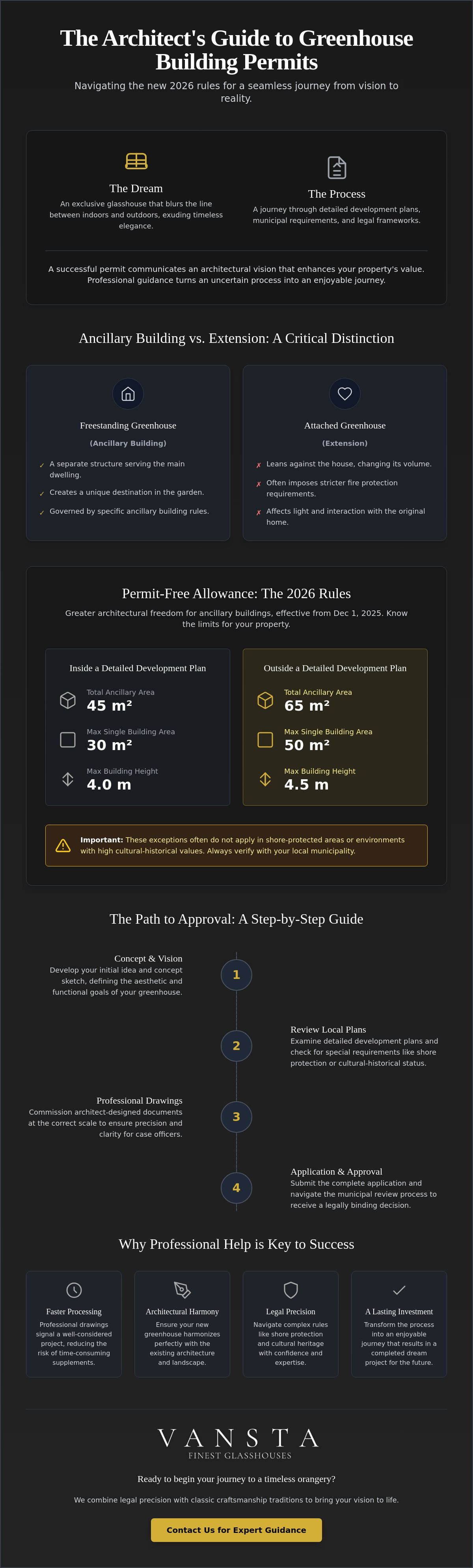
Adım adım: İnşaat ruhsatı süreci
Tamamlanmış bir kış bahçesine giden yol, ilk taşın konulmasından çok önce başlar. Hayal, mimarla yapılan ilk diyalogda şekillenir ve teknik ön koşulları belirlenir. Uzman birinin hem arsanın topografyasını hem de ana binanın mimari karakterini dikkate alan bir konsept taslağı tasarlamasına izin vererek, sorunsuz bir sürecin temelini atarsınız. Çizimler iyileştirildikten ve hazır olduktan sonra, başvuru belediyenin dijital e-hizmeti aracılığıyla yapılır. İşte bu aşamada, profesyonel destek almanın önemi ortaya çıkar. Sera yapım ruhsatı başvurusunda yardım En somut hale gelen şey; profesyonel belgelerle desteklenen eksiksiz bir başvuru, dosya görevlisinin aksi takdirde projeyi haftalarca durdurabilecek zaman alıcı ek bilgiler talep etme riskini en aza indirir.
Başvurunun ardından inceleme süreci başlar. Bu aşamada belediye, öneriyi ilgili detaylı imar planlarına göre inceler ve binanın güvenlik ve estetik gerekliliklerini karşıladığından emin olur. Yapı ruhsatı kararı verildikten sonra, çok önemli bir adım daha kalır: inşaata başlama bildirimi. Yapı ruhsatı alındıktan hemen sonra kazı çalışmalarına başlanabileceği yaygın bir yanılgıdır. Resmi bir inşaata başlama bildirimi alınmadan inşaat çalışmalarına başlamak, gereksiz yaptırım ücretlerine ve yasal komplikasyonlara yol açabilir. Süreç, bina tamamlandığında ve belediye nihai bildirimi yayınladığında sona erer; bu bildirim, her şeyin onaylı çizimlere göre yapıldığını ve yeni alanınızın kullanıma hazır olduğunu gösteren bir belgedir.
Komşularla ve belediyeyle diyalog
Çevreyle iyi bir ilişki kurmak, genellikle hızlı onay almanın anahtarıdır. Eğer serayı mülk sınırına 4,5 metreden daha yakın bir yere yerleştirmeyi planlıyorsanız, etkilenen komşulardan yazılı onay almanız gerekmektedir. İyi hazırlanmış belgeler sunarak ve açık diyalog kurarak, potansiyel itirazlar genellikle resmi engeller haline gelmeden önce profesyonelce ele alınabilir. Belirsiz durumlarda, planladığınız şeyin söz konusu konumda izin verilip verilmediği konusunda bağlayıcı bir cevap sağlayan ön bir karar almak akıllıca olabilir.
Zaman çizelgesi ve işlem süreleri 2026
2026 yılında, bir yapı ruhsatı başvurusunun yasal işlem süresi, başvurunun tamamlanmış sayıldığı tarihten itibaren on haftadır. Daha karmaşık durumlarda, belediyenin bu süreyi on hafta daha uzatma seçeneği bulunmaktadır. Bu nedenle, özellikle daha kapsamlı bir proje planlıyorsanız, bu bekleme sürelerini hesaba katan gerçekçi bir proje planı oluşturmak son derece önemlidir. kış bahçesi Bu durum, planlamada ekstra özen gerektirir. Süreci hızlandıran faktörler her zaman açıklık, doğru ölçekler ve çevreyle uyumlu bir mimari tasarımdır.
Hayalinizin gereksiz gecikmeler olmadan gerçeğe dönüşmesini sağlamak için her adımda size rehberlik edelim. Hizmetlerimiz ve profesyonel yaklaşımımız hakkında daha fazla bilgi edinebilirsiniz. Yapı ruhsatı çizimleri ve başvuruları konusunda yardım Size özel projeniz için.
Vansta'dan Uzmanlık: İnşaat ruhsatı başvurunuzda size yardımcı oluyoruz.
Mimari bir hayali gerçekleştirmek, karmaşık düzenlemeler arasında hem hassasiyet hem de incelikle yol gösterebilen güvenilir bir danışman gerektirir. Her projeyi, kişisel vizyonunuzu yetkililer tarafından belirlenen teknik gereksinimlerle birleştirdiğimiz benzersiz bir sanat eseri olarak görüyoruz. Profesyonel bir yaklaşım benimseyerek, Sera yapım ruhsatı başvurusunda yardım Bizden hizmet alarak kendi çabanızı en aza indirirsiniz. Karmaşık belediye yazışmalarını biz halleder ve tüm belgelerin sağlam bir uzmanlık temeline dayanmasını sağlarız. Amacımız, kalite ve güvenilirlik yansıtan belgeler sunarak hızlı onay alma şansını en üst düzeye çıkarmaktır.
Deneyimimiz sıradanlığın çok ötesine uzanıyor. Estetik uyumun yapı ruhsatı almak için mutlak bir gereklilik olduğu zorlu ortamlar için tasarım konusunda benzersiz bir deneyime sahibiz. İster tarihi bir malikane ortamı olsun, isterse de detaylı imar planlarına sahip modern bir mülk olsun, seranızın konutun bütünleşik bir parçası olmasını sağlıyoruz. Projenin hem mülk hem de çevresi için değerini yetkilinin kolayca anlamasını sağlayan görsel bir anlatı oluşturuyoruz.
Sera mimari hizmetlerimiz
Mimari hizmetlerimiz kapsamında, THE ROSE sera koleksiyonu ve Vansta Classic kış bahçeleri gibi en özel koleksiyonlarımız için özel çizimler oluşturuyoruz. İlk konsept çiziminden temel ve inşaatla ilgili ileri hesaplamalara kadar teknik danışmanlık hizmeti sunuyoruz. Belediyedeki karar alma sürecini kolaylaştırmak için detaylı görselleştirmeler hazırlıyoruz. Bu görseller, yapı ruhsatı memurunun nihai sonucu görselleştirmesine ve mimari detayların mevcut çevreyle nasıl etkileşim kurduğunu anlamasına yardımcı olur. Bu, hiçbir detayın şansa bırakılmamasını sağlayan bir güvenlik yatırımıdır.
Projeniz için neden Vansta Trädgård'ı seçmelisiniz?
Bizi seçmek, klasik bahçe geleneklerine ve zamansız tasarıma derin bir sevgi duyan bir ortağı seçmek anlamına gelir. Çizim ve planlama konusunda uzun ve sağlam bir deneyime sahibiz. limonluk Bu eşsiz binalara yönelik özel gereksinimleri anlıyoruz. Her başvuru kişisel bir yaklaşımla ele alınıyor ve tüm süreç boyunca çıkarlarınızı koruyoruz. Teknik hassasiyeti estetik mükemmellikle birleştirerek, sadece güzel görünmekle kalmayan, aynı zamanda geleceğe yönelik değer koruyucu bir yatırım oluşturan ortamlar yaratıyoruz. Bürokratik süreci, yeni hayal projenize doğru uyumlu bir yolculuğa dönüştürelim.
Mimari vizyonunuzu gerçekleştirin
Özgün bir kış bahçesine giden yol, mimari özgürlüğün hem yasal kesinlik hem de estetik duyarlılık gerektirdiğini anlamakla başlar. 2026'ya ilişkin yeni düzenlemeler ve genişletilmiş izin gerektirmeyen uygulama olanakları arasında doğru bir şekilde ilerleyerek, yalnızca yasal gereklilikleri karşılamakla kalmayıp aynı zamanda mülkünüzün karakterini de geliştiren bir projenin temelini atarsınız. Özellikle kıyı koruması veya yüksek kültürel-tarihsel değerlere sahip ortamlarda, profesyonel çizimlerin ve belediye ile erken bir diyaloğun belirsizliği nasıl sorunsuz bir sürece dönüştürdüğünü gördük.
Profesyonel birini arıyorum. Sera yapım ruhsatı başvurusunda yardım Bu, güvenliğe yapılan bir yatırımdır. 20 yılı aşkın süredir özel kış bahçeleri konusunda edindiğimiz deneyim ve özellikle mimari tasarımlı çözümlerdeki uzmanlığımızla, vizyonunuzun yetkililer tarafından saygıyla karşılanmasını sağlıyoruz. Teknik hassasiyeti, uluslararası üreticilerin zamansız zarafetiyle birleştirerek, ömür boyu iyileşme için mekanlar ve gayrimenkul değerini artıran çözümler yaratıyoruz.
İnşaat ruhsatı başvurunuzda uzmanlarımızdan yardım alın – Bugün Vansta Trädgård ile iletişime geçin.
Doğayla ve mimariyle uyum içinde olan bir sera hayaliniz artık gerçeğe dönüşebilir. Yeni, etkileyici bahçe ortamınıza giden yolculukta güvenilir danışmanınız olmaktan mutluluk duyarız.
Sera yapımına ilişkin inşaat izinleri hakkında sıkça sorulan sorular
15 metrekareden küçük bir sera için yapı ruhsatına ihtiyacım var mı?
Hayır, çoğu durumda, 15 metrekareden küçük bir sera için, küçük yardımcı bina (friggebod) gereksinimlerini karşılıyorsa veya 2026 yılı için izin gerektirmeyen yapı sınırına giriyorsa, yapı ruhsatı gerekmez. Ancak, yapının mülk sınırından en az 4,5 metre uzakta olması ve toplam yüksekliğinin küçük yardımcı bina için 3,0 metreyi geçmemesi ön koşuldur. Daha yüksek veya sınıra daha yakın bir konumda daha karmaşık bir yapı planlıyorsanız, tüm parametrelerin mevcut mevzuata uygun olduğundan emin olmak için sera yapı ruhsatı başvurusunda profesyonel yardım almanız gerekebilir.
Belediyede sera yapımı için inşaat ruhsatı başvurusunun maliyeti ne kadar?
Yapı ruhsatı inceleme ücreti, farklı belediyeler arasında ve projenin karmaşıklığına bağlı olarak değişmektedir. 2026 yılında İsveç'te ortalama ücretler 3.000 ile 16.000 SEK arasında değişmiştir. Kungsbacka belediyesinde, detaylı imar planına uygun bir sera için yapı ruhsatı 6.300 SEK iken, Landskrona 21 ile 35 metrekare arasındaki alanlar için 6.600 SEK ücret almaktadır. Proje detaylı imar planından saparsa veya planlı alanın dışında yer alırsa, işlem süresinin uzaması nedeniyle ücret genellikle daha yüksek olur.
Kış bahçesi için yapı ruhsatı almak ne kadar sürer?
Bir yapı ruhsatı başvurusunun yasal işlem süresi, başvurunun tamamlanmış sayıldığı tarihten itibaren on haftadır. Özellikle karmaşık durumlarda, örneğin kıyı koruma incelemesi veya kültürel ve tarihi açıdan hassas ortamlarda, belediye işlem süresini on hafta daha uzatma hakkına sahiptir. Başlangıçtan itibaren profesyonel çizimler sunarak, aksi takdirde proje başlangıcını önemli ölçüde geciktirebilecek zaman alıcı ek taleplerin riskini en aza indirirsiniz.
Yapı ruhsatı olmadan evin duvarına sera inşa edebilir miyim?
Bir konutun cephesine doğrudan monte edilen bir sera, yasal olarak bir eklenti olarak kabul edilir ve genellikle yapı ruhsatı gerektirir. Attefall kurallarına göre en fazla 15 metrekarelik daha küçük eklentiler için istisnalar mevcuttur, ancak bunlar bile işe başlamadan önce resmi bir bildirim ve başlangıç bildirimi gerektirir. Bir seranın ana binaya entegre edilmesi, bağımsız bir yardımcı binaya kıyasla hem mimari uyarlama hem de yangın koruma ve drenaj için teknik çözümler açısından daha yüksek talepler ortaya koymaktadır.
Yapı ruhsatı olmadan sera inşa edersem ne olur?
Gerekli izinler olmadan bina inşa etmek, önemli inşaat yaptırım ücretlerine ve düzeltme taleplerine yol açabilir. En kötü durumda, belediye, detaylı imar planını ihlal etmesi veya geriye dönük olarak inşaat izni verilememesi durumunda, sahibine yapıyı yıkmasını emredebilir. Yasal komplikasyonlardan kaçınmak ve yatırımınızın gelecekte güvence altına alınmasını sağlamak için sera inşaat izni başvurusunda erken aşamada yardım almanızı her zaman tavsiye ederiz.
Sınır çizgisinden 4 metre uzaklıkta inşaat yaparsam komşunun iznine ihtiyacım var mı?
Evet, seranızı mülk sınırına 4,5 metreden daha yakın bir yere yerleştirirseniz, her zaman komşunuzun yazılı onayını almanız gerekir. Bu, yapının normalde yapı ruhsatı gerekliliklerinden muaf olsa bile geçerlidir. Komşu yerleştirmeye izin vermezse, belediyeden yapı ruhsatı başvurusunda bulunma seçeneğiniz vardır; belediye daha sonra komşunun itirazlarına rağmen yerleştirmenin mümkün olup olmadığına dair genel bir değerlendirme yapacaktır. Açık diyalog ve iyi hazırlanmış belgeler, bu tür komşu işbirliğini genellikle kolaylaştırır.
Eğer mülkte zaten bir garajım varsa, Attefall kuralları geçerli mi?
Evet, 2026 için geçerli olan yeni kurallar, mülk üzerindeki ek binalar için toplamda izin gerektirmeyen bir alan esasına dayanmaktadır. Detaylı imar planı alanı içinde, mevcut garajınız ve yeni seranız da dahil olmak üzere toplam 45 metrekarelik ek binaya inşaat izni gerekmeden sahip olabilirsiniz. Eğer toplam alan 45 metrekareyi aşarsa, izin verilen alanın dışında kalan kısım için inşaat izni gereklidir. Bu, bahçelerini çeşitli fonksiyonel binalarla geliştirmek isteyen mülk sahipleri için büyük esneklik sağlayan esnek bir çözümdür.
Kıyı koruma alanı içinde sera yapımı için inşaat ruhsatı alınabilir mi?
Kıyı koruma alanı içinde yapı ruhsatı almak tamamen mümkündür, ancak yapı ruhsatının kendisine ek olarak özel bir muafiyet incelemesi gerektirir. Kıyı koruması, halkın plajlara erişimini güvence altına almayı ve yaban hayatını korumayı amaçlar; bu nedenle muafiyet başvurunuz için özel nedenler gösterebilmeniz gerekir. Halihazırda mevcut bir bahçe içine yerleştirilmiş iyi tasarlanmış bir kış bahçesi, peyzajın doğal hatlarına ve karakterine saygı gösterilerek sunulursa onaylanma şansı yüksektir.