

Башти без мирног звука текуће воде често недостаје та коначна, дефинишућа димензија архитектонског склада. Пажљиво одабрана класична баштенска фонтана није само још један украс; служи као лук...
Класична баштенска фонтана: Водич за безвременску елеганцију и архитектонску хармонију
19. јун 2026.
Башти без мирног звука текуће воде често недостаје та коначна, дефинишућа димензија архитектонске хармоније. Пажљиво одабрана класична баштенска фонтана није само још један украс; она служи као архитектонско сидро које вашем спољашњем окружењу даје душу и историјско утемељење. Делимо ваше мишљење да башта треба да буде место за опоравак, али такође разумемо оклевање у вези са некурираним избором бездушних бетонских производа који често доминирају тржиштем. Легитимна је забринутост да би фонтана могла изгледати масовно произведена или да њен материјал можда неће издржати мраз који продире у шведско тло.
У овом чланку ћете открити како улагање у истинско занатство и класичан дизајн може трансформисати вашу башту у ненадмашно естетско искуство. Водићемо вас кроз уметност избора материјала који достојанствено старе и објашњавамо како да креирате јасан централни елемент који обједињује облик и функцију на безвременски начин. Испитујући древне традиције и избор материјала који издржавају тест времена, показујемо пут ка спољашњем окружењу где се сваки детаљ сматра уметничким делом сам по себи.
Кључне закључке
- Сазнајте како класична баштенска фонтана служи као архитектонско сидро баште, стварајући мирни централни део са историјским утемељењем.
- Разумите кључну разлику између обичног бетона и правог ливеног камена, материјала који имитира природни камен и стари са јединственом лепотом.
- Откријте како да одаберете праву величину за ваш спољашњи простор, од великих вишеслојних централних фонтана до елегантних зидних фонтана за мање површине.
- Стекните практичан увид у техничка решења као што су капацитет пумпе и затворени водоводни системи за безбрижну и дугорочну инсталацију.
- Погледајте како стручност у баштенској архитектури и одабрани избори из Хадонстона могу трансформисати вашу визију у трајну инвестицију за будућност.
Улога класичне баштенске фонтане у архитектонском спољашњем простору
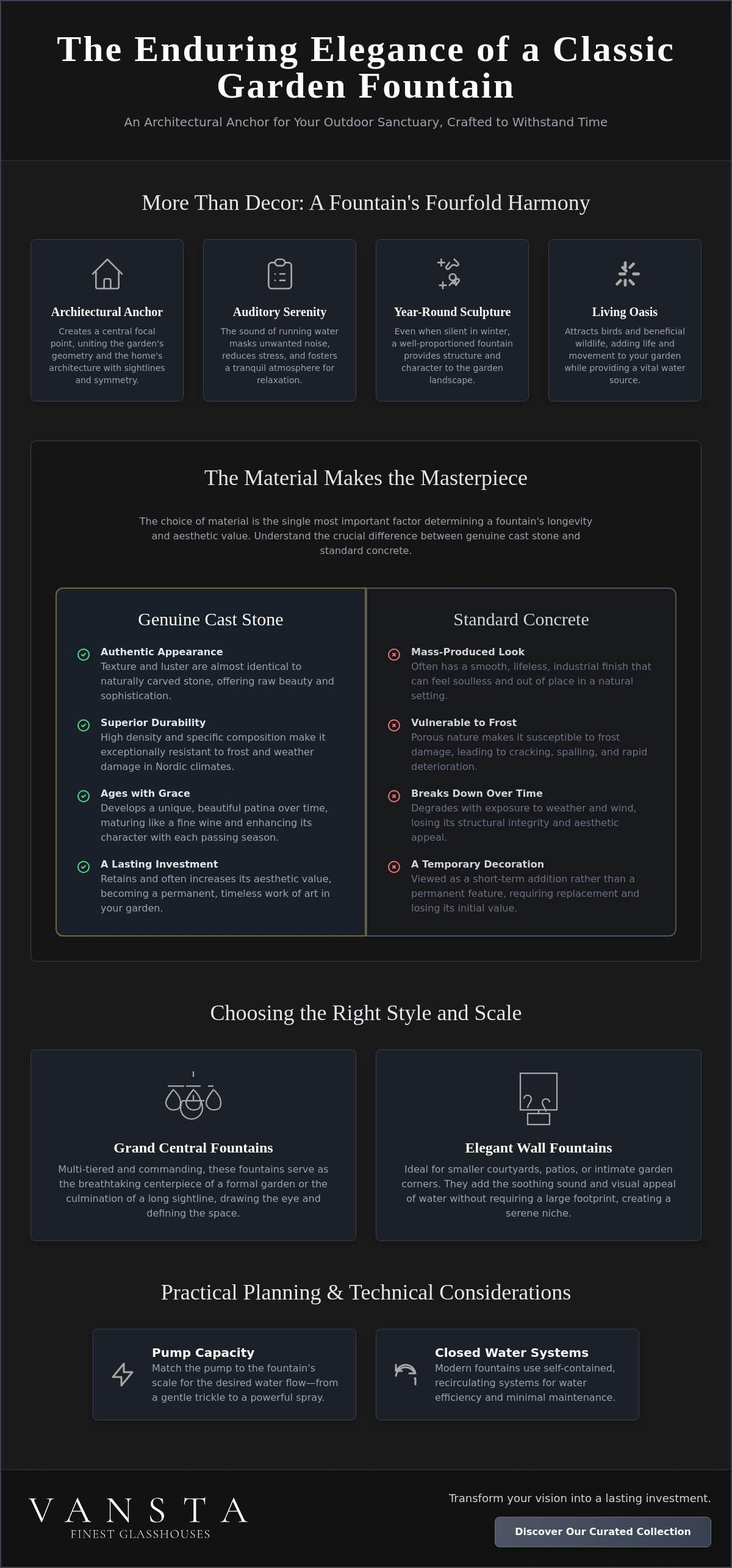
Размишљање о класичној баштенској фонтани значи гледати даље од њеног физичког облика и уместо тога разумети њену улогу као „генија места“ баште, духа места. Вековима је водена уметност била централна тачка у највеличанственијим окружењима, од строгих осовина италијанских ренесансних вртова до валовитих, романтичних пејзажних паркова Енглеске. Проучавајући историја фонтана, Видимо како су архитекте доследно користиле воду да би створиле ред, хладноћу и лепоту напољу. То је традиција о укроћавању природних елемената и њиховом претварању у део дома.
Да бисте били инспирисани како ови елементи делују у класичном окружењу, можете погледати следећу презентацију безвременских идеја за башту:
Видне линије и симетрија
Пажљиво постављање је кључно да би фонтана остварила свој пуни потенцијал као архитектонски украс.У формалној башти, често представља кулминацију видног поља, фокусну тачку која привлачи поглед на себе на крају стазе или у срцу партера. Ради се о стварању дијалога између архитектуре главне зграде и геометрије баште. Центрирањем фонтане у односу на прозоре или врата, простор се проширује ка споља, стварајући осећај бесконачне хармоније и равнотеже између унутрашњег и спољашњег простора.
Атмосфера и благостање
Избор материјала који дефинише квалитет: Ливени камен наспрам бетона
Избор материјала је најважнији фактор у томе да ли ће фонтана бити доживљена као безвременско уметничко дело или привремена декорација. класична баштенска фонтана захтева материјал који поседује и тежину и финесу, баланс који се ретко постиже једноставнијим методама производње. Док се стандардни бетон често повезује са глатком, индустријском завршном обрадом која ризикује да делује беживотно и масовно произведено, прави ливени камен нуди текстуру и сјај који су готово идентични природно резбареном камену. Управо је у сусрету између сирове лепоте материјала и софистицираног дизајна оно што је истинито архитектонска хармонија настаје, где сваки детаљ доприноси целокупном доживљају спољашњег простора.
У захтевној нордијској клими, издржљивост материјала је тестирана до крајњих граница. Висока густина и специфичан састав ливеног камена чине га изузетно отпорним на оштећења од мраза, што је чест проблем код порознијих бетонских производа. Уместо да се распада услед временских услова и ветра, ливени камен започиње спор процес сазревања. Природно реагује на влагу и промене температуре, што доводи до тога да временом развије јединствени карактер. То је инвестиција која не само да задржава своју вредност, већ заправо повећава своју естетску лепоту са сваком годином која пролази.
Мајсторство које стоји иза Хадонстона
Деценијама је Хадонстон синоним за изврсност у спољашњој архитектури и међународном занатству. Тајна њиховог успеха лежи у традиционалној методи ручног сабијања камена. За разлику од течног бетона изливеног у калупе, ливени камен се сабија ручно, што елиминише мехуриће ваздуха и ствара површину са изванредним детаљима. Ова техника омогућава сложене орнаменте и оштре профиле који фонтани дају неоспоран ауторитет. Избор такве фонтане значи избор истинске уметности уместо квантитета, створеног да траје генерацијама.
Одржавање и старење
Једна од најлепших особина висококвалитетног ливеног камена је начин на који он прихвата потезе четкице природе. Маховина и лишајеви који се лепе за површину камена дају фонтани аутентичну патину и осећај да је одувек била део историје баште. Током одржавања треба бити опрезан да се не избрише ова природна лепота. Мекана четка и чиста вода су често довољни да сачувају површину камена без оштећења његовог почетног карактера. Да би се осигурало да технологија остане безбедна током зиме, паметно је испустити воду из система и заштитити пумпу, што чува и механику и камене радове у одличном стању. Ако тражите инспирацију за реализацију своје визије, наш асортиман... Фонтане у Хадонстону нуди свет безвременске елеганције за истраживање.
Избор правог стила и величине за вашу башту
За класична баштенска фонтана Да би се постигао његов пуни архитектонски потенцијал, потребно је дубоко разумевање просторности и волумена. Није ствар само у избору лепог модела, већ у разумевању како његово физичко присуство интерагује са околним структурама.Фонтана која је премала у односу на околину ризикује да буде доживљена као безначајан детаљ, док превише доминантна конструкција може угушити остале елементе баште. Применом устаљених принципи пејзажног дизајна, као што су равнотежа и јединство, ствара се окружење у којем се фонтана осећа као очигледан део пејзажа, а не као накнадни додатак.
У већим баштама или на великим улазима, вишеслојне централне фонтане служе као природно сидро. Ове конструкције стварају вертикално кретање које привлачи поглед навише и даје осећај достојанства. За оне који желе да интегришу воду у ограниченије просторе, као што је интимно двориште или уз зид у једној од наших Ванста оранжерија, зидна фонтана нуди софистицирано решење. Овде се вертикална површина користи за стварање атмосфере без заузимања драгоценог простора на земљи, доказујући да архитектонска елеганција не зависи од квадратуре.
Вишеслојне фонтане
Фонтана на више нивоа је оличење класичне европске баштенске традиције. Дозвољавањем води да се каскадно слива са једног нивоа на други, ствара се и визуелна драма и богат, резонантан звук. Приликом избора таквог модела, кључно је да базен има исправне пропорције у односу на висину фонтане. Довољно широк базен није само естетска потреба за стварање равнотеже, већ и практични предуслов за хватање прскања воде и минимизирање губитка воде током ветровитих дана. Мотиви варирају од строгих, геометријских чинија до украшенијих облика инспирисаних митолошким фигурама, све у зависности од укупног карактера баште.
Зидне фонтане и дискретни бунари
Зидна фонтана је скривени драгуљ градске баште. Има јединствену способност да трансформише иначе анонимни зид у живо уметничко дело. Комбиновањем тврде површине камена са меким пењачицама попут бршљана или ружа пењачица, ствара се безвременски контраст који евоцира скривене баште у Тоскани или Прованси. Оваква... класична баштенска фонтана често најбоље функционише када је интегрисан у простор за седење или осамљени део баште где се звук жуборења воде може уживати изблиза. То је дискретан луксуз који наглашава квалитет и занатство у малом формату.
Без обзира да ли је визија величанствени парк или мирна зимска башта, циљ је увек постизање архитектонске хармоније која траје током времена. Управо у пажљивом разматрању размера и стила ослобађа се прави потенцијал баште.
Практично планирање и техничка разматрања
Иза сваког величанственог визуелног искуства стоји темељ техничке прецизности и пажљивог планирања. Инсталација класична баштенска фонтана се тиче уједињења естетике и функционалности како би се осигурало да игра воде буде хармонична као што архитектура обећава. Први корак је правилно димензионисање технологије. Избор пумпе одређује се не само физичком величином фонтане, већ и жељеном висином подизања и карактером протока воде. Пумпа са премалим капацитетом резултира слабим цурењем, док превелика пумпа може пореметити мирну атмосферу нежељеним прскањем и буком.
Већина фонтана са којима радимо заснована је на затвореном систему где вода циркулише. Ово је и одрживо и практично решење које минимизира потребу за фиксним прикључком за воду. Међутим, захтева редовно праћење нивоа воде, посебно током топлих летњих недеља када се испаравање повећава. Када је у питању електрични прикључак, безбедност је највећи приоритет. Све инсталације у близини воде морају се изводити са уређајима за диференцијалну струју и кабловима пажљиво скривеним у земљи како се не би нарушио визуелни интегритет баште.Додавањем дискретног ЛЕД осветљења испод површине воде, искуство се продужава до сумрака, када светлост чини да текстура камена дође до изражаја са готово магичним сјајем.
Процес инсталације
Да би тешка конструкција од ливеног камена стајала безбедно деценијама, темељ је апсолутно кључан. Стабилан темељ, често у облику армиранобетонске плоче, спречава слегања која би иначе могла проузроковати нагињање фонтане. Прецизност у нивелисању је сама по себи занат; најмање одступање узрокује да вода неравномерно тече преко ивица чинија. Велики значај придајемо скривању све технологије, од црева до разводних кутија, тако да ништа не нарушава безвременску илузију природног извора.
Зимско складиштење и заштита од мраза
У нашој нордијској клими, припреме за зиму су природни део годишњег циклуса баште. Пре него што први мраз продре у земљу, систем мора бити потпуно испуштен од воде како би се избегло оштећење камена од мраза. Препоручујемо да се пумпа извади, очисти и чува у канти са водом, заштићена од мраза, како би заптивке остале меке. Да би се сам камен заштитио од влаге и стварања леда, прилагођени поклопац за фонтану је мудра инвестиција. Он чува лепоту фонтане и осигурава да је спремна за поновно буђење чим се пролећно сунце врати. Ако планирате нову инсталацију за воду у својој башти, можете повољно истражити наш курирани избор... Фонтане у Хадонстону да пронађе савршено техничко и естетско решење.
Стварање безвременске целине са Ванста Тредгардом и Хадонстоном
Остварење сна о класичном баштенском окружењу захтева више од само лепих предмета; захтева оштар осећај за то како различити архитектонски елементи међусобно делују. У Ванста Трдгарду смо посветили свој рад курирању најфинијих примера међународног занатства, где наша сарадња са британским Хадонстоном чини камен темељац. А класична баштенска фонтана из њихових студија није само производ, већ део живе историје који вам помажемо да интегришете у своје специфично спољашње окружење. Захваљујући нашем стручном знању у баштенској архитектури и планирању пројеката, осигуравамо да је свака фонтана постављена узимајући у обзир и видне линије и постојећу архитектуру, стварајући тај редак осећај да све припада заједно.
Наша улога се протеже од почетне визије до тренутка када вода први пут почне да цури у вашој башти. Разумемо техничке изазове и естетске захтеве који су укључени у стварање окружења које ће трајати генерацијама. Без обзира да ли планирате величанствени улаз или скривени кутак за опуштање, ми служимо као ваш поуздан саветник током целог процеса. Реч је о стварању места где квалитет претходи квантитету и где сваки детаљ носи своју причу о занатству и безвременској елеганцији.
Синергија између архитектуре и декора
Фонтана достиже свој пуни потенцијал само када је у интеракцији са другим архитектонским елементима. Комбиновањем вашег воденог елемента са одговарајућим балустраде и стубови од ливеног камена, ствара се заједничка нит која повезује различите просторе баште. Уједначена патина материјала чини да целина делује добро осмишљено и ексклузивно. Управо у том контексту се и класична баштенска фонтана може постати твоје срце које куца оранжерија или стакленик. Присуство воде у затвореном простору или у директној вези са стакленом структуром додаје акустичну димензију која појачава осећај приватне оазе, заштићене од буке спољашњег света.
Персонализовани савети
Верујемо у личне сусрете и специфичне адаптације.Свака башта има своје јединствене услове и зато нудимо помоћ око скица и постављања како бисмо осигурали да су пропорције тачне. Можемо прилагодити моделе специфичним архитектонским захтевима или вам помоћи да изаберете површинску обраду која се најбоље уклапа са вашом главном зградом. За нас је важно да будете сигурни у своју инвестицију. Стога вас позивамо да нас посетите како бисте изблиза доживели тежину и квалитет материјала. Гледање како светлост пада на ручно набијени камен пружа разумевање занатства које ниједна слика на свету не може у потпуности да пренесе.
Остварите свој баштенски сан уз архитектонску издржљивост
Интеграција текуће воде у ваше спољашње окружење један је од најефикаснијих корака ка стварању баште која делује живо и архитектонски комплетно. Кроз овај водич истакли смо како избор... класична баштенска фонтана Од правог ливеног камена не само да додаје визуелни централни елемент већ и ствара акустичну завесу за опуштање. Давањем предности материјалима који старе патином и узимајући у обзир специфичне пропорције баште, ствара се окружење у којем се историјско занатство и природна лепота спајају у савршеној хармонији.
Од 2003. године, ми у Ванста Тредгарду комбинујемо дубоко архитектонско знање са страшћу за безвременским. Као ексклузивни шведски продавац Хадонстона, гарантујемо највиши квалитет ливеног камена, материјала посебно погодног за очување елеганције у нашој захтевној нордијској клими. Позивамо вас да своју башту претворите у место где се сваки детаљ сматра уметничким делом и инвестицијом која чува вредност за будућност.
Истражите нашу колекцију фонтана у Хадонстону и дозволите нам да вам помогнемо да трансформишете своју визију у трајну фокусну тачку која постаје све лепша са сваком годином која пролази.
Често постављана питања о класичним баштенским фонтанама
Колико одржавања захтева класична баштенска фонтана?
Правилно постављена класична баштенска фонтана захтева изненађујуће мало свакодневне неге да би одржала своју лепоту. Најважније је редовно проверавати ниво воде како пумпа никада не би радила на суво и чистити лишће и остатке из базена. Једном у сезони требало би да проверите и филтер пумпе како бисте осигурали несметан проток. Ако је потребно, камена површина се може нежно очистити меком четком и водом како би се сачувао њен сјај без оштећења природне патине.
Могу ли да одржавам фонтану у функцији током зиме у Шведској?
Не, у нашој нордијској клими је директно неприкладно одржавати фонтану у раду када температура падне испод нуле. Вода која се смрзава шири се огромном силом, што може проузроковати неповратна оштећења од мраза и на каменим зидовима и на систему цеви. Пре зиме, фонтану треба потпуно испразнити, а пумпу уклонити ради складиштења без мраза. Покривањем конструкције прилагођеним поклопцем за фонтану, осигуравате да се влага не накупља у посудама током хладних месеци.
Који је материјал најбољи за фонтану која ће трајати генерацијама?
Висококвалитетни ливени камен је примарни избор материјала за оне који траже инвестицију која траје дуго. За разлику од природног камена, који може имати скривене пукотине, ливени камен је хомоген и изузетно густ материјал са високом отпорношћу на временске услове. Поседује јединствену способност да стари достојанствено и развије прелеп карактер који постаје све израженији са сваком годином која пролази у вашој башти.
Да ли треба да спроведем водоводне цеви до фонтане?
Не, већина наших модела ради са затвореним системом за воду који не захтева стални прикључак за воду из куће.Једноставно ручно напуните базен баштенским цревом, након чега иста вода циркулише уз помоћ интегрисане пумпе. Једини технички захтев је безбедан електрични прикључак, који изводи квалификовани електричар, за напајање пумпе и евентуалног осветљења. Ово чини инсталацију знатно једноставнијом и флексибилнијом како у новим, тако и у постојећим баштама.
Како да одаберем фонтану праве величине за мој простор?
Исправна величина је првенствено одређена архитектонским размерама баште и видним линијама које желите да истакнете у простору. Фонтана која је премала може лако нестати у отвореном парковском окружењу, док претерано велики модел може деловати претерано у мањем дворишту. Препоручујемо да означите жељени пречник фонтане на земљи како бисте стекли осећај за њену запремину. Равнотежа између висине фонтане и околне вегетације је кључна за стварање визуелне хармоније.
Која је разлика између ливеног камена и обичног бетона?
Разлика лежи и у високом квалитету сировине и у занатском процесу производње који ствара душу материјала. Док се обичан бетон често сипа у калупе у течном стању и добија глатку, индустријску површину, ливени камен се ручно пакује како би се постигла текстура идентична резбареном природном камену. Ова метода пружа знатно већу густину и детаље. Ливени камен такође природно реагује на временске услове и ветар, дајући вашој класичној баштенској фонтани аутентичну патину коју обичном бетону недостаје.
Како да спречим раст алги у води фонтане?
Раст алги се ефикасно спречава комбинацијом сталног кретања и правилног постављања у баштенском простору. Пошто алге најбоље успевају у стајаћој води и на директној сунчевој светлости, пумпа треба редовно да ради, а фонтана пожељно да буде постављена у делимичној хладовини. Постоје и биоразградиви адитиви за пречишћавање воде који одржавају воду кристално чистом, а да притом не оштете камени материјал или фауну баште. Редовна замена воде током средине лета такође помаже да систем буде свеж и привлачан за птице.
Да ли су фонтане у Хадонстону отпорне на мраз?
Да, производи компаније Хаддонстоун су познати по својој високој отпорности на мраз, али захтевају одговарајућу зимску негу како би се одржао њихов интегритет током времена. Материјал је тестиран да издржи екстремне температурне флуктуације, али никада не сме да се дозволи да се вода замрзне у посудама или техничком систему. Ако се придржавате препорука за дренажу и покривање пре зиме, ваша фонтана ће без проблема издржати шведску климу. Управо је ова комбинација чврстоће материјала и правилне неге оно што гарантује доживотну лепоту ваше инвестиције.