An orangery is more than just a building of glass and stone; it is a dream come true of a life closer to nature, regardless of the season. It is an architectural gem that extends the soul of the home into the garden and creates a time…
Orangery: A Complete Guide to Timeless Architecture and Garden Dreams 2026
Mar 24, 2026
An orangery is more than just a building of glass and stone; it is a dream come true of a life closer to nature, whatever the season. It is an architectural gem that extends the soul of the home into the garden, creating a timeless place for recovery, cultivation and socializing. In this guide, we explore everything from the rich history of the orangery to the crucial details of material selection and construction required to create an exclusive living space that lasts for generations.
What is an orangery? From historic luxury to modern living space
A true orangery is defined by its architectural substance, a building where aesthetics and function work in perfect harmony. Unlike simpler glass structures, the orangery is a permanent and integral part of a property's character, a link between the indoor environment and the garden landscape.
History takes us back to the 17th century European nobility, who built these magnificent glass houses to protect their precious collections of citrus and orange trees (hence the name). orangery) during cold winters. Today, the orangery has evolved into the ultimate symbol of quality of life – a bright and peaceful space where the line between outside and inside is blurred. Modern interpretations preserve the classic aesthetic with its symmetry and solid materials, but adapt the function to today's needs for a versatile and exclusive living room.
The role of the orangery in the classical garden
In a well-composed garden, the orangery acts as a natural eye-catcher and an architectural highlight. Inspiration is often drawn from the rich British garden heritage, where craftsmanship and a sense of proportion are central. By carefully adapting the orangery's design, materials and location, a seamless harmony is created between the main building and the new glass house, which enhances the expression of the entire property.
Why invest in an orangery in 2026?
Investing in an architect-designed orangery is a decision that goes far beyond aesthetics. It is an investment in both quality of life and the future value of the property.
- Value increase: A permanent, architecturally well-thought-out extension increases the property's attractiveness and market value.
- A room for all seasons: With the right construction and insulation, the orangery becomes a lush and usable space all year round, regardless of the Swedish climate.
- Durability: By choosing genuine and sustainable materials such as cast stone and quality glass, you create a building that is not only beautiful today, but that ages with dignity.
Orangery, greenhouse or conservatory – what's the difference?
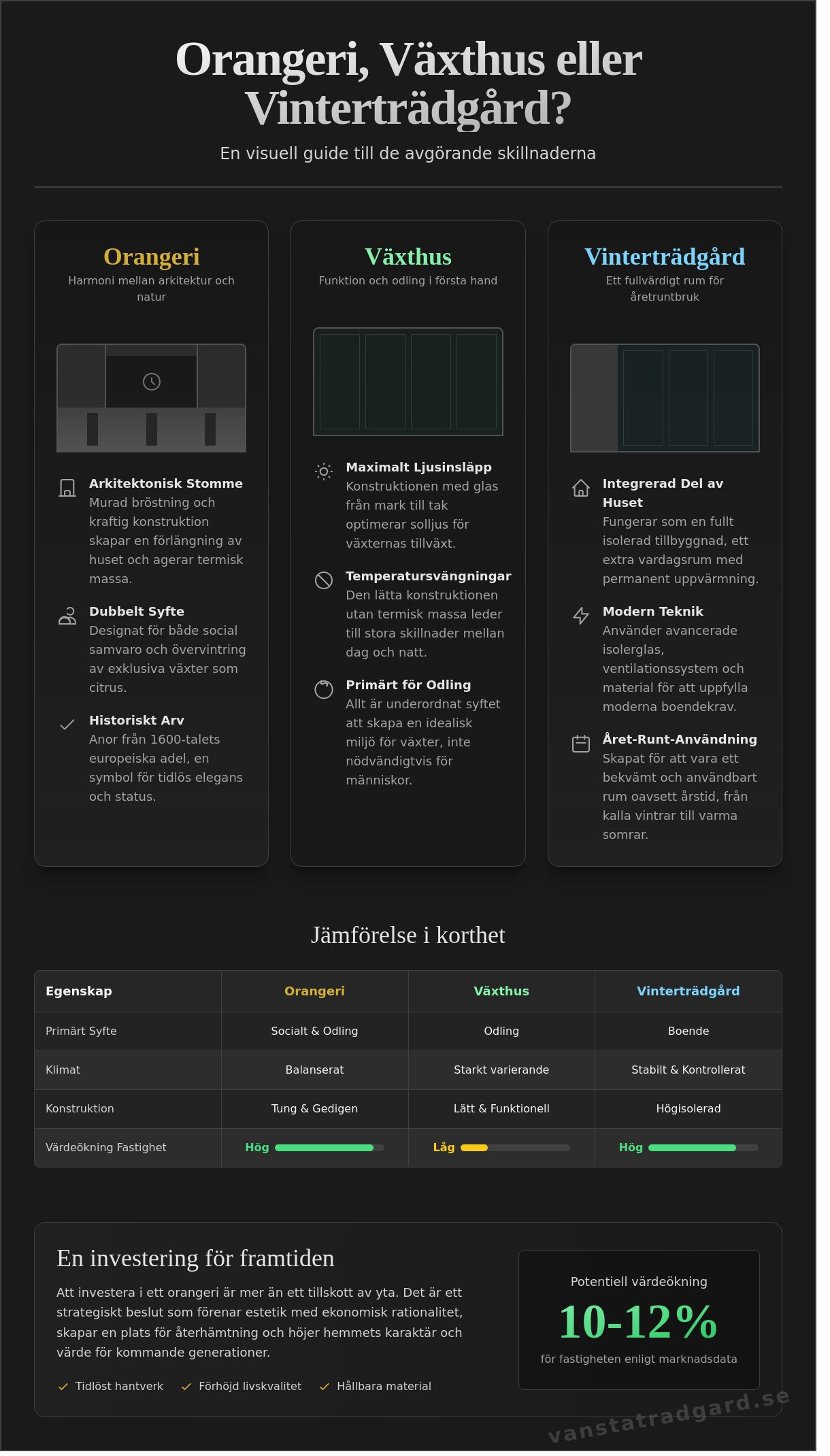
The terms are often used incorrectly, which can create confusion. The crucial difference is not, as many people believe, simply whether the building has a brick foundation or not. Both orangeries and greenhouses can be built on brick. The real differences are found in their primary purpose, technical characteristics and architectural ambition.
| Property | Conservatory | Greenhouse | Conservatory |
|---|---|---|---|
| Primary purpose | Socializing, relaxing, overwintering of sensitive plants. An extra living space. | Cultivation, pre-cultivation and maximization of harvest. Function before form. | A fully-fledged, insulated extension to the residential building for year-round use. |
| Construction | Architecturally heavy and solid, often with a brick base, pillars and a roof structure with a glass lantern. | Lighter construction (often aluminum/wood) with maximum glass surface for optimal light penetration. | Highly insulated construction, often with triple-glazed windows, and fully integrated with the house's heating and ventilation system. |
| Use | A room that connects the house and garden. Usable for a large part of the year, can be heated if necessary. | Focused on creating an optimal climate for plants. Use as a living room is often limited to warm months. | Used as a regular room in the house, such as a dining room or living room, regardless of the outside temperature. |
| Aesthetics | An elegant and representative building that complements the architecture of the main building. | Functional design where light and ventilation are prioritized over architectural details. | The design is completely subordinate and adapted to the residential building to create a seamless transition. |
The greenhouse for the passionate grower
The soul of the greenhouse lies in the cultivation. Here, everything is optimized to give the plants the best possible conditions, with maximum light and good ventilation. The construction is often simpler and the materials chosen for their function rather than their aesthetic longevity. Although a beautiful greenhouse can be an ornament, its role as a living room is secondary and limited by the seasons.
The winter garden as a full-fledged extension
A conservatory is in practice a fully insulated and heated extension of the residential building. It meets the same energy requirements as the rest of the house and is designed to be used as a regular room 365 days a year. Here the orangery's dream of a bright room is combined with all the comforts and technical requirements of the residential building.
The architecture behind an exclusive orangery: Form, function and choice of materials
An exclusive orangery is characterized by an uncompromising approach to quality in every detail. Classic design rests on principles of proportion and symmetry, where every line and angle is carefully considered to create a balanced and harmonious whole.
It is in the choice of materials that true quality is defined. Solid materials such as cast stone, steel and high-quality glass not only provide an unrivaled aesthetic but also guarantee a construction that stands the test of time and the Nordic climate. Details such as beautiful eaves decorations, spires and classic fittings complete the architectural expression. Modern technology for ventilation, heating and shading can be integrated discreetly without compromising the timeless feel.
Materials that age with dignity
For base, plinth and decorative elements, cast stone from established manufacturers such as Haddonstone is an unrivalled choice. The material develops a beautiful patina over time and offers the same grandeur as carved natural stone. Designs inspired by the British craft tradition from players such as Hartley Botanic ensure a durability and elegance that simple solutions in plastic or polycarbonate can never replicate in an exclusive project.
Light and Space: Designing with Glass
The choice of glass is crucial to creating the right balance between insulation, light and aesthetics. The pitch and design of the roof not only affects the appearance of the orangery, but also its ability to handle snow loads and maximize light during the dark months of the year. By consciously working with the placement of windows and doors, you can create beautiful sight lines that connect the interior with specific parts of the garden, creating a feeling that nature is part of the room.
Plan your orangery: Building permits, location and climate in Sweden
Making your dream of an orangery a reality requires careful planning. One of the first and most important steps is choosing the optimal location on the plot. Consideration must be given to the direction of the wind to balance sunlight and shade, soil conditions for the foundation, and proximity to the house for a natural connection.
Careful adaptation to Nordic conditions is crucial. The construction must be dimensioned to withstand local snow zones and wind loads, ensuring a safe and durable building.
Building permits and regulations for orangeries
In most cases, a building permit is required to build an orangery, especially if it is to be used as a room for living. The Attefall rules may in some cases be applicable to smaller buildings, but for a genuine orangery that is a permanent extension, a full building permit application is standard. Professionally produced building permit drawings are a prerequisite for a smooth process and ensure that all technical and aesthetic requirements are met. When located near buildings of cultural and historical value, extra high demands are placed on adaptation and material selection.
Create a comfortable indoor climate
For the orangery to become the oasis you dream of, a well-planned indoor climate is required. There are several heating options, from an atmospheric stove to comfortable and discreet underfloor heating. Good ventilation is equally important to avoid condensation and create a healthy environment for both people and plants. On hot and sunny summer days, an automated shading solution, such as awnings or blinds, is indispensable to regulate the temperature and protect against strong sunlight. This peaceful environment is perfect for relaxing and socializing, perhaps with a good book or an entertaining pastime. For those who appreciate quizzes and astrology as a fun form of self-insight, learn more about AstroQuiz.
Make your dream come true: How Vansta Trädgård creates your unique orangery
At Vansta Trädgård we see an orangery as an architectural masterpiece and an investment in quality of life. Our process always begins with a personal consultation where we listen to your dreams and analyze the unique conditions of the site. We design and tailor each orangery to suit your specific needs and the character of your property.
With over 20 years of experience, we take full responsibility for design and project management, and guide you confidently through the entire journey – from the first conceptual sketch and the building permit process to the completed orangery. For the discerning customer who values craftsmanship, quality and timeless design, Vansta Trädgård is the obvious choice.
Our range of exclusive orangeries
Our collections offer a starting point for creating your personal dream room.
- Left Classic: Timeless and classic elegance, designed to blend into traditional Swedish garden environments.
- THE ROSE: An exclusive collection where dreams, function and first-class craftsmanship meet reality in outstanding design.
- Architect-designed solutions: For completely unique projects, we create completely customized orangeries from scratch, in close collaboration with you.
More than just a glass house: A complete outdoor environment
An orangery is the heart of the garden, but to create a perfect environment, harmony in the surroundings is required. We will help you complement your glass house with beautiful fountains, statues and pots in cast stone from Haddonstone and exclusive, maintenance-free outdoor furniture from Oxleys. Together we create a place of enjoyment and relaxation that will be loved for generations.
Book an architectural consultation for your dream orangery here
Frequently asked questions and answers
What is the difference between an orangery and a greenhouse? The main difference lies in the purpose and construction. An orangery is an architectural building designed for socializing and relaxation, often with a solid foundation and better insulation. A greenhouse is primarily a lighter construction optimized for cultivation and maximum light.
Do I need a building permit to build an orangery? Yes, in most cases a building permit is required for an orangery as it is considered an extension or a new complementary building intended for living. We will help you with the entire building permit process.
Can I use my orangery all year round in Sweden? Absolutely. With the right foundation, insulation, glazing and heating system, an orangery can be designed to be a fully functional and comfortable room even during the coldest winter months.
How much does it cost to build an architect-designed orangery? The cost varies greatly depending on size, choice of materials, technical equipment and ground conditions. An architect-designed orangery is a significant investment in quality and design, and the price reflects the high level of craftsmanship and durability. Contact us for a personal consultation and quote.
Which material is best for a sustainable orangery? For a construction that will last for generations, we recommend solid materials such as a foundation in cast stone or masonry, a frame in high-quality steel or aluminum, and insulating glass adapted to the Nordic climate.
How do I care for the plants in my orangery during the winter? Mediterranean plants such as citrus and olive trees thrive in a bright and cool orangery (approx. 5-10°C) during the winter. Water sparingly and ensure good ventilation to avoid moisture problems.
Can you have a stove in an orangery? Yes, a stove can be a fantastic source of both heat and ambiance. However, it requires a correctly installed and approved chimney and that the building's construction and ventilation are adapted for this.
How long does it take to build an orangery from start to finish? The process from initial idea to completed building can take anywhere from six months to over a year. The time is affected by the length of the design process, the municipality's processing time for building permits, and the construction itself.