

Peki ya hayalinizdeki projedeki en büyük risk ilk harcama değil de zorlu iklimimizde zarif bir şekilde eskimeyen bir çözümü seçmenin gizli maliyetiyse? Her vizyon sahibi kişinin en temel sorusu…
Bir Limonluğun Maliyeti Nedir? Mimarlık ve Yaşam Kalitesine Yatırım Yapma Rehberi 2026
8 Haz 2026
Hayalinizdeki projeyle ilgili en büyük riskin ilk yatırım değil de, zorlu iklim koşullarımızda zamanla eskimeyecek bir çözüm seçmenin gizli maliyeti olduğunu düşünün. Her vizyon sahibi ev sahibi için en önemli soru elbette bir kış bahçesinin maliyetidir, ancak cevap bir ürün kataloğundaki basit bir rakamın çok ötesine uzanır. Bu, hem yaşam kalitesini hem de evin mimari değerini yükselten, el işçiliği hassasiyeti ile uzun vadeli mülk geliştirme arasındaki dengeyle ilgilidir. Karmaşık zemin çalışmaları, 2026 için yeni inşaat ruhsatı yönetmelikleri ve malzeme seçimlerinin nihai sonuçla nasıl ilişkilendirileceğini görselleştirmenin zorluğu konusunda ortaya çıkabilecek belirsizliği anlıyoruz.
Bu kılavuzda, özel bir kış bahçesini tanımlayan faktörlerin derinlemesine bir incelemesini ve yatırımınızın evinizin uyumlu bir uzantısı haline gelmesini nasıl sağlayacağınızı öğreneceksiniz. Sürdürülebilir yalıtımlı cam seçiminden tüm inşaat süreci için gerçekçi bütçelemeye kadar, mimari bir şaheser yaratmak için gerçekten nelerin gerekli olduğunu vurguluyoruz. Teknik gereksinimler ve estetik hedefler arasında düşünceli seçimler yaparak, güzelliğini ve işlevini gelecek on yıllar boyunca koruyacak zamansız bir yenilenme alanı yaratabilirsiniz.
Önemli Noktalar
- Basit bir sera ile kalıcı bir kış bahçesi arasındaki farkı ve bu yatırımın yaşam alanınızın değerli bir uzantısı olarak neden değerlendirilmesi gerektiğini anlayın.
- Yalıtımlı cam ve çerçeve malzemesi seçiminin bir kış bahçesinin maliyetini ve uzun vadeli enerji verimliliğini doğrudan nasıl etkilediğine dair daha derin bir anlayış kazanın.
- Proje bütçenizi baştan itibaren gerçekçi ve güvenli hale getirmek için, temel ve altyapı çalışmaları gibi gizli maliyetleri nasıl yöneteceğinizi öğrenin.
- 2026 için güncellenen yapı yönetmeliklerinin, mimari hayallerinizi daha fazla esneklikle gerçekleştirmeniz için sunduğu yeni fırsatları keşfedin.
- Profesyonel proje planlamasının vizyonunuzu nasıl zamana meydan okuyan bir yatırıma dönüştürdüğünü ve hem yaşam kalitesini hem de mülkün piyasa değerini nasıl artırdığını keşfedin.
Bir Kış Bahçesinin Maliyeti Ne Kadar? Ömür Boyu Sürecek Bir Yatırıma Giriş
Bir kış bahçesinin maliyetini sormak, ev ortamınızı zamansız bir zarafetle zenginleştirme yolculuğunun başlangıcıdır. Bu, basit bir plastik veya ince alüminyum sera değil, işçilik ve geleneği yansıtan kalıcı bir yapıdır. Tarihsel olarak, Limonluk Eskiden değerli narenciye ağaçlarını korumak için kullanılan bir yerdi, ancak günümüz mimarisinde evin sofistike bir uzantısı haline geldi. Özel bir portakal bahçesinin fiyatından bahsederken, onu basit bir bahçe aksesuarı olarak değil, yaşam alanı için metrekare başına maliyet olarak değerlendirmek en doğrusudur.
Standartlaştırılmış modüller ile özel çözümler arasındaki fark, nihai sonuç açısından temel öneme sahiptir. Doğru fiyatlandırılmış bir proje, zamanla değerini koruyan malzemeler kullanarak gelecekteki bakım maliyetlerini ortadan kaldırır. 1 Temmuz 2026, yeni bina yönetmeliklerinin önceki hükümlerin yerini tamamen alacağı önemli bir dönüm noktasıdır.Bu değişiklik, işlevsel gereksinimlerin teknik detaylı çözümlerden daha öncelikli hale getirilmesi anlamına gelir ve bu da yatırımınızı özel ortamınıza ve estetik gereksinimlerinize göre optimize etme konusunda bize daha fazla özgürlük sağlar.
Böyle bir projenin çevresiyle nasıl uyumlu bir şekilde bütünleştirilebileceğini daha iyi anlamak için, rüya gibi bir konumda yer alan bu kış bahçesi tasvirine bakabilirsiniz:
Bütçe ve Yatırım: Katma Değeri Anlamak
Vansta'dan bir kış bahçesi, mülkün piyasa değerine yapılan bir yatırımdır. Fark, malzemelerin taşıma kapasitesinde yatmaktadır. Seri üretim kitlerinde genellikle ince profiller kullanılırken, bizim yapılarımız sağlam çelik veya dökme demirin gücüne dayanmaktadır. Sürecin ilerleyen aşamalarında maliyetli düzeltmelerden kaçınmak için, başlangıç bütçesine profesyonel proje planlamasını dahil etmek çok önemlidir. Mimar tarafından tasarlanmış seralar Ve kış bahçeleri nesiller boyu dayanacak şekilde tasarlanır. Kalite, satın alma sırasında daha fazla maliyete neden olur, ancak önümüzdeki on yıllar boyunca bakım masraflarından büyük ölçüde tasarruf sağlar.
Kullanım amacı fiyat etiketini belirler.
Projenin finansal çerçevesini belirleyen, sizin amaçladığınız kullanım şeklidir. Yalıtımsız bir yazlık, tamamen yalıtımlı bir kış bahçesinden tamamen farklı teknik özellikler gerektirir. Eğer hayaliniz sıcak bir ortamda sessiz bir kar yağışının tadını çıkarmaksa, camın U değeri ve profillerin ısı yalıtımı konusunda yüksek beklentiler söz konusudur. Yerden ısıtma, gelişmiş elektrik tesisatı ve aydınlatma seçimi, bir kış bahçesinin maliyetini etkileyen faktörlerdir, ancak bu detaylar aynı zamanda yılın her günü kullanım imkanı da sağlar. Biz, biçim ve işlevin mükemmel bir uyum içinde etkileşimde bulunduğu bir ortam yaratmak için bu seçimleri dengelemenize yardımcı oluyoruz.
Malzeme Seçimi ve Mimari Tasarım: Fiyatı Belirleyen Başlıca Faktörler
Her mimari seçim, mülkünüzün son resmindeki incelikli bir fırça darbesidir. Bir kış bahçesinin maliyetini analiz ederken, hem çerçevenin taşıma kapasitesini hem de camın teknik özelliklerini birincil bileşenler olarak dikkate almak gerekir. Mesele sadece metrekare değil, malzemelerin ruhu ve İskandinav ışığıyla nasıl etkileşim kurduklarıyla ilgilidir. Klasik bir seçim ile modern bir kış bahçesi arasında seçim yapmak önemlidir. ahşap sera Dayanıklı çelik veya alüminyumdan yapılmış bir yapı, binanın genel karakterini ve gelecekteki bakım ihtiyaçlarını belirler.
Yapının ömrü ve estetik ağırlığı için çerçeve malzemesi seçimi çok önemlidir. Ahşap, organik bir sıcaklık ve tarihi bahçe gelenekleriyle doğrudan bir bağlantı sunarken, çelik ve alüminyum, ışık girişini en üst düzeye çıkaran daha ince profiller sağlar. THE ROSE ve Vansta Classic gibi özel koleksiyonlar, bu kalite için önemli ölçütler oluşturmaktadır. Burada, tarihi estetik ve modern mühendislik bir simbiyoz içinde buluşuyor. Dik çatı açıları, zarif cumbalı pencereler ve detaylı süslemeler gibi tasarımın karmaşıklığı, standart çözümlerin asla elde edemeyeceği bir üretim hassasiyeti gerektirir. Zaman içinde kalıcı bir görsel uyum yaratmak için her detay özenle düşünülmüştür.
Doğru Bardağı Seçme Sanatı
Cam, kış bahçesinin kalbi ve dış etkenlere karşı en kritik kalkanıdır. Mevsimlik kullanım için tek camlı pencereler ile düşük U-değerlerine sahip gelişmiş yalıtımlı camlar arasında seçim yapmak, bir kış bahçesinin nihai maliyetini etkileyen en büyük faktörlerden biridir. İskandinav ülkelerinde, hem hava koşullarına hem de rüzgara karşı güvenliği sağlamak için temperli güvenlik camı açık bir standarttır. Güneş ışığı girişini ve sıcaklığı düzenleyen özel cam, en sıcak yaz günlerinde bile konforlu bir iç mekan iklimi yaratır.Teknik özelliklerin yanı sıra, camın kalitesi benzersiz bir akustik özellik ve iç mekan ile dış mekan arasındaki sınırın neredeyse şiirsel bir şekilde bulanıklaştığı bir atmosfer yaratıyor.
Fark Yaratan İşçilik Detayları
Eğitimli bir göz için gerçek ustalık, çoğu zaman görünmeyen küçük detaylarda kendini gösterir. İyi tasarlanmış bir limonluk Çatı drenajı ve bağlantı elemanları gibi teknik gereksinimleri gizleyerek mimarinin kendini ifade etmesine olanak tanır. Ana binanın renk paletiyle uyumlu olacak şekilde renk şemasını özelleştirme olanağı, tüm mülkü yükselten bir lükstür. Süslemeler ve dekoratif unsurlar sadece süsleme değil; her binanın bir sanat eseri olarak kabul edildiği bir döneme saygı duruşudur. Biçim ve işlev arasında nihai dengeyi arayanlar için, kişisel bir danışmanlık genellikle vizyonlarını gerçekleştirmenin ilk adımıdır. Avantajlı bir şekilde Koleksiyonlarımızı keşfedin Kendi özgün projeniz için ilham bulmak.
Sera Ötesi: Temel, Zemin Hazırlığı ve İnşaat Ruhsatlarının Maliyetleri
Bir seranın vizyonu genellikle görünür detaylarla başlar, ancak gerçek kalıcılığı yer yüzeyinin altında belirlenir. Bir seranın maliyetini hesaplarken, zemin hazırlığı ve temel, toplam yatırımın önemli bir bölümünü oluşturur. Binanın estetik uyumu ve yapısal yük taşıma kapasitesinin temeli burada atılır. 2026 yılına ait güncel verilere göre, zemin hazırlığı için ortalama maliyet metrekare başına yaklaşık 8.500 SEK'tir, ancak fiyat zemin yapısına ve projenin karmaşıklığına bağlı olarak 3.600 ile 14.500 SEK arasında değişebilir. Bu aşamada, kazı, drenaj ve gelecekteki çökmeleri önleyen sağlam bir alt taban oluşturulması gibi kritik unsurlar ele alınır.
Sadece zeminle ilgili fiziksel çalışmaların yanı sıra, gerekli altyapının kurulması için de maliyetler söz konusudur. Aydınlatma ve iklimlendirme için elektrik, bitkilerin sağlığı için su ve muhtemelen kanalizasyon, hesaplamalara erken aşamada entegre edilmesi gereken faktörlerdir. Bu tesisatların ilk zemin çalışmalarıyla birlikte planlanması, sonradan eklemeler yapmaktan önemli ölçüde daha uygun maliyetlidir. Bu, teknik hassasiyet ve binanın yıl boyunca meydana gelen değişiklikler boyunca nasıl nefes alması ve işlev görmesi gerektiğine dair bir anlayış gerektiren bir süreçtir.
Temelin Nihai Sonuç İçin Önemi
Temel seçimi, tüm kış bahçesinin karakterini belirler. Duvar üzerine inşa edilmiş, güzelce yapılmış bir kaidenin cam bölümlerle buluştuğu bir sera, anında tarihi bir bağ ve klasik bir zarafet duygusu yaratır. Tamamen yalıtımlı bir sera hayal edenler için... kış bahçesi, Genellikle dökme, yalıtımlı beton bir döşeme gereklidir. Bu, su bazlı yerden ısıtma sistemlerinin kurulumu ve kış aylarında konforlu bir iklimin korunması için bir ön koşuldur. İnşaat işlerinde doğru uzmanlığı kullanmak, temelin kalıcı bir binaya yönelik yüksek talepleri karşılamasını sağlamak için çok önemlidir.
Yapı Ruhsatı Süreci ve Teknik Proje Planlaması
1 Temmuz 2026'dan itibaren yeni yapı yönetmelikleri tam olarak uygulanacak ve bu da İsveçli mülk sahipleri için heyecan verici bir değişiklik anlamına geliyor. Yeni Planlama ve Yapı Kanunu'na göre, detaylı imar planı bulunan bölgelerde, en büyük tek binanın 30 metrekareyi geçmemesi koşuluyla, toplam 45 metrekareye kadar ek binaların yapı ruhsatı olmadan inşa edilmesi artık mümkün. Bu kolaylıklara rağmen, profesyonel yapı ruhsatı çizimleri ve teknik proje planlaması, sürecin vazgeçilmez bir parçasıdır.Vansta Trädgård'ın yapı ruhsatı başvurularındaki uzmanlığı, tüm estetik ve teknik gereksinimlerin karşılanmasını sağlayarak, maliyetli hatalı inşaat riskini ortadan kaldırır. Havalandırma ve gelişmiş iklim kontrolü, tasarım aşamasından itibaren planlanarak, hem insanların hem de bitkilerin mükemmel bir denge içinde gelişebileceği bir ortam yaratılır.
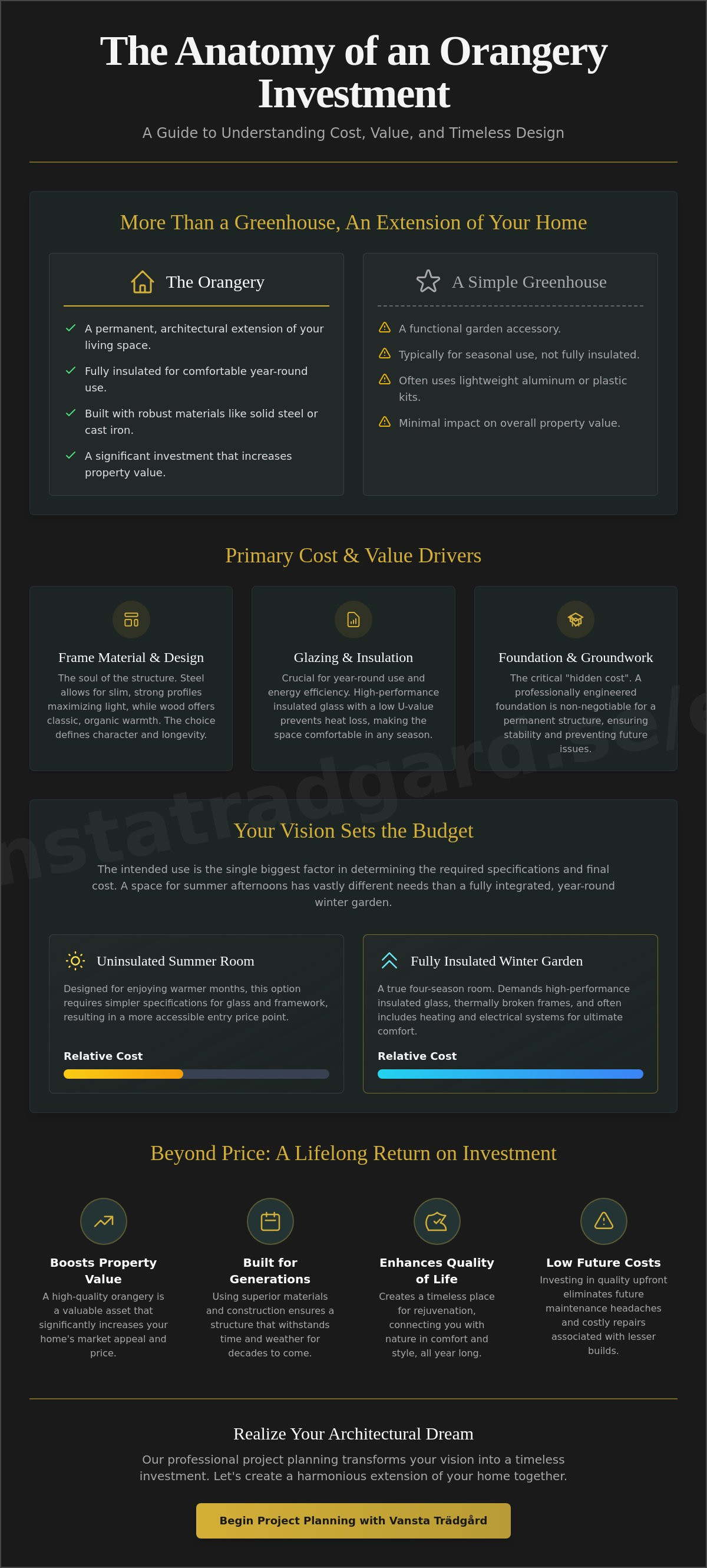
Fiyat mı Değer mi: Gayrimenkulün Nihai Değeri İçin Kalite Neden Çok Önemli?
Bir kış bahçesinin maliyetini araştırırken, teklifteki ilk rakama takılıp kalmak kolaydır. Ancak değerin gerçek anlamı, satın alma fiyatından zaman içindeki toplam sahip olma maliyetine odaklandığımızda ortaya çıkar. Mimari açıdan doğru bir kış bahçesi geçici bir yapı değildir; gelecek nesillere hizmet etmek üzere inşa edilmiş bir mirastır. Yüksek taşıma kapasitesine sahip malzemeler ve zamansız bir tasarım seçilerek, tam teşekküllü bir ek oda gibi işlev gören bir ortam yaratılır. Ev ve bahçe arasındaki sınırın kalıcı olarak bulanıklaştığı, yalnızca kron cinsinden ölçülmesi zor olan günlük bir yaşam kalitesi yaratan bir yerdir.
Ancak ekonomik avantaj, mülkün gelecekteki satışında çok açık bir şekilde ortaya çıkar. Ana binayla uyumlu, iyi planlanmış bir cam yapı, genellikle mülkün piyasa değerini gerçek inşaat maliyetinden çok daha fazla artırır. Burada amaç, potansiyel alıcıların seri üretim standart çözümlerde bulamayacakları benzersiz bir satış noktası, bir atmosfer yaratmaktır. Burada, her bir bağlantı parçasının kalitesi, profillerin hassasiyeti ve camın şeffaflığı, bir değerleme uzmanının veya alıcının karşılaştığı genel izlenim için çok önemlidir. Gerçek el işçiliğine yapılan yatırım, daha ucuz kitlerin asla ulaşamayacağı bir dayanıklılıkla karşılığını verir.
Mimari Uyum, Değer Artırıcı Bir Unsur Olarak
İster klasik bir malikane ortamı ister modern bir villa olsun, evin karakterini sadakatle tamamlayan bir stil seçmek estetik başarının anahtarıdır. Burada önemli olan, kış bahçesini bağımsız bir bina olarak değil, daha büyük bir mimari bütünün entegre bir parçası olarak görmektir. Ayrıca çevreyi aşağıdaki gibi unsurlarla süsleyerek de estetik bir görünüm elde edilebilir. Haddonstone çeşmeleri Heykeller ve diğer unsurlarla birlikte proje, eksiksiz bir bahçe ortamına dönüştürülüyor. Bu tür bütüncül düşünme, tüm mülkün deneyimini zenginleştiren ve yıllar geçtikçe kalıcı bir ayrıcalık duygusu sağlayan görsel bir şiir yaratıyor.
İşletme ve Bakım Zaman İçinde
Bir kış bahçesinin maliyetini etkileyen bir diğer önemli unsur da işletme ve bakım için devam eden giderlerdir. Sağlam çelik, dökme demir ve özenle seçilmiş ahşap gibi malzemeler, daha basit alternatiflerin sahip olmadığı bir zarafetle yaşlanırlar. Sadece birkaç sezon sonra pahalı onarımlar gerektirmek yerine, bu sağlam malzemeler zamanla daha da güzelleşen bir patina geliştirirler. Enerji tasarrufu da hesaplamanın önemli bir parçasıdır; doğru yalıtım ve teknik olarak gelişmiş cam seçimi sayesinde, soğuk aylarda ısıtma maliyetleri önemli ölçüde azalır. Derin uzmanlığa sahip yerel bir ortakla iş birliği yapmanın güvenliği, yatırımınızı geleceğe yönelik olarak güvence altına alan tavsiyelere erişmenizi sağlar. Değer koruyucu bir yatırıma doğru yolculuğunuza başlamak için avantajlı bir şekilde Uzmanlarımızla kişisel bir görüşme ayarlayın. Benzersiz projenizi görüşmek üzere.
Vansta ile Proje Planlaması: Mimari Çizimden Tamamlanmış Kış Bahçesine Giden Yol
Mükemmel bir kış bahçesine giden yol, bir ürün kataloğunu karıştırmakla başlamaz. Dış ve iç mekan arasındaki sınırın bulanıklaştığı bir yer vizyonuyla başlar. Bir kış bahçesinin maliyetini analiz ederken, düşünceli proje planlamasının değerini unutmak kolaydır.İşte burada, hayalleriniz ve mimari uzmanlığımızın buluşma noktasında, başarılı bir yatırımın temeli atılıyor. Süreci bize bırakarak, bütçenizdeki her kuruşun maksimum estetik ve işlevsel etki yaratmak için kullanılmasını sağlıyorsunuz. Projenin ilk yapı ruhsatı çizimlerinden son, uzmanlıkla uygulanan montaj detayına kadar sorunsuz bir şekilde ilerlemesini garanti ediyoruz.
Profesyonel proje planlaması, beklenmedik masraflara karşı güvencenizdir. Bu, havalandırma, iklimlendirme ve yük taşıma kapasitesiyle ilgili teknik zorlukları, şantiyede maliyetli sorunlara dönüşmeden önce öngörmekle ilgilidir. Gerçekten bütünsel bir ortam yaratmak için, iç mekan tasarımını da sürecin başlarında ele almak gerekir. Zamansız tasarımlar seçmek... Oxleys Mobilya dış mekan mobilyaları Dökme alüminyum kullanımı, İngiliz zarafetini kış bahçesinin kalbine taşımanın bir yoludur. Binanın yapımı kadar iyi planlanmış bir atmosfer yaratır.
Her adımda kişiselleştirilmiş uzmanlık
Mimarlarımızla yapacağınız görüşme, özel ihtiyaçlarınızı ve arsanızın benzersiz koşullarını dinlediğimiz yaratıcı bir diyalogdur. Sofistike Vansta Classic gibi koleksiyonlarımızı, mevcut mimarinizle uyumlu bir denge oluşturacak şekilde uyarlıyoruz. Ağımız, köklü geleneklere sahip uluslararası üreticilerden oluşmakta olup, seri üretim çözümlerinde bulunamayacak bir kaliteyi garanti etmektedir. Bir kış bahçesinin hem zaman hem de malzeme açısından maliyetini anlayarak, size yıllar geçtikçe değerini koruyacak ve onurlu bir şekilde yaşlanacak seçimler yapmanızda rehberlik edebiliriz. Her profil ve her bağlantı parçası, hem bütüne hem de detaya hizmet edecek şekilde özenle seçilir.
Hayalinizdeki Kış Bahçesi'ne Doğru Yolculuğunuza Başlamak
İlk görüşmenizden en iyi şekilde yararlanmak için, kış bahçesini daha büyük bir bahçe planının bütünleşik bir parçası olarak görmenizi öneririz. Günün farklı saatlerinde ışığın nasıl düştüğünü ve yılın çeşitli değişimleri sırasında odayı nasıl kullanmayı planladığınızı düşünün. Yıldızların altında geç akşam yemekleri için bir yer mi yoksa en değerli bitkileriniz için korunaklı bir cennet mi? Vizyonunuz ne kadar net olursa, onu gerçekleştirmek için bütçeyi o kadar iyi optimize edebiliriz. Sizi, olağanüstü bir şey yaratmak için zanaatkarlığın ve tutkunun buluştuğu bir dünyaya davet ediyoruz. Hayalinize doğru ilk adımı atın ve kişisel bir görüşme ayarlayın Mülkünüzü nasıl geliştirebileceğimiz konusunda görüşmek üzere bizimle iletişime geçin.
Geleceğe Yönelik Mimari Hayallerinizi Gerçekleştirin
Kış bahçesine yatırım yapmak, mülkünüze nesiller boyu sürecek bir ruh kazandırmaktır. Teknik hassasiyet ve estetik duyarlılık arasındaki doğru dengenin, sıradan dış mekanları zamansız başyapıtlara nasıl dönüştürdüğünü gördük. Yüksek taşıma kapasitesine sahip malzemelere öncelik vererek ve mimarinin net bir dil konuşmasına izin vererek, anlık deneyimin çok ötesine uzanan katma değer yaratırsınız. Değerlendirme yaparken... Bir kış bahçesinin maliyeti ne kadar?, Bütünüyle ilgilenmek çok önemli; temelin taşıma kapasitesinden camın berraklığına ve profillerin el işçiliğiyle tamamlanmış haline kadar her şeyi göz önünde bulundurmak gerekiyor.
20 yılı aşkın süredir seçkin bahçe mimarisi alanında faaliyet gösteren bir aile şirketi olarak, her detaya büyük bir tutkuyla yaklaşıyoruz. İlk inşaat ruhsatı çizimlerinden, projenin arsanızda yerini aldığı ana kadar kapsamlı destek sunuyoruz. Seçenekler arasında yolunuzu bulmanıza ve kendi vizyonunuz kadar eşsiz bir yenilenme alanı yaratmanıza yardımcı olalım.
Hayalinizdeki kış bahçesi için kişiselleştirilmiş bir fiyat teklifi almak üzere Vansta Trädgård ile iletişime geçin. Hem günlük yaşamınızı hem de mülkünüzü zenginleştirecek bir yatırıma doğru ilk adımı atın. Uyumlu bir cam pavyona doğru yolculuğunuz, kalite ve işçilik üzerine bir konuşmayla başlar.
Kış Bahçesi Yatırımı Hakkında Sıkça Sorulan Sorular
Bir kış bahçesinin metrekare başına ortalama maliyeti nedir?
Ev uzantısı olarak inşa edilen bir kış bahçesinin metrekare başına ortalama maliyeti, komple projeler için genellikle 18.000 ile 35.000 kron arasında değişmektedir. Bu tahmine genellikle temel, cam konstrüksiyonu ve standart montaj dahildir. Bununla birlikte, özel malzeme seçimleri, gelişmiş mimari ve yıl boyunca kullanım için tam yalıtımın nihai yatırımı daha yüksek bir segmente taşıyabileceğini anlamak önemlidir. Bu durumlarda, fiyat, işçiliğin hassasiyetini ve binanın uzun vadeli dayanıklılığını yansıtır.
Kış bahçesi inşa etmek için her zaman yapı ruhsatına ihtiyacım var mı?
Hayır, 2025 ve 2026 yıllarında yürürlüğe giren yeni düzenlemeler sayesinde her zaman yapı ruhsatı başvurusunda bulunmanız gerekmiyor. Detaylı imar planı bulunan alanlarda, en büyük tek binanın 30 metrekareyi geçmemesi koşuluyla, toplam 45 metrekareye kadar olan ek binaların yapı ruhsatı olmadan inşa edilmesine izin veriliyor. Detaylı imar planı olmayan alanlarda ise toplam alan 65 metrekaredir. Ancak, kıyı koruma alanları veya kültürel ve tarihi açıdan değerli ortamlar için istisnalar mevcuttur, bu nedenle belediyenizle görüşmeniz her zaman önerilir.
Fiyat açısından bir kış bahçesini normal bir kış bahçesinden ayıran özellikler nelerdir?
Bir kış bahçesi ile bir sera arasındaki fiyat farkı, esas olarak mimari karmaşıklık ve estetik gereksinimlere dayanmaktadır. Bir sera genellikle klasik oranlara ve tarihi detaylara odaklanan, bağımsız bir mimari sanat eseri olarak kabul edilir. Bir kış bahçesi ise daha çok evin yaşam alanının doğrudan bir uzantısı olup, modern yalıtım teknolojisine odaklanmaktadır. Bununla birlikte, her iki yapı da yıl boyunca iklimdeki değişikliklere karşı en iyi şekilde işlev görebilmesi için temel ve yüksek performanslı yalıtımlı cam konusunda benzer yatırımlar gerektirir.
Temel ve altyapı çalışmaları için ne kadar bütçe ayırmalıyım?
2026 yılı için temel ve zemin hazırlığı için metrekare başına ortalama 8.500 kron civarında bir bütçe ayırmanız gerekmektedir. Fiyat aralığı, zeminin gerçek durumuna ve tuğla kaide mi yoksa yalıtımlı betonarme döşeme mi tercih edeceğinize bağlı olarak 3.600 ile 14.500 kron arasında değişmektedir. Bu, hesaplamada kritik bir unsurdur çünkü sağlam bir temel, cam yapının şeklini ve taşıma kapasitesini gelecek on yıllar boyunca koruyabilmesi için ön koşuldur.
Ahşaptan mı yoksa metalden mi bir kış bahçesi inşa etmek daha pahalıya gelir?
Ahşap ve metalden yapılmış bir kış bahçesinin maliyeti tamamen malzemenin kalitesine ve işçiliğine bağlıdır. Sürdürülebilir şekilde yetiştirilmiş ahşap veya meşeden yapılmış bir kış bahçesi genellikle imalat sırasında daha fazla başlangıç işçiliği gerektirirken, toz boyalı alüminyum veya çelikten yapılmış yapılar daha ince profiller ve minimum bakım gereksinimi sunar. Her iki malzeme de premium segmentte uygulandığında benzer fiyat seviyelerini temsil eder. Bu nedenle seçim genellikle ana binanın mimari tarzına ve atmosferle ilgili kişisel tercihlerinize göre belirlenir.
Kış bahçemi yıl boyunca kullanabilir miyim ve ısıtma maliyeti ne kadar olur?
Evet, modern enerji tasarruflu cam ve doğru yalıtımla donatılmış bir kış bahçesi yılın on iki ayı boyunca kullanılabilir. Isıtma maliyeti, binanın U değeri ve ısı kaynağı seçiminize bağlıdır; su bazlı yerden ısıtma genellikle en etkili seçenektir. Düşük enerji değerine sahip camlara yatırım yaparak ısı kayıpları önemli ölçüde en aza indirilir. Bu, ister yaz sıcağı ister kışın dondurucu soğuğu olsun, cam bölümlerin dışında egzotik bitkiler ve sosyal toplantılar için hoş bir ortam yaratır.
Cam türünün seçimi toplam fiyatı nasıl etkiler?
Kış bahçesinin maliyetini araştırırken en önemli faktörlerden biri cam seçimidir. Tek cam, metrekare başına 1.000 ila 2.500 kron arasında değişen maliyetiyle mevsimlik odalar için uygun fiyatlı bir seçenektir. Ancak, yıl boyunca kullanılabilen fonksiyonel bir oda için yalıtımlı cam veya enerji tasarruflu cam gereklidir; bu da maliyeti metrekare başına 2.000 ila 4.500 kron arasına çıkarır. Bu yatırım, enerji maliyetlerindeki azalma ve yıl boyunca odadaki konfor seviyesinin önemli ölçüde artmasıyla hızla kendini amorti eder.
Vansta kış bahçesinin fiyatına kurulum dahil mi?
En yüksek kaliteyi sağlamaya yönelik taahhüdümüzün ayrılmaz bir parçası olarak, kurulum ve teknik desteğin entegre edildiği kapsamlı bir süreç sunuyoruz. Her proje benzersizdir ve fiyat tekliflerimizi, uzman ekiplerimiz tarafından kurulumun nasıl gerçekleştirileceğinin net bir şekilde anlaşılması için özelleştiriyoruz. Mimari çizimden tamamlanmış binaya kadar tüm süreci bize bırakarak, teknik detayların geleceğe yönelik değer koruyucu bir yatırım için gereken hassasiyetle gerçekleştirilmesini sağlıyorsunuz.