

A greenhouse is not only a place for cultivation; it is an architectural signature that defines the character of your property for the next 50 years. We understand the frustration when the dream of a glass-clad oasis is met by mass production...
Greenhouses: A Guide to Architecture, Cultivation and Quality of Life 2026
Mar 25, 2026
A greenhouse is not just a place for growing; it is an architectural signature that will define the character of your property for the next 50 years. We understand the frustration when the dream of a glass-clad oasis is met with mass-produced models that feel both plastic and soulless compared to the aesthetics of the main building. It is a well-known challenge to find that perfect balance where British craftsmanship meets the demands of the Scandinavian climate for strength without losing its elegant silhouette.
In this 2026 guide, you’ll learn how to transform your outdoor space with an exclusive glass house that combines historical finesse with contemporary architecture. We’ll clear up any questions about the planning permission process and show you how a well-chosen orangery can act as a sophisticated extra living space all year round. By focusing on artisanal details from renowned manufacturers like Hartley Botanic, you’ll gain in-depth insights into how the right design choices can add significant value to your property and create a timeless place to unwind.
Important Conclusions
- Discover how an architect-designed glass house acts as a timeless extension of your home, combining British craftsmanship with modern aesthetics.
- Learn why the combination of tempered safety glass and powder-coated aluminum is the optimal investment for a durable and maintenance-free greenhouse.
- Get guidance on how to analyze your garden's lighting conditions and create stability by integrating classic wall structures into your design.
- Navigate confidently through the 2026 building permit and occupancy notification regulations with the help of professional architectural drawings for a smooth process.
What defines an exclusive greenhouse? From function to aesthetics
An exclusive greenhouse is much more than just a protected environment for growing. It is an architectural extension of the home that blurs the line between the curated home and the wild beauty of nature. To understand the basics, ask yourself What is a greenhouse? in its most fundamental form, but in the modern garden design of 2026 we see a clear shift. Here it is about proportions that harmonize with the characteristics of the main building and the choice of materials that age with a rare dignity.
The difference between a standard greenhouse from a hardware store and an architect-designed glasshouse is evident in every detail. While simpler models often compromise with thin profiles and limited ceiling height, the exclusive choice is distinguished by precision in every joint. It is about creating a volume where light falls correctly at all hours of the day, which requires a deep understanding of both aesthetics and engineering. A greenhouse from a manufacturer like Hartley Botanic is not just a building, it is a craft that rests on centuries-old traditions.
To better understand the craftsmanship and practical steps behind a solid construction, this overview can be very helpful:
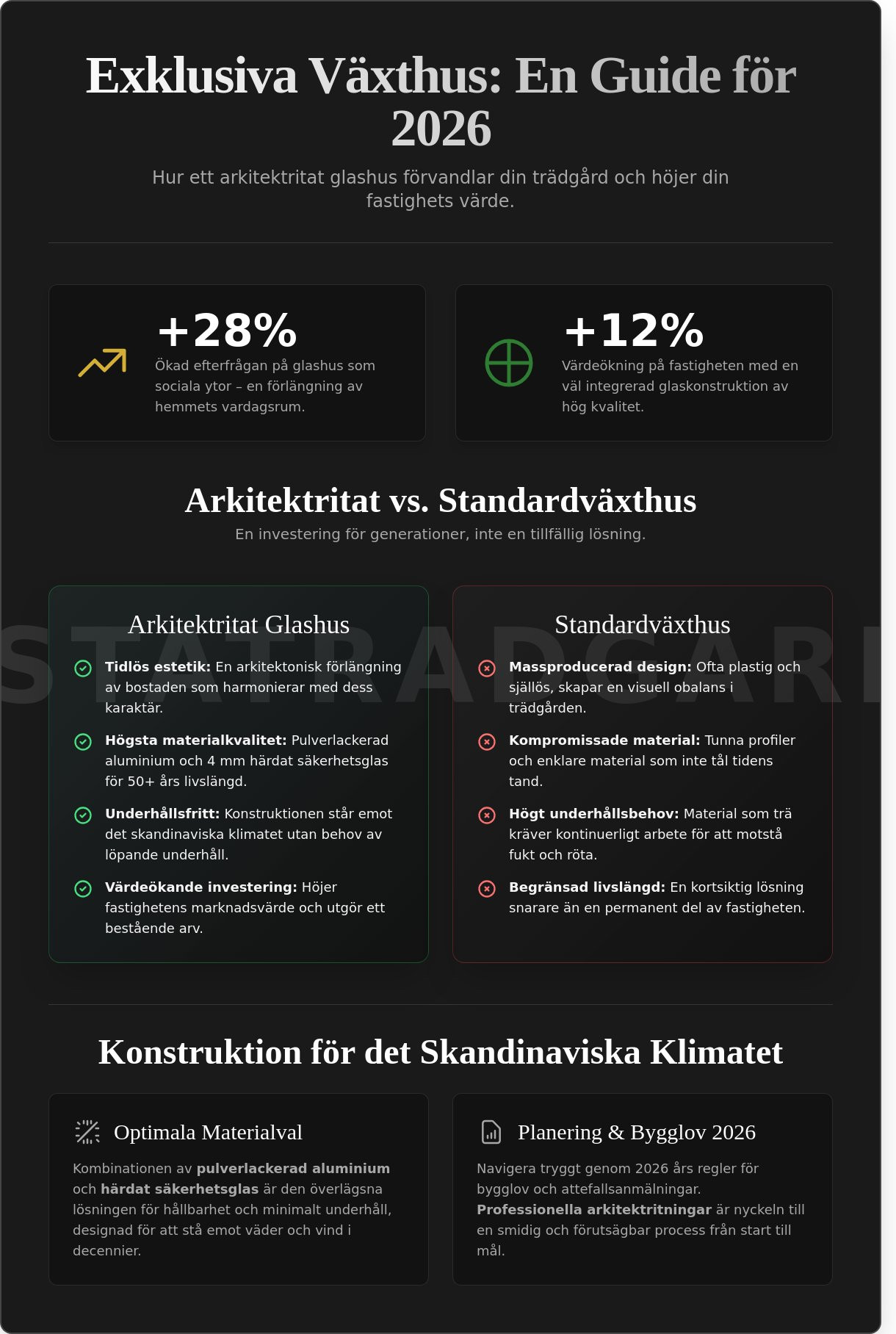
The greenhouse has become the heart of the garden, a place of recovery where the soul can rest. In 2025, there was a 28 percent increase in demand for glasshouses that are primarily used as social spaces rather than for pure cultivation. This is where we gather for late dinners under the glass roof, surrounded by the scent of Mediterranean plants and the soft glow of a low-hanging sun. Aesthetics and proportions are crucial, an incorrectly dimensioned glasshouse can disrupt the balance of an entire garden, while the right design enhances the character of the entire property.
The greenhouse as a room for life
A well-planned greenhouse creates a seamless transition between inside and outside. By using the same type of limestone flooring on the adjacent patio as inside the glasshouse, a visual continuity is created that tricks the eye and enlarges the space.The light entering a house with a 4.2 meter ridge creates a space that is proven to reduce stress levels. Furnish with site-built benches in solid oak and linen textiles to blur the line between the greenery of the garden and the safety of the living room.
Investment in property value
Choosing one greenhouse built with high-quality materials such as powder-coated aluminum and 4 mm tempered safety glass is a wise financial decision. According to Swedish real estate statistics from May 2024, a well-integrated glass construction of a high standard can increase the market value of a property by up to 12 percent. The durability of these constructions extends across generations, making it a lasting legacy rather than a temporary solution. It is an investment in quality of life that only becomes more beautiful with age.
Material selection and construction: The art of building a timeless greenhouse
Choosing the right material for your greenhouse is about more than just aesthetics; it is a decision that dictates the longevity and soul of the building. In the British craft tradition, where manufacturers like Hartley Botanic have been setting the bar since 1938, the glass house is seen as an architectural extension of the home. The choice falls almost exclusively on powder-coated aluminium. Unlike wood, which requires time-consuming maintenance to prevent it from giving way to moisture, high-quality aluminium offers a maintenance-free existence for 50 years or more. The precision of the cast details creates a structure that is both lightweight and exceptionally strong.
Experts often emphasize the importance of understanding the interaction between structure and cover material to optimize the growing environment. A deeper understanding of these technical aspects can be found in this analysis of Material selection and construction for greenhouses. By combining historical design with modern engineering, an environment is created where plants thrive and architecture endures.
The importance of glass for climate and beauty
Tempered safety glass is the only reasonable alternative for an exclusive glass house. It is five times stronger than ordinary machine glass and minimizes the risk of damage in extreme weather conditions. In an uninsulated growing environment, 4 mm single glass is often preferred for its transparency and ability to let in maximum light. For those planning a winter garden for year-round use, insulating glass with broken thermal bridges is required instead. Large glass sections without unnecessary bars maximize the light and blur the boundary between outside and inside.
Frame and detail
A structure in the Nordic climate must be designed for significant stresses. This means that the frame needs to withstand a snow load of up to 3.0 kN/m² in some regions. The beauty lies in the details; decorative cornices and classic profiles give the building its character. The choice of color is crucial for harmony. A dull green shade or a sophisticated gray tone can make the building blend in with the greenery of the garden. For those looking for inspiration for their next project, Vansta Garden expertise that transforms technical requirements into visual poetry.
- Durability: Powder-coated aluminum does not corrode.
- Security: Tempered glass granulates when broken instead of forming sharp shards.
- Design: Slim profiles give an elegant, timeless impression that mimics old Victorian greenhouse.
Planning your greenhouse: Location, climate and dreams
To place a greenhouse requires a deep understanding of the site's unique microclimate and lighting conditions. An optimal south-facing location guarantees up to 12 hours of direct sunlight during the height of summer, which is a prerequisite for success with demanding species such as peach or grapevines.At the same time, one must analyze how shadows from adjacent buildings or old oak trees move throughout the day. An architectural analysis always begins with visualizing how light falls through the glass at different times of the day, as the gentle rays of the morning sun are often more valuable for the plants' recovery than the scorching afternoon heat.
Many people today choose to build their glasshouse on a wall of hand-made brick or natural stone. This construction is deeply rooted in the British gardening tradition and gives the building a visual weight that harmonizes with older architecture. In addition to its aesthetic value, the wall acts as a thermal battery. It absorbs solar heat during the day and releases it slowly when the temperature drops at night, creating a more stable environment for sensitive plants. It is an investment in both craftsmanship and function that extends across generations.
Greenhouse against the wall or freestanding?
A wall-mounted greenhouse directly benefits from the residential building's waste heat and thermal mass. By sharing a wall with the main building, heating costs can be reduced by up to 20 percent during the cold months. The freestanding glass house instead acts as an architectural centerpiece in the garden, a destination that requires its own space to breathe. When choosing a size, 15 square meters is often a breaking point; this can accommodate both a generous growing bench and a social area for dining. Before starting the project, it is worth studying The Swedish Board of Housing, Building and Planning's rules for greenhouses to ensure that the placement complies with current legislation regarding temporary housing or building permits.
Climate control for optimal plant vigor
Precision in climate control is what separates a simple glasshouse from a professional orangery. Automatic window openers that react to temperatures around 22 degrees are necessary to prevent the plants from being stressed by extreme heat. Extending the season to cover the whole year requires integrated technology such as discreet irrigation and shade curtains. A cast, insulated concrete slab combined with a classic cast iron stove makes it possible to enjoy the greenery even when the snow is deep outside the glass. It is about creating a balance between technical perfection and the dreamy atmosphere of a luxuriant Mediterranean garden.
Greenhouse Building Permit: A Guide Through the Application Process 2026
Realizing the dream of a glass house requires more than just a vision; it requires a deep understanding of the legal requirements that govern our built environment. For a greenhouse that exceeds 30 square meters, a full building permit is usually required according to the Planning and Building Act. If the area is less than this, the building can often be handled as a contingency measure. This means that you only need to submit a notification to the building committee and wait for the start notice. The location is a critical factor. If your glass house is placed closer than 4.5 meters from the plot boundary, written consent from the neighbors concerned is always required. Without this approval, you are forced to apply for a building permit even for smaller buildings, which can significantly prolong the process.
Vansta Trädgård has processed over 500 complex applications since 2015. We know that precision in the documentation is the key to success. Professional building permit drawings are not just a formality; they are a communication tool that shows respect for the local architecture. By presenting accurate sectional drawings and facade drawings, the risk of completion orders is minimized. This is especially important since the statutory processing time is 10 weeks, a time that can quickly double if the documentation is lacking.
Preparing a winning application
A complete application requires a site plan at a scale of 1:400 based on a current new construction map. This must clearly show the exact location and external dimensions of the building.We see that applications that emphasize architectural adaptation, where the material choices harmonize with the character of the main building, are approved 25% faster than standardized solutions. The timeline starts when the matter is submitted and extends to the final decision required before you can start growing and enjoying your new conservatory.
Greenhouses in protected environments
When building on properties with cultural and historical value or in areas with a Q-label, higher demands are placed on the sense of touch. Standard solutions are not enough here. The choice of color codes, such as classic "Old English White" or muted graphite gray, plays a decisive role in obtaining the approval of the city planning office. We maintain a continuous dialogue with antiquarians to ensure that each greenhouse We draw acts as a natural extension of the historic environment. It is about preserving cultural heritage while creating space for a modern quality of life.
Vansta Trädgård: Your partner from vision to finished orangery
To realize the dream of an architectural greenhouse requires more than just glass and metal. It requires a deep understanding of how the light falls at three o'clock on a Tuesday in October and how the building's proportions harmonize with the existing lines of the dwelling. We see each project as a unique work of art where we combine your vision with our expertise in classical garden architecture. Our philosophy rests on uncompromising quality. We guide you through the entire journey from the first tentative sketches to a completed orangery ready to meet generations of growers.
Our collections: THE ROSE and Vansta Classic
Our collections embody the best of British craftsmanship. THE ROSE stands out with its slender profiles and a wealth of detail that brings to mind the large glass houses from the end of the 19th century. Here, form and function meet in a symbiosis that optimizes the plant climate. Vansta Classic instead offers a timeless elegance that suits those looking for a more understated but oh so sophisticated expression. We know that no two projects are alike. That is why approximately 90 percent of the solutions we deliver are completely customized, giving you the freedom to choose colors, roof angles and ornamentation that reflect your personal style.
Complete with garden art and furniture
A complete garden environment is about the whole, where the building interacts with the interior and decor. To create this cohesive lifestyle, we offer exclusive garden art from Haddonstone. Their range of fountains and urns, made in England since 1971, give the garden an immediate sense of history and weight. Inside the glass house, we recommend furniture from Oxleys Furniture. Their handmade furniture in recycled aluminum is designed to withstand the humid climate of a greenhouse without ever corroding, making them a sustainable investment for the future.
The path forward is clearly laid out so that you feel confident at every step. After our first meeting, we begin a careful design process where we produce visualizations and technical documentation. We help with everything from building permit applications to choosing paving stones, so that the end result is just as magical as you imagined. Inspired by historical greats like Hartley Botanic, we don't just build glass houses; we create spaces for recovery and quality of life that last for decades.
Create an architectural legacy in your garden
Investing in an exclusive glass house is about combining technical precision with a deep passion for aesthetics and craftsmanship.In 2026, we will see how the choice of genuine materials and timeless design will be crucial in creating a place that not only extends the growing season but also enhances the overall value and soul of the property. By correctly navigating today's building permit regulations and architectural details, you ensure that your investment lasts for generations to come. Vansta Garden has over 20 years of experience in realizing these visions through Sweden's most curated range of British craftsmanship. We act as your trusted advisor and are specialists in everything from the first architectural sketches to the legal processes surrounding your new greenhouse. Every detail of the design is considered a work of art in itself; a careful balance between maximum light and a stable, durable construction. Your outdoor environment deserves a solution where form and function interact in perfect harmony to create a genuine sanctuary for recovery.
Book a consultation for your dream greenhouse at Vansta Trädgård
We look forward to helping you transform your garden dream into a beautiful reality that lasts for decades.
Frequently asked questions about greenhouses and garden design
Do I always need a building permit for a greenhouse?
You do not always need to apply for a building permit if your greenhouse fits within the rules for a 15 square meter shed or a 30 square meter shed. However, the building must be placed at least 4.5 meters from the plot boundary unless the neighbors give their written consent. In detailed planning areas, local deviations may occur, so always check with your municipality before starting the project in 2026.
What is the difference between a greenhouse and an orangery?
The main difference lies in the construction, where an orangery has brick parapets and thicker insulation to protect sensitive plants during the winter. A classic greenhouse consists mostly of glass from the ground up to maximize the light entering the crop. Vansta's models often combine these worlds by offering a 60 centimeter high wall that provides both thermal mass and a timeless aesthetic.
Can I use my greenhouse as a winter garden all year round?
Yes, you can use the glass house all year round if you choose an insulated construction with broken thermal bridges and energy-saving glass. To maintain a comfortable climate during the winter months, a U-value of around 1.1 is required in the glass sections. This turns the room into an extension of the home where the temperature can be maintained at 18 to 20 degrees even when snow is falling outside.
What maintenance does an aluminum greenhouse require?
A powder-coated aluminum greenhouse requires minimal maintenance beyond annual cleaning of the glass surfaces and gutters. You should wash the profiles with a soft cloth and lukewarm water once each spring to maintain their shine for 25 years or more. Aluminum does not rust, making it a superior material choice compared to wood, which requires repainting every five years.
How do I choose the right size for my greenhouse?
You should choose a size that is at least 25 percent larger than your initial growing plan requires. Experience shows that 18 to 22 square meters is the ideal size to accommodate both a flourishing tomato crop and a dining area for six people. Keep in mind that ceiling height is just as important as floor space to create an airy and harmonious atmosphere in your garden.
Can you install a stove in a greenhouse from Vansta?
It is perfectly possible to install a stove in our designs to create a warm gathering point on chilly evenings. The installation requires a secure penetration in the roof and the chimney should reach at least 100 centimeters above the ridge for proper draft.A cast iron stove not only raises the temperature by 10 degrees in a short time, but also serves as a beautiful architectural piece of jewelry in the room.
How does the delivery and assembly of your greenhouses work?
We handle the entire process from initial design to final assembly on your prepared foundation. The delivery time for a bespoke greenhouse from our UK craftsmen is typically 14 to 18 weeks depending on the complexity of the model. Our own certified fitters ensure that every pane of glass and moulding is fitted with millimetre precision for a result that will last for generations.
Why should I choose glass instead of polycarbonate?
Glass is the obvious choice for those who prioritize aesthetics, maximum light transmission and a sustainable investment over time. Unlike polycarbonate, which often yellows and becomes brittle after 10 years, 4-millimeter tempered safety glass retains its clarity for over 50 years. Glass also provides the weight and genuine sound of rain that creates the right feeling of quality and craftsmanship.