

Furnishing an orangery for socializing is about much more than just placing beautiful furniture under a glass roof; it is an architectural balancing act where the shifts of light and the tactility of the materials create conditions for…
Furnishing an orangery for socializing: Create an exclusive social space in 2026
Jul 8, 2026
Furnishing an orangery for socializing is about much more than just placing beautiful furniture under a glass roof; it is an architectural balancing act where the changes in light and the tactility of the materials create the conditions for conversations that linger long after the sun has set. Many experience a challenge in combining the desire for ostentatious vegetation with the need for a representative social space, where the fear that the interior will feel out of place against the austere glass sections often inhibits creativity. It is a natural hesitation, as the unique environment of the glass house places high demands on both the permanence of the form and the aesthetic harmony.
Here you will learn the art of transforming your orangery into a timeless social oasis through conscious zoning and the selection of exclusive materials that not only withstand the specific climate but also age with rare dignity. We explore how to navigate the 2026 trends in sustainable luxury and the latest regulations for accessory buildings to create an environment that feels like a natural extension of the home. By combining artisanal tradition with technical precision, we create a place for representation and family life that enhances both your daily quality of life and the long-term value of the property.
Important Conclusions
- Learn how strategic zoning with plants and level differences creates natural spaces within the room for both dining and relaxation.
- Discover why material choices like aluminum from Oxleys furniture and cast stone are crucial for furnishing an orangery for socializing with a style that lasts across generations.
- Gain insight into how the right lighting strategy and decorative elements from Haddonstone blur the line between inside and outside even after dusk.
- Understand the importance of integrating the interior design vision already in the building permit drawings to ensure a harmonious architectural whole and maximum property value.
The art of decorating an orangery for socializing: A vision of elegance
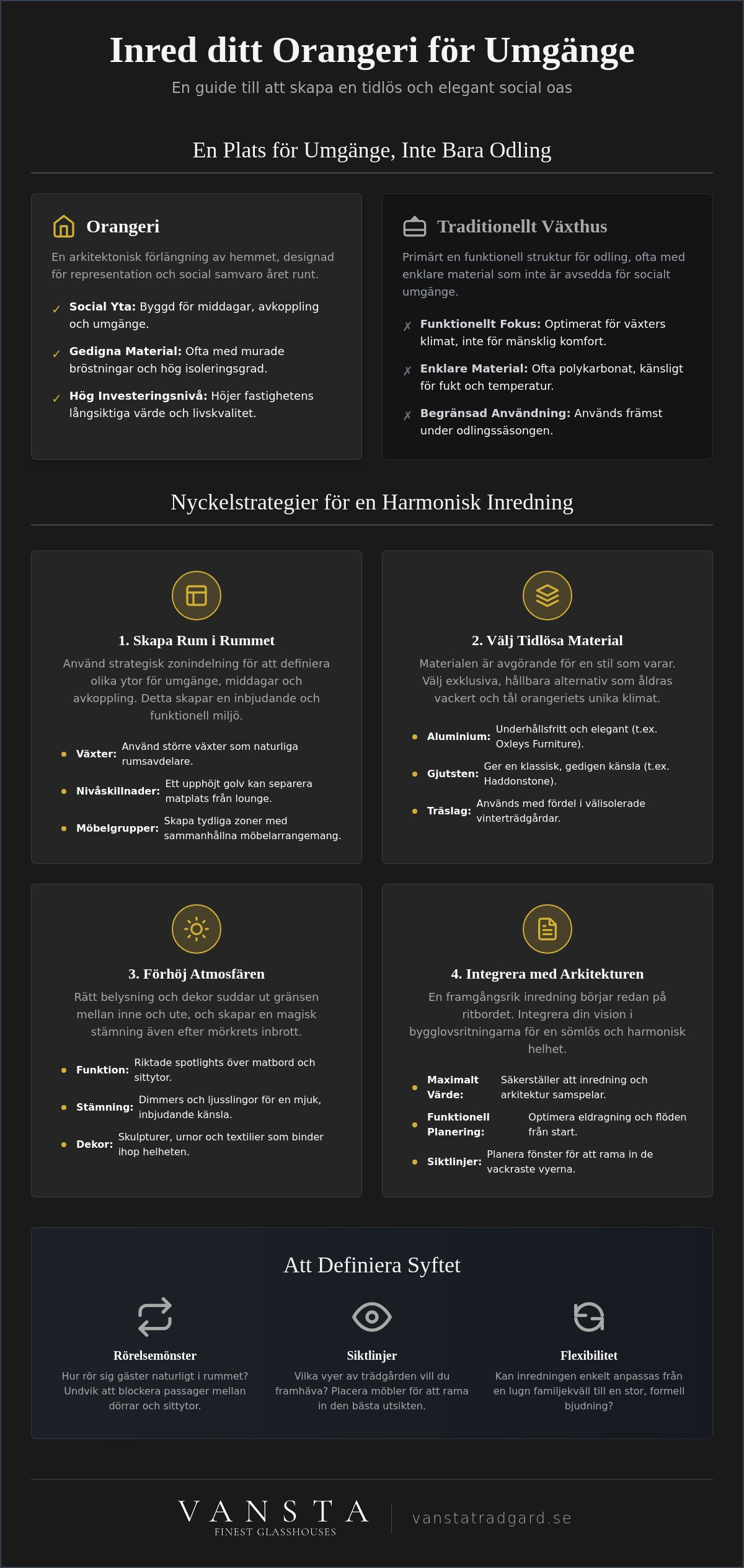
The orangery represents a unique architectural link where the wild, undisguised beauty of the garden meets the refined elegance of the home. It is not just a room made of glass; it is a place for recovery and social gathering that rests on a rich tradition. To successfully furnish an orangery for socializing requires a deep understanding of the soul of the room and its historical heritage. If you study history of the orangery It is quickly apparent that these buildings have always functioned as prestigious social spaces where the boundary between inside and outside is blurred in a sophisticated way. At Vansta, we view each construction as a living work of art where light is allowed to be the main protagonist.
Choosing an interior design philosophy for a Vansta orangery is markedly different from furnishing a simpler polycarbonate greenhouse. Here, it is the architecture that sets the tone and dictates the conditions. The classic proportions and solid material choices require an interior design that does not overpower the character of the building but rather highlights its artisanal details. Less is often more. By letting the space and large glass areas speak, you create an environment for social representation that exudes both authority and warmth. It is a long-term investment in quality of life where every piece of furniture and every plant contributes to a harmonious whole.
To deepen your understanding of how an orangery can be transformed into a living social space, we recommend this inspiring film:
The difference between a greenhouse and an orangery for social spaces
The architectural differences between a functional greenhouse and a social orangery are fundamental to the interior design. A true orangery is often characterized by brick parapets, which provide visual weight and a natural connection to the aesthetics of the main building. If the choice falls on one of our winter gardens With a high degree of insulation, the conditions for your furniture choices change drastically. Here you can confidently use more exclusive textiles and sensitive woods that otherwise risk being affected by moisture. Aesthetic durability is ensured by choosing materials that age with dignity and stand the test of time, regardless of whether it is blazing sun or winter cold outside the glass.
Defining the purpose of your social space
Before placing the first piece of seating, it is crucial to analyze the primary function of the room. Will the orangery accommodate grand dinner parties, serve as an intimate lounge for relaxation, or perhaps a combination of both? A social area needs air to breathe; it is easy to want to fill the space with too many objects. Analyze how the light falls during different hours of the day to optimize the placement of social zones. A well-planned orangery decorated for socializing should feel as inviting for a crispy breakfast in the morning sun as for an atmospheric representation under the starry sky. Consider the following aspects in your planning:
- Movement pattern: How do guests move naturally between different seating areas?
- Sightlines: What parts of the garden do you want to highlight from within the sofa or dining table?
- Flexibility: Can the interior design be easily adapted from family life to formal gatherings?
Creating rooms within the room: Architectural zoning
Successfully furnishing an orangery for socializing is about understanding how to tame the large volumes without losing the coveted space. A glass house can easily feel echoing or exposed if you don’t actively work with zoning. By creating clear rooms within the room, the open space is transformed into a series of inviting environments, each fulfilling a specific purpose. It’s about controlling the flow and the gaze; letting the architecture guide the guest from the welcoming dining area to the deeply relaxed lounge corner.
A successful modern orangery design often take these social flows into account right from the drawing board. Floor levels are a powerful architectural tool that naturally separates the dining room from the social area. By combining different floor materials, such as cool limestone floors with warming brick, visual boundaries are created that do not require physical walls. To increase the feeling of intimacy, large plants can be used as natural room dividers. A grouping of citrus trees or tall palms in beautiful containers creates both fragrance and a pleasant privacy that makes the company feel cherished.
The dining area as the heart of the orangery
The dining area should be located where the view is most dramatic but where accessibility to the dwelling house is optimal for serving. The choice of table is critical as the material must withstand intense sunlight without warping or fading unevenly. Rectangular tables provide a formal and representative feel for larger gatherings, while circular tables often promote a more dynamic and inclusive social interaction at smaller gatherings.Integrating a stove in the dining area not only extends the time of use but also creates a natural gathering point that spreads a homely warmth when dusk falls.
Lounge area: Comfort meets nature
The lounge area is the place for late, intimate conversations where comfort is the focus. Here, the seating should be positioned to maximize contact with the surrounding nature outside the glass walls. In a room dominated by hard surfaces, acoustics are a constant challenge; the use of generous rugs in natural materials is therefore crucial to dampen the sound volume and create a softer atmosphere. By strategically placing the seating group, sight lines are created that lead the eye towards the garden's eye-catcher, such as a fountain or a statue. If you need guidance on how to best arrange your space, our experts can help you with tailor-made building permit drawings and application which takes into account both aesthetic form and social function.
Furniture choices that combine aesthetics and sustainability
The choice of furniture in an orangery is a direct extension of the building's architectural language. It's about finding a balance between the visual lightness and the physical heaviness required to withstand the specific climate of the glass house. When choosing to furnish an orangery for socializing, the performance of the materials in direct sunlight and varying humidity becomes absolutely crucial for the overall experience. It is an environment where aesthetics must never come at the expense of sustainability, as the room's large glass areas expose every detail to the forces of nature.
According to international findings regarding designing a year-round orangery The focus should be on furniture that functions as a permanent part of the home, rather than temporary garden furniture. In this context, cast aluminum and cast stone stand out as superior choices. These materials possess a natural resistance to corrosion and fading, which means they maintain their elegance decade after decade. By mixing these timeless materials with carefully selected antique objects, a sophisticated style is created that feels both personal and deeply rooted in history.
Exclusive outdoor furniture from Oxleys
Oxleys furniture outdoor furniture represents a craftsmanship quality that harmonizes perfectly with Vanstas architect-designed greenhouses. Their cast aluminium collections offer a British elegance that is virtually indestructible. The beauty of Oxleys is the possibility of personalisation; the furniture can be tailored in colour choices that exactly match the orangery’s profiles or surrounding details. To create an inviting social space, the choice of textiles is equally important. By using top-quality UV-resistant fabrics, you ensure that sofas and cushions retain their lustre without fading from the intense sun streaming through the glass.
Materials that age with dignity
In an exclusive orangery, you should consistently avoid plastic and cheap woods that quickly lose their charm under the influence of moisture and heat. Instead, invest in natural materials such as stone, ceramics and wrought iron. These materials require minimal maintenance and over time develop a beautiful patina that only enhances the character of the building. The patina becomes proof of the passage of time and gives the room a sense of authenticity and permanence. By letting the interior design be dominated by materials that age with dignity, you create an environment that is not only beautiful today, but that becomes more interesting with each passing year. That is the essence of decorating an orangery for socializing with a long-term perspective.
- Cast aluminum: Easy to maintain, rustproof and timeless.
- Cast stone: Gives weight and a classic architectural feel.
- Forging: Creates slim, elegant silhouettes that don't steal light.
- UV textiles: Necessary to preserve the splendor of colors in a glasshouse environment.
Details that enhance the atmosphere: Lighting and decor
As dusk descends over the garden, the glasshouse undergoes a dramatic transformation. Furnishing an orangery for socializing requires thoughtful lighting to avoid the large glass areas turning into "black windows", which can easily create a feeling of exposure and cold. By working with light in different layers, a cozy atmosphere is created where the boundaries of the room are pleasantly blurred. It's about creating a visual security that invites company long after the last ray of sunlight has disappeared behind the horizon.
An often overlooked detail in creating an exclusive environment is the importance of scent for social well-being. By planning for a multi-sensory experience, the feeling of luxury and presence is deepened. Planting jasmine or citrus plants that spread their subtle scent in the warm evening air enhances socializing in an almost poetic way. The contrast between the hard glass surfaces and soft, tactile textiles in natural materials such as linen and wool further contributes to creating a balanced harmony that dampens the acoustics and invites touch.
Lighting design in the glass house
Discreet spotlights integrated into the ceiling structure provide a functional foundation, but it is the atmospheric floor lamps and candles that give the room its soul. By lighting the plants from below, exciting shadows are created against the brick walls, giving the room unexpected depth and a lively character. Sturdy lanterns in a classic design become beautiful sculptures in themselves during the day and spread a soft, flickering glow during intimate evening conversations. It is in the meeting between the directed light and the soft glow that the true magic of the orangery arises.
Garden art from Haddonstone
Garden art doesn't have to stop at the doorstep; it often finds its most natural place within the protective walls of the orangery. By placing a statue or a small fountain inside the orangery, an eye-catcher is created that anchors the room in a rich European tradition. Products from Haddonstone in cast stone provide a historical weight that few other materials can match. A rippling fountain also contributes a peaceful sound climate that masks unwanted noise from outside and enhances the feeling of a private oasis. Here you can read more about how to choose the right one Haddonstone Fountains to create a unique centerpiece in your social environment.
Cast stone pots act as architectural anchors, giving the space structure and a sense of permanence. Their ability to age beautifully and develop a natural patina means they blend into the orangery's construction over time. Explore our curated selection of Haddonstone Pots and Statues to find the details that complete your vision of an exclusive social space.
From floor plan to finished living space
The journey towards a perfect orangery begins long before the first pane of glass is installed. To successfully furnish an orangery for socializing, the vision for the social space must be integrated into the early drawings. It is at this stage that the invisible but oh-so-important details are determined: the placement of electrical outlets for atmospheric lighting, the drawing of water for a rippling fountain, and the planning of the infrastructure that makes the room inviting all year round.By letting the needs of the interior design guide the technical design, compromises that can later limit the social potential and aesthetic harmony of the room are avoided.
With the new rules for accessory buildings that came into force on December 1, 2025, the possibilities for creating generous spaces without a building permit have changed and often simplified. An area of up to 30 square meters within a detailed planned area provides fantastic conditions for furnishing an orangery for socializing where both a dining area and a lounge can be accommodated with a good margin. Understanding these legal frameworks is part of the expertise we at Vansta offer to ensure that your investment is both legally correct and architecturally perfect. It's about building with a long-term perspective where every detail serves the whole.
Architectural consulting and design
Vansta Orangeries offers not only physical constructions but a complete architectural journey from dream to reality. We assist with everything from the first sketches to finished building permit drawings and application, ensuring that the transition between your existing home and the new glass construction is seamless. By planning for electricity and water early in the process, we can hide installations in a professional way, which allows the architecture and interior design to speak undisturbed. The goal is to create an environment where the line between outside and inside is blurred and where every square meter is optimized for social gatherings.
Invest in quality of life
Choosing quality in every detail is a decision for the future. An architect-designed orangery is not just a social space for today's needs, but a legacy that can be managed by future generations. It is a lasting investment that increases the market value of the property and, above all, enriches the lives of those who live there. Quality always pays off over time, especially in environments where materials are exposed to the changes of nature. If you want to deepen your knowledge of how to create this timeless environment, we recommend our comprehensive guide to an exclusive conservatory. Please contact us for a personal consultation where together we can realize your dream of a social oasis characterized by authenticity and permanence.
Realize your vision of a timeless social oasis
Creating a social space under glass is an art form that requires both technical precision and an intuitive sense of aesthetics. We have explored how the right architectural zoning and the choice of materials that age with dignity lay the foundation for an environment where conversations can take place. By strategically furnishing an orangery for socializing With a focus on craftsmanship and thoughtful lighting design, the building is transformed into an integral part of the home; a place for both representation and tranquility that endures across generations.
Vansta Trädgård stands by your side as a trusted advisor throughout the project. As the exclusive agent for established brands such as Oxleys and Haddonstone, and with deep expertise in planning permission and application processes, we ensure that your vision is realised without compromise. Our architect-designed solutions are created to be a value-sustaining investment that enhances both the quality of life and the character of the property.
Discover Vansta's exclusive orangeries and book a consultation to begin your journey towards a social oasis where every detail carries a story of timeless elegance. Let us together create a room that not only captures the light, but also becomes the heart of your social life.
Frequently asked questions about decorating an orangery for socializing
What furniture is best suited for socializing in an orangery?
Furniture made of cast aluminum or cast stone are the most suitable choices for this unique environment.These materials possess a natural resistance to the great differences in temperature and intense light without losing their aesthetic sharpness. By choosing handcrafted furniture from manufacturers like Oxleys, you create a durable base that harmonizes with the architectural quality of the building.
How do I keep the orangery warm for socializing during the winter?
An integrated stove or water-based underfloor heating are the most effective solutions for maintaining a comfortable temperature during the winter months. For orangeries that will be used all year round, the degree of insulation in the glass sections and the choice of a conservatory construction are crucial. It is important to plan for these heat sources already in the first planning permission drawings to ensure an even and inviting climate.
How do I avoid fading furniture in a glass house?
Top quality UV resistant fabrics are essential to prevent cushions and pillows from fading in the strong sun. Materials such as cast aluminium and natural stone are inherently immune to the sun's rays and require no protection. By strategically furnishing an orangery for socializing With these durable materials, you reduce the need for future maintenance and preserve the elegance of the room.
Can I have a dining area in an orangery that is also used for growing?
Yes, it is possible to combine cultivation and social spaces by applying conscious architectural zoning. Large plants in beautiful containers act as natural room dividers that create intimacy and privacy at the dining area. It provides a vibrant environment where the scent of citrus flowers and greenery enhances the dining experience and creates a unique atmosphere for your guests.
What type of lighting is recommended for late evenings in the orangery?
A combination of discreet spot lighting and soft, multi-layered mood lighting creates the best atmosphere after dusk. By lighting larger plants from below, a visual depth is created in the room that counteracts the feeling of black window panes against the darkness. Candles in sturdy, classic lanterns provide the final touch of warmth and presence in the social area.
Do I need a building permit to furnish my orangery as a living room?
The interior design itself does not require a building permit, but the size and location of the building are governed by the new rules for accessory buildings that came into force in December 2025. Up to 30 square meters can often be built without a building permit within a detailed planning area, provided that certain requirements are met. However, it is important to define whether the building will be used as an extension to the residential building or as a free-standing structure.
How do I create good acoustics in a room with so much glass?
The acoustics are most effectively improved by introducing tactile and soft surfaces that dampen sound reflections against the glass walls. Generous carpets in natural materials, abundant green plants and quality textiles are necessary tools to create a pleasant conversational climate. These elements break the sound waves and transform the echoing glass hall into a cozy and subdued lounge.
Which plants best contribute to a social atmosphere?
Fragrant plants like jasmine, citrus and heirloom geraniums are great for creating an inviting social atmosphere. Their subtle scents contribute to a multi-sensory experience that makes socializing more memorable and relaxed. furnishing an orangery for socializing with greenery that offers both visual beauty and fragrance, creating an immediate feeling of luxury and well-being for everyone present.