

It is the craftsmanship, not merely the material, that determines how metal outdoor furniture performs and feels on the patio. Metal can unite a distinct architectural form with robustness, yet characteristics differ bet…
Metal Outdoor Furniture for Style and Durability on the Patio
Nov 9, 2026
It is the craftsmanship, not merely the material, that determines how metal outdoor furniture performs and feels on the patio. Metal can unite a distinct architectural form with robustness, yet characteristics differ between aluminium and steel, for instance. Material choice, surface finish, and construction influence both the aesthetic expression of the furniture and how naturally it integrates with the space.
The appeal of metal is easy to appreciate: clean lines and well-proportioned details can impart a timeless character to the outdoor living area. At the same time, practical considerations play a vital role, from how frequently the pieces are moved to how exposed the location is to wind and weather. A well-considered setting therefore begins by balancing aesthetic appeal, practical use, and material quality.
Here you will discover what distinguishes aluminium from powder-coated steel, how surface treatments affect metal's resistance, and what factors to consider regarding colour, comfort, and maintenance. We also examine how the form and weight of furniture interact with patio architecture, ensuring your choice is both practical and firmly anchored in its environment.
Key Takeaways
- Select materials and construction based on whether the furniture will stand on a balcony, terrace, or in the garden.
- Weigh the lightweight, effortlessly movable quality of aluminium against the more grounded, substantial feel of steel when choosing a frame.
- Consider surface treatment and maintenance as an integral part of material selection, especially on an exposed patio.
- Evaluate how grey, brown, black, and anthracite interact with the building's facade and garden palette.
- Plan placement and circulation space so the arrangement functions just as beautifully in everyday life as it does within the wider design scheme.
Why Choose Metal Outdoor Furniture?
Metal furniture can provide an architectural anchor for a balcony, terrace, or garden. A thoughtful choice accounts for both the spatial geometry of the site and how it will be enjoyed.
Use on Balconies, Terraces, and in the Garden
On a narrow balcony, a compact table can leave an unobstructed walkway to the door. On a terrace, a dining group can instead frame outdoor gatherings close to the house. In the garden, a freestanding table setting can create an inviting destination between the residence and surrounding plantings. Begin by measuring the surface and plotting out the intended placement of the furniture.
Account for chair movement as well, not just table dimensions. It should be effortless to pull chairs out without obstructing doorways, walking paths, or access to the garden. The shape of the table influences how easily guests reach their seats. Round tables encourage conversation, while rectangular tables often echo the linear proportions of a terrace.
Temperature also influences seating comfort. Metal can feel cool in mild weather and warm when placed in direct sunlight. Cushions enhance comfort, especially during extended dining. Choose textiles designed specifically for outdoor use and plan where they will be stored as the weather shifts.
Selecting the Right Metal
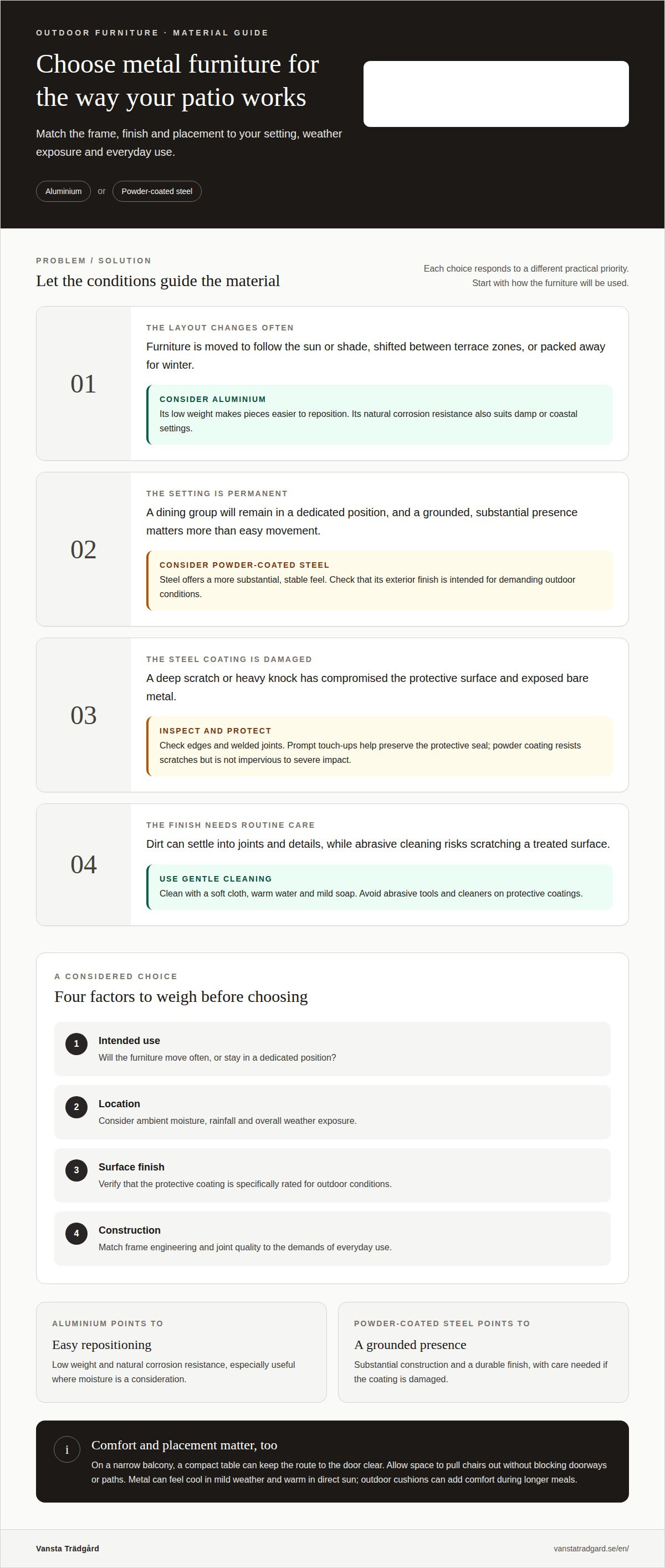
Aluminium and steel present distinct properties worth weighing carefully. Aluminium is lightweight and inherently rust-resistant, making it ideal for furniture shifted to follow the sun or shade. Steel offers a more substantial, grounded presence well-suited to a permanent dining setting. Compare the finish as well, as it dictates how effectively the frame is shielded outdoors.
A powder-coated surface provides exceptional protection for a steel frame, though deep scratches can expose the raw metal underneath. Inspect edges and welded joints regularly during cleaning. If the coating is compromised, prompt touch-ups will preserve its protective seal. Avoid abrasive cleaners that could scratch treated surfaces, opting instead for a soft cloth, clean water, and mild soap.
Metal furniture is particularly functional when seasonal storage or reconfiguration is needed. Foldable or stackable designs release valuable space when not in use. On a compact balcony, this frees up floor space between meals. In the garden, lighter chairs can effortlessly migrate to another seating nook as the day evolves.
Consider also the end-of-life cycle of the furniture. Metal designs can be recycled or processed according to local municipal collection guidelines. Keeping the finish intact throughout its lifespan ensures optimal performance and appearance, making the choice a balance of day-to-day utility and sustainable material management.
Aluminium Compared to Powder-Coated Steel
The choice between aluminium and powder-coated steel hinges on how the pieces will function on your patio. Look beyond the metal type alone: frame construction, surface finish, and intended use must all be evaluated together. Aluminium is celebrated for being lightweight and rust-free, whereas powder-coated steel delivers a solid, stable construction with a durable surface finish. Each points toward distinct priorities.
Begin by considering how frequently the layout will change. If tables and chairs will move across various zones of the terrace, low weight becomes a practical asset. Aluminium is typically far lighter than steel or iron, making it effortless to reposition. If the suite is to remain in a fixed position year-round, the reassuring heft of steel may outweigh the ease of portability.
The microclimate also guides this comparison. Aluminium is exceptionally well-suited to damp or coastal settings due to its natural corrosion resistance. For steel, the exterior finish is paramount: it must be engineered for demanding outdoor environments. A powder-coated frame offers robust scratch resistance, though it is not impervious to severe impact. Damage that exposes bare metal must be sealed to maintain long-term protection.
Evaluate these options based on how the furniture will be handled throughout its life outdoors. Consider whether pieces will be moved for cleaning, packed away for winter, or left exposed to changing weather conditions. Decide whether the visible frame should present a delicate, slender aesthetic or a bolder, more architectural outline. This grounds the decision without confining it to a single technical attribute.
A balanced evaluation follows four key aspects:
- Intended Use: Determine whether the furniture will move often or remain in a dedicated position.
- Location: Factor in ambient moisture, rainfall, and overall weather exposure.
- Surface Finish: Verify that the protective coating is specifically rated for outdoor conditions.
- Construction: Match frame engineering and joint quality to the demands of everyday use.
Maintenance must respect the integrity of the surface coating. A soft cloth, warm water, and mild soap are ideal for routine care, whereas abrasive tools can scratch protective coatings. Inspect steel finishes carefully following any heavy knocks. Aluminium also benefits from regular cleaning to prevent dirt and grime from settling into joints and ornate details.
The synthesis is straightforward: choose aluminium when low weight and high moisture resistance are paramount. Choose powder-coated steel when structural weight, stability, and a resilient, durable finish take precedence. In both cases, craftsmanship, lifestyle use, and ongoing care determine how elegantly the pieces endure over time.
Prices for metal outdoor furniture vary widely across styles, materials, and manufacturers. Evaluate current market price ranges alongside material selection, structural integrity, and finish quality before arriving at a decision.
The natural strength of metal furniture does not mean anti-corrosion protection can be overlooked. Metal outdoor furniture, such as aluminium or steel, is robust and enduring, but thoughtful rust protection remains essential. It is wise to consider material selection and surface treatment as one cohesive decision rather than two detached criteria. When comparing collections, verify whether the surface features an architectural powder coating or a specialized exterior treatment.
Make surface protection an integral part of your product comparison before making an investment. Corrosion resistance must be assessed in tandem with the properties of the metal, frame detailing, and intended placement. This yields a far more practical assessment than simply choosing between aluminium and steel. Base your selection on proven surface performance tailored to your specific garden environment.
Colours and Finishes
Colour and surface texture define the visual presence of metal furniture. A sleek, smooth frame creates an understated, modern tone, while visible joins and classic profiles highlight artisanal construction. Never view colour in isolation from the chair back, table legs, or framework details; fine craftsmanship reveals itself upon closer inspection.
Quality of execution is especially apparent where different elements intersect. Examine where legs meet the seat frame or how a tabletop rests on its substructure. Consistent proportions establish visual harmony. If tables and chairs feature contrasting designs, a unifying detail—such as a matching leg profile or consistent surface sheen—ties the collection together seamlessly.
Lustre profoundly affects how colour is perceived. A matte or satin finish allows surrounding plantings and architecture to take centre stage, while a subtle gloss draws the eye toward the furniture itself. Profile dimensions also alter perception: slender profiles convey visual lightness, even in deep shades, whereas broader sections establish a more grounded presence. Evaluate colour tone and surface texture across the entire ensemble.
An outdoor dining area can also harmonize multiple materials. A metal frame can be complemented by a tabletop of natural stone or timber, paired with textured exterior upholstery. Restricting the palette of primary materials preserves visual calm. If the tabletop features pronounced grain or veining, a refined, understated metal frame allows the natural beauty of the surface to shine.
When assessing colours and finishes, pay close attention to the following details:
- The cross-section of the frame and how its profile is mirrored across tables and seating.
- Seamless transitions between legs, seat, backrest, and armrests.
- The surface sheen in relation to tabletop materials and outdoor upholstery.
- How closely the aesthetic language of the furniture complements the residence.
A unified dining setting does not require every piece to be identical. Subtle variations in chair design can add visual dynamism, while a shared frame profile maintains cohesion. On a compact terrace, visually light silhouettes help the furniture blend into the backdrop. On a spacious patio, more substantial profiles lend the setting a distinguished, well-defined presence.
View the finish as a hallmark of true craftsmanship. Refined terminations, well-balanced proportions, and flawless welding create an enduring aesthetic. When fine details work in concert with colour and texture, outdoor furniture takes its rightful place in the architectural harmony of the home, transcending transient design trends.
Colour Options in Grey, Brown, Black, and Anthracite
Grey, brown, black, and anthracite each impart a distinct mood to metal furniture. The selected shade governs how prominently the furniture stands out and how naturally it converses with its setting. Always compare colours against permanent architectural elements such as timber decking, natural stonework, masonry, or painted facades to anchor your choice in the surrounding environment.
Grey embraces both warm and cool undertones. Set against grey stone paving, a tone-on-tone palette creates a serene, seamless impression, whereas a bolder contrast sharpens the frame's silhouette. Evaluate grey furniture against mortar lines, facades, and terrace surfaces; even a subtle shift between two greys can dramatically change the perceived scale of a dining group.
Brown brings warmth and organic affinity to the outdoor setting. A brown frame echoes the natural tones of timber decking, cedar elements, or an orangeri with fine woodwork. To prevent tones from blending excessively, introduce contrasting cushions or a stone tabletop. Set against lush foliage, brown offers an organic contrast, while paired with brickwork it establishes a sophisticated, grounded continuity.
Black defines the profile of chairs, tables, and armrests with striking architectural clarity. On a pale terrace, dark framework emphasizes clean structural lines. In gardens framed by dark window joinery, black metal echo the architectural detailing of the main house. Take silhouette into account: slender, forged legs express elegance, while heavier profiles convey permanence and strength.
Anthracite provides a softer alternative that is often less severe than pure black. It unites dark ironmongery, window frames, and outdoor furniture without abrupt contrast. Test anthracite against both pale and deep backgrounds: on light limestone, the furniture stands out with sculptural poise, while on weathered decking, it settles into a quiet, understated elegance.
Colour selection extends to the finest design accents. Visible structural fasteners can accentuate the meeting of frame and seat, whereas a uniform, monochrome finish creates a disciplined, cohesive feel. Evaluate colour and finish as a single unified composition rather than choosing a frame tone in isolation.
Follow this checklist to guide your colour choice:
- Hold material swatches against facades, flooring, and adjacent garden beds.
- Observe the chosen shade under both direct sunlight and evening shade.
- Assess table and chair silhouettes as one unified sculptural group.
- Incorporate upholstery fabrics and parasols before finalizing your palette.
Through grey, brown, black, or anthracite, you can orchestrate nuanced visual relationships: grey integrates softly, brown harmonizes with timber, black articulates architectural form, and anthracite unites darker exterior details. Comparing samples on site ensures a harmonious fit between structural craftsmanship and patio architecture.
Robustness and Design of Metal Furniture
Frame engineering, surface finish, and silhouette define both structural resilience and aesthetic elegance. Corrosion resistance and overall lifespan depend on material quality, surface protection, environmental exposure, and regular care.
Robustness and Durability
Begin by evaluating how the frame is engineered. The gauge of the profiles, cross-bracing, and welding standards directly govern how rigid a chair or table feels. Substantial metal frames are ideally suited to permanent seating zones. On an exposed terrace subject to coastal gusts, structural weight provides vital stability and peace of mind.
Consider how each piece will be used on a daily basis. A chair moved frequently demands different structural qualities than a lounge suite set permanently around a fire pit. True stability is not merely a product of the metal alloy; structural geometry, balance, and thoughtful weighting all contribute.
Design and Aesthetics
The form of metal furniture is just as defining as its inherent strength. Tapered legs, contoured backrests, and sculpted joints lend the frame an architectural elegance. A minimalist chair reads as light and airy, while ornate scrollwork or substantial cross-members give the design classic presence. Always evaluate furniture from multiple vantage points, not just head-on.
In an outdoor dining area, tables and chairs must interact effortlessly. Verify table height, leg positioning, and armrest clearance. If armrests bump into the table apron, chairs cannot be tucked away neatly. Rigorous design combines effortless ergonomics with a consistent architectural vernacular.
Rust Resistance and Longevity
Metal furniture can feature excellent anti-corrosion protection, but chips in the surface can expose the substrate beneath. Rust resistance relies on both the alloy and the integrity of its surface finish. Longevity varies with construction standards, placement, environmental exposure, and seasonal care. No single lifespan applies universally to all collections.
Inspect joints, edges, and chair feet regularly, as these areas experience the greatest physical contact. Address deep scratches promptly with appropriate touch-up coatings to maintain protection. Clean the frame with a soft cloth, water, and mild detergent, avoiding scouring pads that could compromise the coating.
A durable investment brings together several concrete factors: the frame must align with the intended use, welds should be smooth and continuous, and surface treatments must be rated for outdoor use. For permanent outdoor dining, a heavier frame offers enduring security, while occasional seating benefits from lighter handling.
Maintenance plays an indispensable role in protecting your investment. Dry the metal after cleaning and address surface abrasions early. During harsh or damp winters, breathable covers or protected storage safeguard the finish, while regular seasonal inspections keep furniture in pristine condition.
Routine care makes it easy to spot minor wear before it affects structural performance. A high-grade protective finish minimizes corrosion risks and makes daily cleaning effortless. Substantial frames are particularly advantageous in windy settings, providing a grounded presence where lighter alternatives might shift.
For example, the Modena six-person dining set in light grey weighs 58 kg and features steel paired with outdoor mesh fabric. The Cento six-person dining set in anthracite weighs 104 kg and is crafted entirely from powder-coated steel. The Porto Comida 6 corner lounge set in anthracite weighs 88 kg in powder-coated steel, while the Porto Premium 6 set in brown weighs 108 kg. This comparison illustrates that collections designed for similar uses can vary considerably in mass and material combinations. Consider mobility needs and exposure to wind when choosing the optimal frame weight.
Vansta Trädgård: Oxleys Furniture Outdoor Furniture
Vansta Trädgård offers outdoor furniture from Oxleys Furniture for those who wish their patio seating to become an architectural extension of the home. Once you have weighed materials, colours, and engineering against your garden's layout, the next step is selecting furniture that honours both residential architecture and landscape character.
Consider how a dining or lounge setting will converse with your facade, terrace paving, and surrounding beds. A balanced arrangement accommodates both daily meals and peaceful moments of reflection, while craftsmanship and materials meet the natural environment with grace.
Contact Vansta Trädgård to discuss collections from Oxleys Furniture and explore how their timeless designs can elevate your outdoor space.
Let the Patio Take Shape Over Time
An outdoor living area achieves its greatest character when it evolves alongside the architecture of the house and the natural rhythm of the garden. View your choice of metal outdoor furniture as part of a grander vision: a dining area can later be accompanied by structural plantings, dappled shade trees, or a sheltered glasshouse. Every addition will then share a natural dialogue with what came before.
Vansta Trädgård’s Vansta Orangerier, Vansta Classic orangeries, and greenhouses from THE ROSE collection can also help create a seamless connection between home and garden. Whether you are designing an intimate courtyard or an expansive terrace, clarity of purpose and form makes every subsequent choice rewarding.
When you are ready to explore your outdoor living possibilities, you are warmly invited to contact Vansta Trädgård regarding outdoor furniture. Let our conversation be the starting point for an outdoor space of enduring beauty and bespoke elegance.
Frequently Asked Questions About Metal Outdoor Furniture
How do I maintain my metal outdoor furniture?
Maintain your furniture through gentle cleaning and early inspection. After heavy rain or extended seasonal storage, inspect joints, edges, and feet closely, as accumulated dirt can mask surface wear. Keep cushions stored dry when not in use. Breathable covers or sheltered winter storage during cold, wet months will preserve the finish for years to come.
What should you check before purchasing?
Ensure that dimensions and construction match your spatial layout. Measure the area carefully, allowing ample clearance to pull out chairs, open terrace doors, and move freely around the table. Inspect welds and surface coatings for smoothness and consistency. Always test the seating comfort: backrest inclination, seat depth, and armrest height are vital for long, leisurely dining.
What makes metal furniture practical for outdoor use?
Metal furniture is available in diverse structural configurations suited to varying needs. Lightweight aluminium models offer effortless mobility when rearranging the layout, while foldable or stackable chairs free up floor space when not required. On a compact balcony, this flexibility leaves room for other activities between dining hours.
What types of metal outdoor furniture are available (e.g., steel, aluminium, and wrought iron)?
The primary materials are aluminium, steel, and iron, including wrought iron. Aluminium is lightweight and inherently corrosion-resistant, making it ideal for wet climates. Steel provides substantial weight and strength, typically protected by a powder-coated finish. Wrought iron is shaped through traditional forging, offering an artisanal, historic aesthetic. Always evaluate the surface coating alongside the metal type.
Which material is best for outdoor furniture: aluminium, steel, or iron?
The ideal choice depends on your site conditions and how the furniture is used. Aluminium is easy to rearrange and excels in damp environments. Powder-coated steel offers structural stability and weight. Wrought iron provides unmatched classic presence and permanence. Weigh mass, construction, and weatherproofing against the demands of your patio.
How do you protect metal outdoor furniture against rust, weather, and UV radiation?
Protect metal furniture by maintaining the integrity of its surface coating and minimizing unnecessary weather exposure. Dry frames after washing, and address chips or scratches immediately before moisture reaches the metal underneath. Utilizing fitted covers or dry storage during damp, freezing winters extends lifespan significantly. Positioning furniture beneath a pergola or roof overhang reduces harsh sun and direct precipitation.
How do you clean and care for metal outdoor furniture?
Clean metal furniture using a soft microfiber cloth, warm water, and a mild soap. Wipe down the entire frame, especially around welded joints and under seats where grime tends to collect. Rinse thoroughly with clean water and towel dry to prevent water spotting. Avoid harsh solvents, bleach, or abrasive pads, as these can scratch and degrade protective coatings.