

Imagine if your greenhouse was not only a place for the last harvest of the summer, but the most desirable room in the home when the frost covers the windows? We know that the dream of an orangery with a stove is often accompanied by thoughts about r...
Orangery with stove: A guide to architectural warmth and aesthetics in 2026
Apr 8, 2026
What if your greenhouse were not just a place for the last harvest of the summer, but the most sought-after room in the home when the frost covers the windows? We know that the dream of an orangery with a stove is often accompanied by concerns about smoke ducts through glass roofs and the building permit regulations that require both precision and knowledge. It is a natural concern that a fireplace will feel out of place in a fragile glass structure, but with the right architectural guidance, it instead becomes the natural heart of the room that invites rest regardless of the season.
In this 2026 guide, you’ll learn how to integrate a fireplace to create a timeless gathering place that blurs the line between indoors and outdoors all year round. We give you the technical confidence you need to realise your vision of a harmonious glass-enclosed living space, where every detail exudes quality and craftsmanship. Combining our expertise with a passion for British garden heritage, we show how warmth becomes a signature architectural feature that enhances quality of life for generations to come.
Important Conclusions
-
Learn how to transform your glass house from a seasonal place into a winter oasis where the fire becomes the natural and atmospheric heart of the room.
-
Discover how to choose the right fireplace effect based on the insulation level of the glass structure to achieve a perfect balance between architectural form and thermal function.
-
Gain insight into the technical solutions for safely integrating an orangery with a stove, including how smoke ducts are routed through tempered glass in accordance with current safety requirements.
-
Navigate through the legal requirements and understand why a fireplace requires a building permit and fire safety documentation, even when the building itself is exempt from a building permit.
-
Explore how architect-designed design and flexible collections create the conditions for realizing a timeless meeting place that blurs the line between indoors and outdoors all year round.
Table of contents
-
The dream of an orangery with a stove: An extension of the home
-
Choosing the right stove for your glass house: Form meets function
The dream of an orangery with a stove: An extension of the home
To plan for a Orangery is about more than just adding square footage to your home; it's about creating a spiritual sanctuary where the line between outside and inside is completely blurred. In 2026, we will see how architecture moves towards more permanent solutions where a orangery with stove becomes the natural center of the home. It is here, between the thin steel profiles and the generous light, that the fire acts as a visual and thermal bridge between the wild nature of the garden and the security of the home.
To better understand how a fireplace can transform a glass house and create a usable room year-round, see this practical walkthrough:
The difference between a traditional seasonal greenhouse and a winter oasis is fundamental. While the simple greenhouse lives in the conditions of summer, a well-built one defies orangery with stove the Scandinavian seasons. Vansta's philosophy is based on the idea of a space for recovery, where genuine craftsmanship meets quality of life.A cast iron stove not only provides much-needed warmth on sub-zero nights; it adds architectural weight and history to the space, in keeping with the British heritage of manufacturers like Hartley Botanic. It's an investment that transforms the garden room into a place of reflection rather than just storage.
From grow room to social center
The warmth of the fire means that social life can move outside long before the spring sun has had time to warm the ground in earnest. It's about creating an atmosphere that invites undisturbed reading, morning meditation or deep conversations during crisp autumn evenings. Investing in a conservatory is a long-term investment in well-being. In an era where digital distraction is increasingly taking over, the fireplace becomes a gathering point that promotes presence. According to architectural analyses for 2026, homeowners are now prioritizing multifunctional spaces that combine botanical interest with social interaction.
Aesthetic benefits of a fireplace
Architecturally, the stove acts as an eye-catcher, a so-called focal point, anchoring the geometry of the room. The interplay between the natural daylight flowing through the glass and the warm, vibrant glow from the flames creates a dynamism that no other element can replace. The choice of materials is crucial to achieving timeless elegance.
-
Cast iron: Gives a robust and classic feel that ages beautifully.
-
Steel and glass: Creates a contrast between the heavy element and the sheer construction.
-
Natural stone: A fireplace plan in limestone or slate reinforces the connection to the garden outside.
This meeting between the industrial and the organic reinforces the feeling of genuine craftsmanship where every detail is carefully selected to last for generations.
Choosing the right stove for your glass house: Form meets function
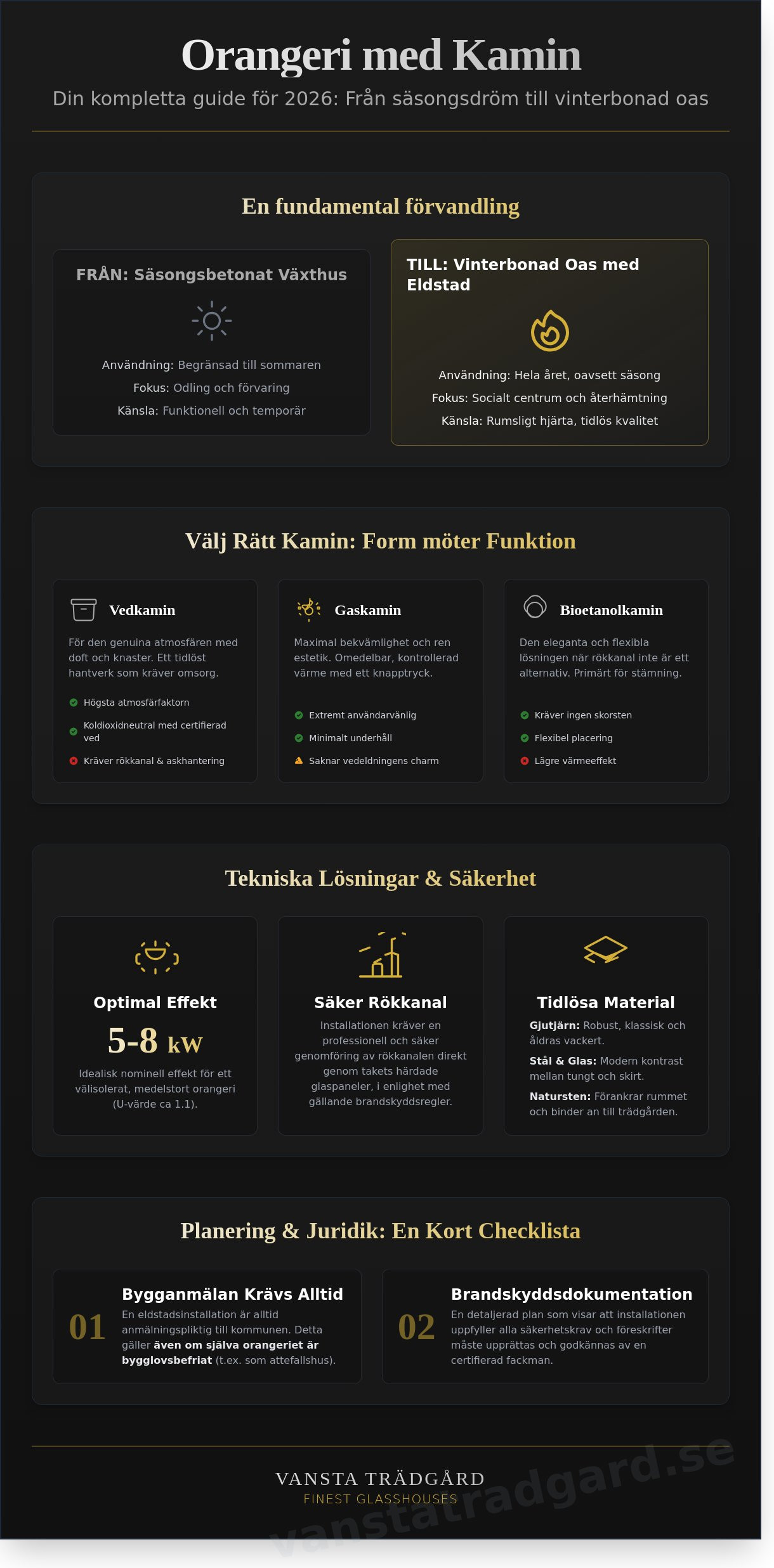
Creating an orangery with a stove is about finding the perfect balance between the sheer lightness of the glass and the heavy, secure presence of the fireplace. It is a technical challenge where the degree of insulation of the glass structure determines the power requirement of the stove. A modern glass house with a U-value of around 1.1 requires a different dimensioning than a simpler greenhouse. A stove with a nominal power of 5 to 8 kW is often ideal for maintaining a comfortable temperature in a medium-sized room even when frost bites the windows. The choice of a fireplace is not just a decision about heat; it is a decision about the soul of the room and how the light from the flames will dance against the large glass surfaces during late winter evenings.
Sustainability is a key aspect when choosing a fuel. Certified wood from local forests remains a carbon-neutral option that speaks to our ancient senses. For those who prioritize simplicity, modern gas fireplaces offer an instant heat source that can be controlled with precision, minimizing energy waste. Each choice reflects a lifestyle where quality and long-term thinking take precedence over quick fixes. It’s about investing in an environment that will bring joy for generations.
Classic wood stoves vs. modern alternatives
The scent of the wood-burning stove and the soothing crackle of burning birch wood create a genuine atmosphere that is hard to beat. It is a craft in itself to look after the fire. For environments where a flue is not technically possible, bioethanol stoves offer an elegant solution without smoke. Gas stoves are gaining ground due to their ease of use. They provide controlled heat and a clean visual experience that fits well in a minimalist orangery where you want to avoid handling ash and firewood.
-
Wood stove: Unbeatable atmosphere and scent for the traditional feel.
-
Gas fire: Fast heating and precise temperature control.
-
Bioethanol: Flexible placement without the need for a chimney in certain designs.
Design choices that last over time
When choosing to supplement left orangeries With a fireplace, you should aim for lines that correspond to the building's classic architecture. A freestanding stove placed centrally in the room acts as a sculptural centerpiece and spreads the heat evenly in all directions. If you instead choose to place the stove against a brick wall, a sense of historical weight and stability is created. To create an inviting environment around the fire, you can advantageously integrate exclusive seating furniture from Oxleys furniture. Their handmade aluminum furniture can withstand the temperature changes that can occur near a heat source and offers a timeless elegance that matches the aesthetics of the orangery.
The placement of the stove should always be planned based on how people move around the room. It is important to create sight lines where you can enjoy both the fire and the garden outside at the same time. If you would like to know more about how we can help you make your dream come true, you can explore our customized solutions for exclusive glass houses.
Technical solutions for flue and safety in an orangery
Realizing the dream of an orangery with a stove requires a combination of engineering and aesthetic flair. It involves allowing the living fire to take its place in a room dominated by glass, where every technical detail must be executed with surgical precision to guarantee both safety and architectural harmony. The greatest challenge lies in managing the extreme temperature differences that arise between the stove's flue and the cold surfaces of the glass structure.
A high-quality cast iron stove can weigh between 150 and 300 kilos. This places high demands on the load-bearing capacity of the floor. The foundation must be dimensioned to carry this point load without causing the glass structure to settle. We often recommend a reinforced concrete layer or a solid stone base that not only carries the weight but also acts as a thermal reservoir, extending the heating effect long after the embers have gone out.
Glass ceiling penetration: A precision task
The passage of the flue through a roof made of tempered safety glass is a step that leaves no room for mistakes. Since tempered glass cannot be processed after it leaves the factory, the hole must be planned precisely at the drawing stage. We use double-jacketed, fully insulated pipes that reduce radiant heat towards the glass. Specially adapted flanges and silicone seals that can withstand temperatures up to 250 degrees Celsius are installed between the pipe and the glass.
It is crucial to create space for thermal stresses. Glass and steel move differently when temperatures change; therefore, the penetration must be flexible. An architecturally correct flue follows the lines of the orangery and becomes a vertical sculpture that balances the transparency of the room with its solid presence.
Safety and maintenance
In a tight orangery, the oxygen supply is a critical factor. Modern glass constructions are often so tight that the stove risks consuming the room's oxygen, leading to poor combustion. The solution is an external air supply valve that directs fresh air from the outside into the combustion chamber. This ensures a clean flame and maintains a healthy indoor climate for both people and plants.
-
Fireproof substrates: A spark arrester made of tempered glass or natural stone should extend at least 300 millimeters in front of the stove and 100 millimeters on the sides.
-
Distance requirements: According to current standards, the distance to flammable materials should be at least 500 millimeters, but in an orangery with a stove we often optimize this by using radiation screens.
-
Annual inspection: Sweeping and inspecting the flue is necessary to ensure that no thermal damage has occurred in the penetrations.
Safety never has to compromise elegance. By hiding technical solutions in the construction and choosing materials that age with dignity, we create an environment where the heat from the fire feels as natural as the light from the sun. It is in these details that the craftsmanship truly shows its strength.
Planning and Building Permits: Navigating Fireplace Laws
Realizing the dream of an orangery with a stove involves more than just choosing beautiful materials and a suitable design. It is about combining an architectural vision with the strict safety requirements set by Swedish legislation. Installing a fireplace is considered a significant change to the technical characteristics of a building according to the Planning and Building Ordinance (2011:338). This means that even if the orangery itself is built as a temporary building exempt from building permit, a building notification to the municipality's building committee is almost always required before work can begin.
The process requires technical precision and careful documentation. You need to submit a fire protection description that details how the building is protected against the spread of fire. Together with the stove's declaration of performance, which certifies that the product meets the EU's environmental requirements and safety standards according to the Ecodesign Directive, these documents form the basis for your start decision. The interaction between the architect and the chimney sweep is central here. The architect designs the stove for optimal aesthetics and harmony, while the chimney sweep ensures that the flue complies with the Swedish National Board of Housing, Building and Planning's building regulations (BBR) regarding temperatures and distances to combustible materials.
The building permit process step by step
The path to an approved decision begins with correct building permit drawings showing the exact location of the fireplace and the chimney penetration. A clear and proactive dialogue with the municipality's administrators reduces the risk of unnecessary additions that can delay the project by eight to ten weeks. Vansta Trädgård possesses unique expertise in producing these documents. We ensure that each application reflects both technical correctness and the architectural elegance that characterizes an exclusive glass house from Hartley Botanic.
Location and neighborliness
When planning your orangery with a stove, the smoke's dispersion paths are a crucial factor for both comfort and compliance with the law. According to BBR 6:422, chimneys must be placed so as to avoid nuisance to the surrounding area. This often means that the chimney needs to reach at least 1.0 meters above the roof ridge if the building is placed close to the main house. Aesthetically, it is about finding a balance where the chimney becomes a natural part of the roof line. A discreet smoke channel in a color that matches the frame creates a seamless integration that does not disrupt the exterior of the house.
Need help navigating the technical requirements for your dream project? Let our experts guide you through the entire process from drawing to finished orangery.
Create your architect-designed orangery with Vansta
At Vansta Trädgård we consider each project as a unique architectural work where form meets function in a timeless symbiosis. Integrating a orangery with stove requires a deep understanding of both thermodynamics and aesthetics. We let the fireplace become the natural center of the drawing, rather than an optional addition added afterwards.By planning for chimney routing and foundations already in the first sketches, we ensure a technically perfect solution that harmonizes with the building's lines and roof structure.
Our THE ROSE collection offers exceptional flexibility for those looking for a modern interpretation of the classic glasshouse. Here we can work with modules and proportions to create a room that reflects your personal lifestyle and the unique conditions of the garden. For those looking for the absolute pinnacle of British tradition, Vansta Classic stands in a class of its own. These buildings, created in collaboration with Hartley Botanic, who have been manufacturing greenhouses since 1938, represent a craftsmanship that has won recognition at the Chelsea Flower Show year after year. Every detail, from the precise roof angle to the design of the plinth in natural stone or brick, is tailored to complement your existing architecture.
Complete solutions from drawing to finished dream
Our process is a safe journey where we take responsibility for every step, from the first architectural visions to the moment you light the first fire. We see a orangery with stove as part of a larger whole. By combining the building with timeless horticultural art from Haddonstone, who have been casting classic ornaments for over 50 years, we create environments that feel established and genuine from day one. An investment in a Vansta orangery is an investment in quality of life that increases the value of the property for generations to come. It is a legacy of glass, steel and stone that only gets more beautiful with age.
Inspiration for your next investment
Over the years, we have realized projects where the stove has become the soul of the room, a place for reflection on cold winter evenings when the snow falls outside the glass. Choosing the right size and model is crucial to creating the right atmosphere, and we guide you through the choices of material, surface finish and placement. Contact us for a personal consultation where we explore the possibilities for your future orangery together. Let us transform your garden dream into an architectural reality that lasts over time.
Realize your vision of a timeless glass house
A orangery with stove is more than just an extension; it is an architectural investment that blurs the line between outside and inside during all months of the year. By combining classic British craftsmanship with modern heating technology, we create rooms where the natural changes of light meet the soothing crackling of the fire. During our more than 20 years working in exclusive glass houses, we have learned that the technical details always determine the aesthetic whole. It is about everything from the discreet placement of the flue to precisely navigating the legal requirements in the planning and building code for fireplaces.
As Sweden's leading supplier of British garden craftsmanship, we possess the specific expertise required to combine architectural elegance with functional safety. We guide you through every step of the journey, from the first visionary sketches to the final approved planning permission. Let us transform your garden into a place of timeless recovery that will provide quality of life for generations to come.
Book an architect-designed consultation for your dream orangery
We look forward to helping you find the perfect harmony between form, warmth and nature.
Frequently asked questions about orangery with stove
Is a building permit required to install a stove in an existing orangery?
Installation of a fireplace and flue normally requires a building notification to your municipality's building committee according to the Planning and Building Act from 2010.You must receive a start certificate before work begins and a final certificate after a certified chimney sweep has inspected the installation. This is a necessary safety measure that ensures that all fire safety requirements are met in your orangery with stove.
What type of glass is required in an orangery with a stove?
Tempered safety glass is a basic requirement for the glass construction to withstand the thermal stresses that occur when the stove spreads its heat. To optimize heat retention, insulating glass with a U-value below 1.1 is recommended, which often means double glazing with argon filling. This choice reduces the risk of cold drafts and creates a comfortable climate where both sensitive plants and people can stay during chilly winter evenings.
Can you have a stove in a wooden-framed orangery?
It is perfectly possible to integrate a stove into a wooden structure, provided that the statutory safety distances to combustible materials are strictly observed. According to the Swedish National Board of Housing, Building and Planning's building regulations, a distance of at least 500 mm to unprotected wood is often required, but this can be reduced by using radiation protection plates or brick walls. By combining the natural warmth of wood with a cast iron stove, a timeless aesthetic is created that exudes genuine craftsmanship and architectural care.
How much heat does a stove provide in an uninsulated orangery in winter?
A stove with a nominal output of 5 kW can raise the temperature by about 10 to 15 degrees in a 20 square meter glass house on a cold day. Since single glazing lacks insulating properties, heat quickly radiates through the glass surfaces as soon as the fire goes out. The stove therefore works best as an atmospheric heat source for temporary relaxation rather than as a permanent solution for frost-sensitive overwintering in completely uninsulated environments.
What substrate is recommended for a stove in a glass house?
A fireplace base made of non-combustible material such as natural stone, clinker or cast concrete is a requirement to protect the floor structure from sparks. According to Swedish safety standards, the base should extend at least 300 mm in front of the stove and 100 mm on either side of the opening. The choice of a robust limestone from Öland or classic slate enhances the exclusive feel of an orangery with a stove and creates a beautiful visual anchor in the room.
How do you clean soot from the glass panes of an orangery?
The most effective and environmentally friendly way is to use damp paper towels dipped in fine ash from the stove to gently rub away the soot. Finish by cleaning the windows with a solution of water and 10 percent vinegar to restore the glass's crystal-clear shine. This traditional method is gentle on the fine metal profiles of a handcrafted greenhouse and avoids unnecessary chemicals in the growing environment.
Are there stoves that are specifically designed for greenhouse environments?
There are no specific stoves specifically designed for greenhouses, but smaller, high-convection cast iron models are particularly suited to these glazed environments. Manufacturers such as UK-based Charnwood offer robust stoves that blend perfectly with the classic style of a Hartley Botanic greenhouse. These models are designed to withstand the varying humidity levels of an orangery while providing maximum visual contact with the live flames.