

Did you know that the peaceful sound of rippling water can lower your heart rate by as much as 15 percent in just a few seconds? For those looking for a garden that invites recovery, a cast stone fountain is more than just a deck…
Cast Stone Fountain: A Buying Guide for Timeless Garden Architecture 2026
Jul 13, 2026
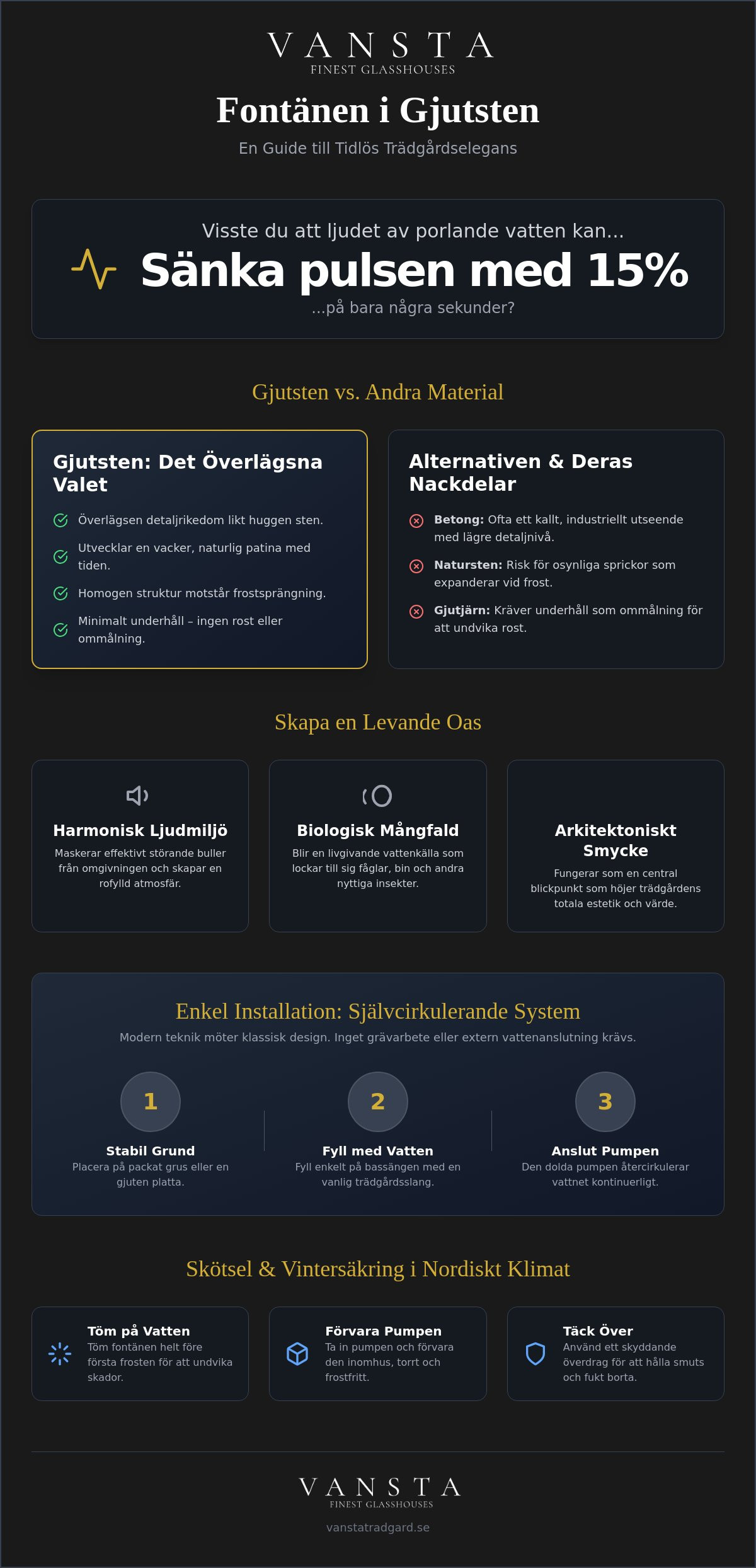
Did you know that the peaceful sound of babbling water can lower your heart rate by as much as 15 percent in just a few seconds? For those seeking a garden that invites relaxation, a cast stone fountain is more than just a decoration; it is an architectural anchor that unites moving energy with timeless elegance. We understand that the dream of a water artwork is often accompanied by questions about Nordic frost resistance and technical installation, where the balance between aesthetics and function becomes crucial to the end result.
You probably share the desire for an environment that ages gracefully, but may feel concerned about the durability of the materials or how to navigate water supply and scale. This guide promises to give you the knowledge you need to choose a self-circulating solution where British craftsmanship meets modern engineering. We explore how to create a maintenance-free oasis with easy installation without excavation, and give you the tools to visualize how a fountain can transform your outdoor space into a private retreat that only gets more beautiful with age.
Important Conclusions
- Learn why cast stone's superior detail and natural patina make it a more durable and aesthetic choice than regular concrete.
- Discover how to choose the right scale and design for your cast stone fountain to create a harmonious extension of your house's architecture.
- Understand the benefits of self-circulating systems that allow for easy installation without the need for an external water connection.
- Get practical advice on how to protect your water feature against the Nordic climate through proper winter protection and pump maintenance.
- Explore how strategic sight lines can integrate the fountain as an architectural jewel adjacent to your orangery or patio.
Why choose a cast stone fountain for your garden?
Choosing the right elements for your outdoor environment is about finding a balance between the permanent and the living. A cast stone fountain acts as the heart of the garden, an architectural centerpiece that ages with a beauty that few other materials can match. But What is cast stone? Unlike regular concrete, which is often perceived as cold and industrial, cast stone is a handcrafted material consisting of carefully selected crushed natural stone and binders. The result is a surface with a tactility and detail that is almost identical to real carved stone, but with a significantly higher precision in the classic ornaments.
To get a clearer picture of how these designs fare in a real environment and how the water moves over the surface, you can see this example of a classic model on a smaller scale:
Investing in a fountain is not just about today's aesthetics, but about the long-term character of the property. The density of cast stone makes it extremely resistant to the changing Nordic weather. While inferior materials risk cracking when exposed to temperature changes, high-quality cast stone is designed to withstand the rigors of frost year after year.It is a valuable detail that enhances the overall impression of your garden architecture and creates a sense of rich tradition.
Cast stone vs. Natural stone and cast iron
Many people choose between natural stone and cast stone. Natural stone can be magnificent, but often hides invisible cracks that expand when the water freezes. Cast stone is more homogeneous and therefore safer in our climate. Compared to cast iron, stone requires minimal maintenance; you avoid rust and the need to repaint. The most enchanting thing, however, is the patina. Cast stone has a unique ability to absorb the colors of the surroundings and allow moss and lichen to adhere to the surface, giving your cast stone fountain a soulful aura of historical weight.
The role of water in garden design
The sound of running water has an almost magical ability to transform a place. By strategically placing a fountain, you can effectively mask disturbing noise from roads or neighbors with a harmonious, natural soundscape. It's all about the psychology of sound; the rippling water creates an auditory barrier that promotes reflection and tranquility. In addition, the fountain quickly becomes a life-giving oasis. Birds and beneficial insects seek out the water, enriching biodiversity and making your outdoor environment a living part of the ecosystem.
Buying guide: How to choose the right model from the collection
Finding the right one cast stone fountain is about listening to the existing proportions of the garden. A grand fountain in a baroque garden requires a completely different presence than a discreet wall fountain in a sheltered courtyard. It is crucial to match the fountain's design language to the architecture of the house; a classic Haddonstone model with rich ornaments complements a historic stone house, while the more geometric and stripped-down shapes create an exciting contrast to modern functionalism.
The nature of the water flow defines the atmosphere of your outdoor space. A powerful jet provides energy and movement, while a gentle splash creates a meditative sense of calm. Many of the most sought-after models today are self-circulating, meaning they do not require a fixed water connection. How a self-circulating fountain works In practice; the water is reused through a hidden pump, which makes installation both simple and resource-efficient even on smaller areas such as balconies or terraces.
Different styles of cast stone fountains
Wall fountains are ideal for the urban garden where every square meter counts. They create a vertical eye-catcher without taking up valuable space. For those with a larger lawn or a generous driveway, freestanding fountains with a surrounding basin are the obvious choice; they act as an architectural exclamation point. Smaller bowl fountains and birdbaths, on the other hand, offer a discreet elegance that fits perfectly in the intimate flowerbed or as a welcoming detail at the entrance.
Key technical specifications to compare
A cast stone fountain is a heavy construction that requires a stable foundation. Depending on the total weight of the model, this may require anything from a simple bed of packed gravel to a poured concrete base to avoid settlement. Plan the electrical installation well in advance and check the pump capacity and cable length to ensure a smooth connection to the nearest outlet. An important detail for 2026 is that 68 percent of the country's municipalities now require a building permit for fountains that hold more than 379 liters of water, so always check local regulations before planning a larger installation.
If you are unsure about which scale best harmonizes with your environment, personal advice and an exclusive selection of artisanal models are available at Vansta Garden.
Architectural integration and placement
A well-thought-out placement transforms a cast stone fountain from a stand-alone object to an integrated part of the home. To achieve true architectural symbiosis, you should start from the house's sight lines. By centering the fountain in a window area or at the end of a garden path, a visual anchor is created that can also be enjoyed from inside. This is especially effective when planning your conservatory; The movement of the water outside the glass adds a dynamic energy that contrasts beautifully with the static elegance of the orangery.
For those who have invested in winter gardens The fountain acts as an important visual bridge between the outdoors and indoors throughout the year. By working with professional lighting of the water, the season is extended well into the dark autumn evenings. A warm, directed light that is refracted in the falling drops creates a dramatic effect that brings the garden to life even when the vegetation has gone dormant. It is this attention to detail that separates an ordinary garden from a curated outdoor environment.
Location in relation to sun and shade
The choice between sun and shade affects both aesthetics and maintenance. A location facing directly south increases water evaporation and can accelerate algae growth, which requires closer supervision. At the same time, the sun's rays reflected in the water can create an enchanting play of light on the facade of the house. Don't forget the dark corners of the garden; a cast stone fountain can give new life to a forgotten shady spot where few plants thrive. Also take into account the wind, as a strong beam in an unprotected location can lead to unwanted water splashing on nearby furniture or windows.
Combine with plants and furniture
To create a place for true relaxation, the fountain should be framed by comfort and greenery. Create an inviting seating area nearby by matching the stone with exclusive outdoor furniture in wrought iron or aluminum. Around the base, the hard stone is softened with moisture-loving perennials such as dewberry or funkia, which thrive in the slightly higher humidity created by the water. For a formal English style, the fountain can be framed with balustrades, which provides a clear division of space and reinforces the classic feel. According to technical guidelines from the Cast Stone Institute, it is also important that the substrate is completely level so that the water flow is distributed evenly over all sides of the fountain.
Installation and technology: How a self-circulating fountain works
A self-circulating cast stone fountain is based on a technically sophisticated principle where the water moves in a completely closed circuit. Unlike simpler pond fountains, which often require extensive piping and an external water supply, these architectural pieces contain their own reservoir. This means you don't have to dig expensive water pipes; all that is required is a stable foundation and access to electricity. The system is powered by a submersible pump that is strategically hidden inside the stone sections, preserving the aesthetic expression without visible hoses or distracting technical details.
Before assembly begins, the foundation work is crucial to the longevity of the structure. A cast stone fountain has a considerable weight, often several hundred kilos, which places high demands on the bearing capacity of the ground. For smaller models, a well-packed bed of crushed gravel and a stable stone slab are often sufficient.However, for the most magnificent pool fountains, we recommend a cast concrete base. This prevents settlements that could otherwise cause the water to flow unevenly, which would directly affect the visual harmony and symmetry of the water flow.
When it comes to the electrical connection, safety is the top priority. The pumps are designed for continuous outdoor operation with a high IP rating, typically IPX8, to withstand immersion in water. The installation should always be connected to an earthed socket with a residual current device. The cables are discreetly routed through prepared channels in the cast stone, making the technology an invisible servant to the overall experience. To ensure that your installation is as worry-free as you dream, we offer complete package solutions for your cast stone fountain including pump and nozzle.
Step-by-step installation
The assembly begins with the base being positioned and levelled with absolute precision. Use a long spirit level; even a millimetre deviation can be noticeable when the water starts to flow. The pump and nozzle are then installed in the concealed system before the upper sections are lifted into place. At the first start, the fountain is filled with water until the pump is completely covered. Here you have the chance to adjust the water flow on the pump control to find exactly the sound and jet strength that suits your garden.
Water conservation and ecology
To keep the water crystal clear without harming the environment, biodegradable algaecides are recommended. During hot summer days, natural evaporation occurs, which means you need to regularly check the water level so that the pump never runs dry. A simple routine is to add a splash of water while watering your flowers. Cleaning the filter and pump should be done at least once a season, which ensures that your fountain continues to ripple with the same clear power year after year.
Maintenance and winterization in Scandinavian climates
The beauty of a cast stone fountain lies in its ability to age gracefully, but the Nordic climate places specific demands on the caretaker of this garden heritage. For your investment to remain a lasting architectural detail, a respectful attitude to the changing seasons is required. When the autumn air turns crisp and the first frost approaches, it is time to prepare the fountain for its winter rest. It is a simple but crucial process that ensures that the material’s artisanal precision remains intact for decades of use.
The most important routine before winter is to completely drain the system of water. Although high-quality cast stone is extremely frost-resistant, liquid water is a powerful force of nature when it chooses to expand. When the water in the basins and internal channels freezes into ice, its volume increases by about 9 percent. This creates enormous internal pressure that can lead to frost bursting in the pores of the material. Use a sponge or a wet vacuum cleaner to remove the last traces of moisture from bowls and hidden spaces. By being careful here, you eliminate the risk of microcracks that can otherwise impair the integrity of the structure over time.
Why water should never be left standing in the fountain
The physics behind ice formation are merciless to all types of stone materials. In addition to draining the fountain, you should use specially designed fountain covers. Unlike simple plastic tarps, these covers are often made of a breathable material, which prevents condensation from forming under the cover. Condensation that freezes can be just as harmful as water left in the basin.Make sure the cover is properly secured so that heavy snow or ice does not accumulate in the fountain's cavities. For those who want to future-proof their garden oasis, it is a good idea to explore our entire collection of self-circulating fountains here, where each model is designed with these practical needs in mind.
The pump also requires its own specific care. Once the system has been drained, the pump should be lifted out and cleaned of limescale and organic debris. An expert trick to extend the life of the pump is to store it frost-free in a bucket of water during the winter. This keeps the gaskets and seals moist, preventing them from drying out and cracking, which is often the reason why pumps stop working at the start of spring.
Long-term care of cast stone
When spring returns, it's time for a gentle service. Wash away winter dirt and fallen leaves with a soft brush and a mild soap solution. It's important to avoid high-pressure washing, as the powerful water jet can damage the fine surface structure and remove the natural patina that is the main hallmark of cast stone. A cast stone fountain should be allowed to age naturally; mosses and lichens that adhere to the surface give the stone its soul and historical weight. By following these simple but professional tips, you guarantee that your water art piece will continue to spread harmony and elegance in your garden, season after season.
Create your own timeless waterscape
A cast stone fountain is more than an investment in the aesthetics of the garden; it is a commitment to long-term harmony and architectural quality. By combining British craftsmanship tradition from Haddonstone with modern self-circulating systems, an environment is created that invites both rest and deep inspiration. We have seen how the right scale, careful placement at sight lines and conscious winter protection make your water artwork only become more beautiful with each passing year. The unique patina that develops over time makes each piece a living work of art that merges with nature's own colors.
With our complete package solutions, which include both pump and nozzle, the path to the peaceful sound of rippling water becomes much easier than you might first imagine. We offer national delivery and are ready with personal expert support to help you find the perfect balance between the architecture of your house and the natural elements of your garden. Let the moving energy of water be the architectural anchor that completes your garden dream and creates a place of recovery for many decades to come.
Find your dream fountain in our exclusive collection
Frequently asked questions about cast stone fountains
Do I need a plumber to install a self-circulating fountain?
No, you don't need to hire a plumber to install a self-circulating cast stone fountain. Because the system is closed and the water is reused, there is no fixed water connection or drainage required on your property. All that is needed is a grounded electrical outlet for the pump. This makes installation both easy and flexible, allowing you to place your water artwork where it best harmonizes with the rest of the garden's architecture and planned sight lines.
How much electricity does a fountain pump consume per month?
A modern fountain pump is very energy efficient and usually uses no more electricity than a standard light bulb. The exact consumption depends on the size and flow capacity of the pump, but for most garden models it is a negligible cost on the monthly electricity bill.It is a sustainable investment that allows you to enjoy the soothing sound of running water 24/7 without worrying about high operating costs or unnecessary resource consumption.
Can I have the fountain running during the winter if I have a heater?
We do not recommend running the fountain during the Scandinavian winter, even if a heater is installed in the basin. The risk of frost bursting in the material is too great if water is allowed to freeze in the pores of the stone or in the hidden internal channels of the system. The safest method to preserve your cast stone fountain for generations is to empty it completely and protect it with a ventilated cover when the temperature drops below freezing.
How do I prevent the water from turning green from algae?
To keep the water crystal clear, you should use biodegradable algaecides that are gentle on both the material and the garden wildlife. Placing your cast stone fountain in a semi-shaded location also reduces the ability of sunlight to accelerate algae growth on hot summer days. Regular cleaning of the filter and changing the water when necessary will ensure that your water art piece remains a fresh and inviting oasis for both birds and onlookers.
Can cast stone really withstand the cold of Swedish winters?
Yes, high-quality cast stone from reputable manufacturers like Haddonstone is specifically designed to withstand extreme temperature changes and hard frost. The material's density and unique composition make it more homogeneous than many natural stones, which reduces the risk of cracking. As long as you follow the simple routines for emptying before winter, your cast stone fountain will withstand the Nordic cold year after year and only become more beautiful with its natural patina.
How heavy is a cast stone fountain and is a crane required for delivery?
A cast stone fountain is a massive structure that often weighs between 100 and 500 kilos depending on the scale and design of the model. Delivery is usually on a pallet to the plot boundary and the piece is delivered in manageable sections that facilitate assembly on site. For the very largest basin models, lifting assistance may be required, but most of our fountains can be assembled manually by two people on a stable and well-prepared surface.
What is included when I buy a fountain from Vansta Trädgård?
When you buy a fountain from Vansta Trädgård, you get a complete system that is ready for immediate installation in your outdoor environment. The package includes the handcrafted stone sections, a custom-made quality pump and the right nozzle to create the desired jet pattern. We also offer expert support throughout the process, from model selection to technical advice, to ensure that your architectural addition becomes a value-saving investment for the future.
Can I paint or treat the cast stone myself?
We strongly advise against painting or treating the cast stone yourself, as this hides the natural beauty of the material and prevents the desired patina. The main characteristic of cast stone is its ability to absorb nature's own colors and allow moss and lichen to adhere to the surface over time. Treatment would destroy this organic process and give your cast stone fountain an artificial appearance that violates the aesthetics and timeless elegance of the classic garden tradition.