

Many see the orangery as a fleeting summer idyll, but the true magic only occurs when the frost nibbles the glass while the lemon trees are fragrant in a pleasant, sheltered warmth. Planning for an efficient heating of the orangery has…
Orangery heating: A guide to a perfect year-round climate in 2026
Jul 15, 2026
Many see the orangery as a fleeting summer idyll, but the true magic only occurs when the frost pinches the glass while the lemon trees smell in a pleasant, protected warmth. Planning for efficient orangery heating is not just about installing an element; it is about creating a technically perfect ecosystem where aesthetics and function are united in timeless harmony. In 2026, we will see how new building regulations and regional electricity price forecasts for everything from Malmö to Luleå place higher demands on our technical choices, but with a well-thought-out strategy, your glass house will become a value-saving investment that extends your home through all seasons.
We share your passion for beauty and at the same time understand the concerns about rising energy costs or the fear of damaging delicate plants in the event of a sudden power outage. There is an art to hiding the necessary details of technology in an environment characterized by craftsmanship and natural light. In this guide, you will learn how to create a frost-free climate for your Mediterranean plants and transform your orangery into an inviting living room in the middle of winter. We explore how to combine sustainable heat sources with architectural finesse to secure your green oasis for the future.
Important Conclusions
- Learn the difference between keeping your orangery frost-free for the plants' rest and creating a full room temperature for socializing during the coldest months of winter.
- Discover how modern technology heating of orangery, such as water-based underfloor heating and air-source heat pumps, can be integrated discreetly into classic architecture without disturbing the aesthetics.
- Understand the importance of the U-value of glass and the ability of the wall to function as a natural energy storage to create a stable climate and reduce operating costs.
- Gain insight into how automated climate control balances temperature and humidity to protect both sensitive Mediterranean plants and your interior from dry winter air.
- Realize the importance of including technical design and plumbing already in the first architectural sketches to ensure a harmonious and functional overall solution.
Basic principles of heating an orangery
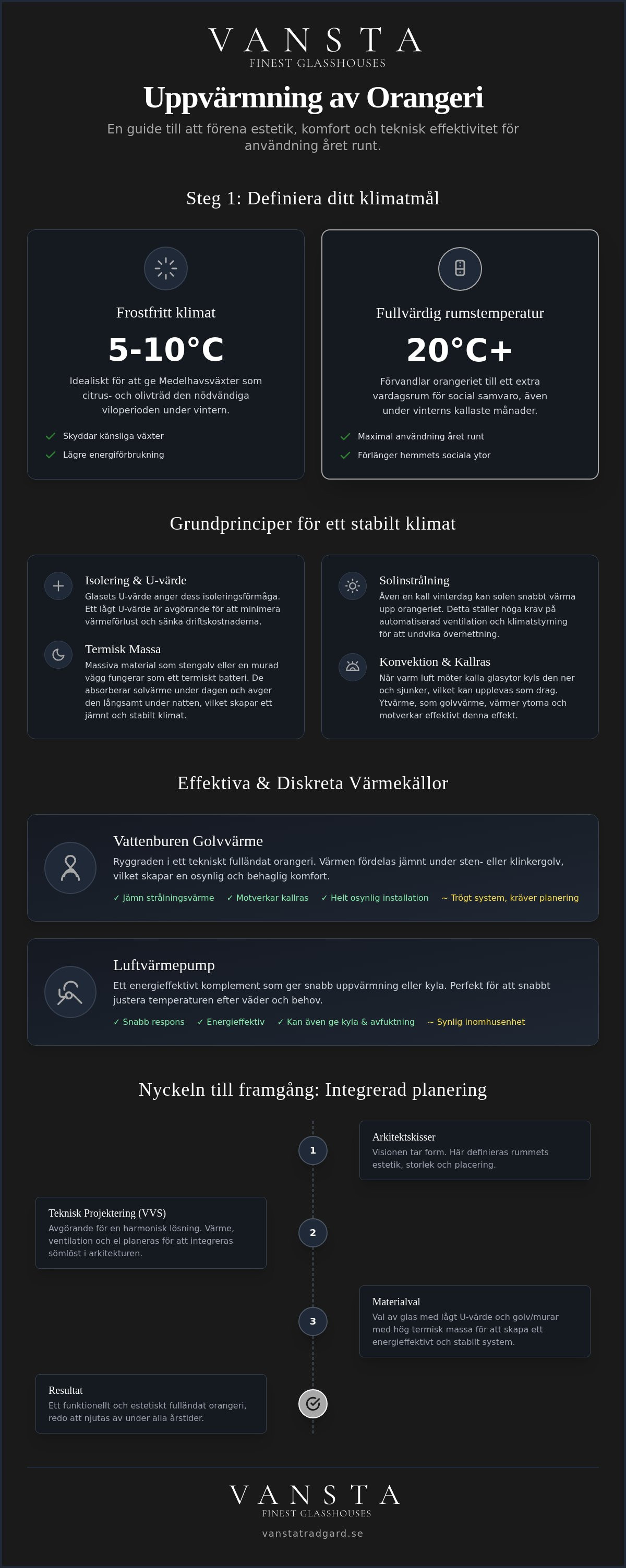
Treating an orangery like any other room in the home is a common mistake that can lead to both aesthetic and functional compromises. A classic Orangery is by its nature a hybrid between nature and architecture, where the large glass surfaces create a unique thermal dynamic. Unlike a conventional house with insulated walls, the glass house reacts immediately to its surroundings. This means that a strategy for heating an orangery must take into account that the building acts as an efficient solar collector during the day and a heat emitter during the night. This is where the balance between the U-value of the glass and the thermal mass of the foundation becomes crucial for the whole experience.
To succeed, an understanding of how energy is stored and moves in a glass structure is required. A solid wall or solid stone floor acts as a thermal battery, absorbing the sun's rays and slowly releasing heat as the outside temperature drops. This creates a natural inertia in the system that prevents the rapid and potentially damaging temperature swings that can otherwise occur in a lighter structure.It is an investment in both quality of life and long-term sustainability, where every material choice contributes to a stable and comfortable indoor climate regardless of the season.
To gain a deeper understanding of how these environments can work in practice and how to think about sustainable solutions, you can watch this inspiring film:
The goal of your climate
Before choosing technical solutions, it is fundamental to define what the room will actually be used for. For the passionate grower, the goal is often to create a safe haven for Mediterranean plants during the winter. Here, it is usually enough to maintain a frost-free environment, usually between 5 and 10 degrees, which gives citrus and olive trees the necessary rest period they require. If, on the other hand, the dream is an extra living room for socializing, a room temperature of 20 degrees or more is required. Trying to combine these two worlds in the same zone requires great dexterity, since plants can be stressed by too much heat during the winter, while we humans are reluctant to sit in a cool environment for long periods.
The physics behind the glass house
In a room dominated by glass, convection and radiant heat become central concepts for your comfort. When the warm air meets the cooled glass surfaces, movements occur that can be experienced as drafts, even if the glass is of the highest quality. This is why we often advocate solutions that heat the surfaces rather than just the air. Solar radiation also plays a paradoxical role; even on a sparkling cold winter day, the sun can quickly raise the temperature to summer levels, which places high demands on both ventilation and automated control. By balancing these natural forces, condensation is avoided and an environment is created where both architecture and vegetation can shine without compromise.
Efficient heat sources for exclusive glass houses
The choice of heat source is very much an architectural decision that affects both the aesthetics of the room and its long-term function. When planning an efficient orangery heating system, we strive for solutions that not only deliver the right temperature, but do so with understated elegance. It’s about integrating the technology so that it serves the environment without taking over the visual expression. A well-planned system takes into account the unique conditions of the building, from the transparency of the glass to the ability of the floor to store energy.
To find the right equipment and technical solutions for your installation, read more about Privatgrossisten.dk and their wide range of plumbing products.
Underfloor heating – invisible comfort
Water-based underfloor heating often forms the backbone of a technically perfect orangery. By placing the heat under a surface layer of natural stone or classic clinker, an even and pleasant temperature distribution is created that counteracts cold drafts from the large glass areas. The inertia of the system is a great advantage; the stone absorbs the heat and releases it slowly, which creates a stable climate for both people and plants. For those looking for a technically sustainable installation, a Greenhouse Energy Conservation Checklist an excellent tool for understanding how to optimize energy use by combining the right insulation with efficient heating systems.
The stove as the heart of the orangery
A fireplace adds more than just warmth; it creates a natural focal point and a sense of timeless tradition. Architecturally, a fireplace can be integrated with a brick chimney that becomes a beautiful part of the glass structure. While a wood-burning fireplace offers the unmistakable aroma and crackle of a live fire, a gas fireplace can be an alternative for those who prioritize immediate convenience.Regardless of your choice, the fireplace provides a powerful heat boost during cold winter evenings and extends the season for socializing long after the sun goes down.
Air source heat pumps have become a popular choice thanks to their high efficiency and ability to quickly regulate temperature. A modern unit can reduce heating costs by up to 50% compared to direct-acting electricity, making it a wise choice for the environmentally conscious homeowner. It also provides invaluable cooling during the hottest days of summer. To ensure that the technology does not disrupt the harmony of the room, the indoor unit can often be built in or strategically placed behind beautiful joinery or greenery.
As a complement to the primary systems, electric convectors can act as an important safety measure. They react quickly to sudden temperature drops and can be programmed to operate as frost protection in the unlikely event that the main system fails. By making the technology an integral part of the early drawings for one of our architect-designed greenhouses & Orangeries create an environment where form and function merge into a harmonious whole. The correct dimensioning and placement of these sources is crucial for optimal conditions for heating the orangery without compromising the visual experience.
Insulation and the importance of construction for heat
Well-thought-out architecture is the main guarantee for sustainable heating of an orangery. It is about creating a climate shell that exudes quality and is able to retain energy without shutting out the life-giving light. The U-value of the glass, which measures the heat loss through the material, becomes a key figure here. A lower value means that the heat stays where it belongs; in the room. To gain a deeper scientific insight into how to calculate the need for different Greenhouse heating systems you can study how the building's volume and glass surface interact with the ambient temperature.
However, the foundation for all effective temperature control is laid long before the glass is installed. Insulation under the floor is an absolute prerequisite to prevent the ground from cooling the foundation. Without a proper insulation layer at the bottom, even the most advanced heating systems will work against the wind, as the ground under the orangery acts as a huge ice block. By combining an insulated foundation with the right quality of glass, the best conditions are created for a pleasant climate all year round.
The choice of glass: Insulating glass vs. single glass
In a classic greenhouse, tempered single glass is often enough to create a protected environment, but in an orangery where comfort is the focus, double or triple layers of insulating glass are often required. Modern energy glass has a thin, invisible coating that reflects thermal radiation back into the room while allowing sunlight to pass through. The challenge lies in maintaining the thin, elegant profiles that characterize a true artisanal glass house, despite the increased weight and thickness of the glass. It is a balancing act where technical precision meets timeless aesthetics.
To create a uniform style in connection with your glass house, discover the railing factory and their artisanal solutions in metal and glass.
The magic of the brick foundation
An orangery built on a wall offers a unique advantage when it comes to thermal stability. A brick or rendered stone wall acts as a natural battery; it absorbs the sun's heat during the day and slowly releases it during the cooler evening hours. However, it is critical that the wall is properly insulated to avoid thermal bridges at the junction between glass and stone. By reading more about how to plan your conservatory foundation, you can ensure that the foundation becomes the stable and warm base that your dream requires.A well-insulated wall reduces the need for active heating of the orangery and contributes to a more even temperature level throughout the day.
Finally, the balance between sealing and ventilation is crucial. An orangery must be tight enough to prevent unnecessary drafts, but at the same time allow for controlled air exchange. Fresh air is essential for plant health and to manage humidity during the winter. By integrating automatic roof hatches and vents, a self-regulating system is created that protects both the structure and the vegetation without compromising energy efficiency.
Climate control and plant care during winter
Mastering the art of heating an orangery requires more than just raw power from a heat source; it requires intelligence and a sense of touch. When we close the door on the winter cold, we create a microclimate that must be guarded 24/7. Automation through thermostats and sensors acts as the orangery’s invisible guardians. These systems ensure that the temperature never drops below critical levels, while preventing unnecessary energy consumption by only being activated when it is really needed. It is a technical security that allows you to enjoy your oasis without constant supervision.
One of the most overlooked aspects of heating an orangery is the balance between heat and humidity. In a heated room, the air quickly becomes dry, which can be devastating for plants used to the humid winds of the Mediterranean. By integrating hygrometer sensors, you can monitor humidity levels and add moisture as needed, either manually or via automated systems. It’s about creating an environment where plants not only survive, but actually thrive and maintain their luster even when the snow is deep outside the glass.
To optimize the climate, air circulation is crucial. Warm air naturally rises towards the ridge, and without help it stays there while the plants at the floor risk being exposed to the cold. A discreet ceiling fan can push the warm air down and create a more even temperature distribution throughout the room. At night, stylish curtains or awnings act as an extra insulating layer that helps retain radiant heat and significantly reduce energy loss.
Overwintering of sensitive species
Lemon trees, olive trees and bougainvillea have specific requirements during the winter months to feel good. A temperature between 5 and 10 degrees is ideal for them to go dormant without losing their leaves. When we raise the temperature for our own comfort, the plants' metabolism increases, which means that their light needs grow dramatically. Supplementary lighting with a spectrum adapted to plants therefore often becomes a necessity. Watering must also be done with great care; a common mistake is to overwater in a heated space, which easily leads to root rot.
Smart control for peace of mind
Modern technology allows us to monitor the health of the orangery directly on your mobile phone. App-controlled systems give you full control over the climate settings no matter where you are, and smart alarm functions immediately warn you if the temperature drops unexpectedly, for example in the event of a power outage. By integrating lighting and heating into a common control system, a seamless experience is created that greatly simplifies maintenance and increases the value of the building.
Do you want to realize your dream of a technically perfect glass house? Explore our possibilities for exclusive orangeries where we combine traditional craftsmanship with modern climate control.
Planning and design with Vansta Trädgård
A vision of an orangery often begins with a dream of light and greenery, but turning this dream into a working reality requires technical precision that extends far below the beautiful surface. At Vansta Trädgård, we view each project as a unique work of art where aesthetic perfection meets advanced engineering. By including solutions for heating the orangery already in the first architectural sketches, a seamless integration is created where no details are left to chance. It is at this early stage that we lay the foundation for a climate that invites both rest and cultivation, regardless of whether the outdoor temperature offers summer heat or biting winter cold.
Architect-designed heating integration
We understand the importance of preserving the clean lines and timeless elegance of our Vansta Classic and THE ROSE collections. That is why our architects work dedicatedly to concealing the necessary piping and electrical installations in the classic profiles. The placement of each heat source is carefully chosen to maximize the thermal effect without disturbing the visual harmony of the room. By working closely with specialized installers, we ensure that the technology works flawlessly and that each installation meets our high standards of craftsmanship. We also provide complete building permit drawings where all technical aspects are documented, creating security throughout the construction process.
A sustainable investment
Having an orangery built is an investment that spans generations and adds lasting value to your property. By choosing sustainable materials such as cast stone and high-quality glass construction, combined with a well-thought-out strategy for heating the orangery, long-term operating economics are created that make the room usable every day of the year. A well-planned conservatory enriches your quality of life by offering a place for recovery in direct contact with the changes of nature. With our architect-designed greenhouses As a base, we tailor an environment that is unique to your garden, where form and function merge into a harmonious whole.
Our role as advisors is to guide you through the entire journey, from the first visionary brushstrokes to the completed room where technology works silently to protect your plants and your comfort. It is about creating a place where craft tradition and modern innovation meet to realize a lifestyle characterized by quality and beauty. With Vansta Trädgård by your side, your orangery will not just be a building; it will become an integral part of your living space and a lasting investment for the future.
Realize your vision of a year-round paradise
Creating an orangery that defies the Nordic seasons is a journey where technical expertise meets a deep understanding of timeless aesthetics. We have seen how the choice of glass quality, the thermal mass of a brick foundation and a discreetly integrated heating of orangery together they form an environment where both plants and people can breathe in harmony. By planning the technology already in the first architectural sketches, you avoid costly compromises and secure an investment that only grows in value over time.
As Sweden's leading expert in classic orangeries, we at Vansta Trädgård take full responsibility from the first drawings to the finished construction. With over 20 years of experience in exclusive garden architecture, we ensure that your project becomes exactly the sophisticated retreat you have dreamed of. Don't let technical challenges stand in the way of your vision; let us help you combine artisanal quality with modern climate control.
Book a consultation for your dream orangery at Vansta Trädgård
Your green oasis is waiting to be realized, no matter what time of year you choose to step into the light.
Frequently asked questions about orangeries and climate
How much does it cost to heat an orangery during the winter?
The operating cost is mainly determined by your geographical location, the insulating capacity of the glass and the chosen electricity contract. For 2026, the electricity price forecasts for southern Sweden (SE4) are around 88 to 90 öre per kWh during the winter months, while prices in the north (SE1) are expected to be significantly lower. By using an air source heat pump, you can reduce the cost of heating your orangery by up to 50% compared to direct-acting electricity, which makes the choice of technology crucial for your budget.
What temperature should I maintain in my orangery for Mediterranean plants?
A temperature between 5 and 10 degrees is ideal for olive trees and citrus plants to get their much-needed winter rest. It is important not to let the temperature rise too high on cloudy days, as the heat without enough light can stress the plants. This cool but frost-free environment mimics the plants' natural winter climate and ensures a magnificent bloom when spring returns.
Can I use an air source heat pump in a glass house?
Yes, an air source heat pump is one of the most effective solutions for maintaining an even base temperature in a glass structure. It reacts quickly to temperature fluctuations and also provides valuable air circulation that counteracts moisture problems. During the hottest days of summer, the system can also be reversed to provide refreshing cooling, making it a versatile investment for a comfortable climate all year round.
Do I need a building permit to install a stove in my orangery?
The stove itself rarely requires a building permit, but according to regulations that came into effect in December 2025, a building notification to the municipality is mandatory when installing a fireplace. This is due to strict requirements regarding fire safety and ventilation. Even if your orangery is otherwise an accessory building exempt from building permits, the flue and fireplace must be approved by a chimney sweep before they are put into use for your safety.
Is water-based underfloor heating effective in a room with only glass walls?
Water-based underfloor heating is very effective in creating an even heat distribution and eliminating cold drafts from large glass areas. By heating the thermal mass of the floor, such as a beautiful natural stone, a stable heat source is created that radiates from below. However, to optimize the system's performance, it is required that the glass has a low U-value and that the foundation under the orangery is carefully insulated against the cold ground.
How do I prevent condensation on the windows when heating the orangery?
Condensation is best prevented through a combination of controlled ventilation and the right temperature balance. When warm, moist air meets a cold glass surface, fog forms, which requires either lowering the humidity or increasing air circulation along the panes. Automatic skylights and fans are excellent tools for regulating this microclimate and protecting both plants and wooden structures from moisture damage.
Which glass is best if I want room temperature all year round?
If the aim is to use the room as a living room, modern double or triple-layered insulating glass with an energy coating is required. This glass reflects the room heat back and has a significantly lower U-value than standard single glass. When planning the heating of an orangery for social use, the choice of energy-efficient glass is the single most important factor in creating a comfortable environment without excessively high electricity bills.
How does a brick foundation affect the heating requirement?
A brick foundation acts as a thermal battery, storing solar energy during the day and releasing it as gentle radiant heat at night. This natural inertia evens out the rapid temperature fluctuations that are otherwise typical of glasshouses. By integrating a brick into the construction, you reduce the need for active heating, which contributes to a more stable climate for sensitive plants and better operating economy.