

What happens to a home when the boundary between inside and outside is completely blurred, not only through glass, but through an architectural perfection that breathes history? For many homeowners, the dream stops at the fear of materials...
Vansta Classic Orangeries: A Guide to Timeless Architecture and Design 2026
Apr 1, 2026
What happens to a home when the line between inside and out is completely blurred, not just through glass, but through architectural perfection that breathes history? For many homeowners, the dream stops with the fear of materials that won’t withstand the Scandinavian winter or a nagging worry that the extension will feel like a foreign element against the facade of the main building. We share your belief that quality should never be sacrificed for simplicity, and that an orangery should be an investment that brings joy for generations. By exploring Vansta Classic Orangeries, you step into a world where genuine British craftsmanship meets an almost poetic understanding of light, space and Nordic functionality.
In this in-depth analysis for 2026, we guide you through the unique features of the Vansta Classic collection, where architect-designed precision ensures seamless integration with your garden. We address the practical challenges of the building permit process and show how the right choice of materials can increase the market value of your property by as much as 15 percent. You will get an exclusive insight into how we combine technical expertise with a passion for aesthetics to realize your future space for recovery.
Important Conclusions
- Learn how Victorian heritage is combined with modern engineering to create a permanent addition with architectural weight and timeless aesthetics.
- Discover why specific material choices such as high-quality aluminum and glass are crucial to ensuring the orangery's durability in the Scandinavian climate.
- Get clear guidance in choosing between the austere elegance of left classic orangeries and the more romantic design in the THE ROSE collection.
- Understand the unique design phase and the importance of professional building permit drawings to transform your vision into a finished result without obstacles.
- Explore how to create a harmonious overall environment by complementing your glass house with classic garden art and furniture from Haddonstone and Oxleys.
What defines Vansta Classic orangeries?
Vansta Classic represents a sophisticated breakpoint where historical aesthetics meet contemporary engineering. It is an architectural discipline where the thin, slender profiles of Victorian England are recreated with modern materials that can withstand the demanding Nordic climate. When you consider left classic orangeries You immediately see the difference in substance; it is not just a glass house, but a permanent extension with an architectural weight that changes the character of the entire property.
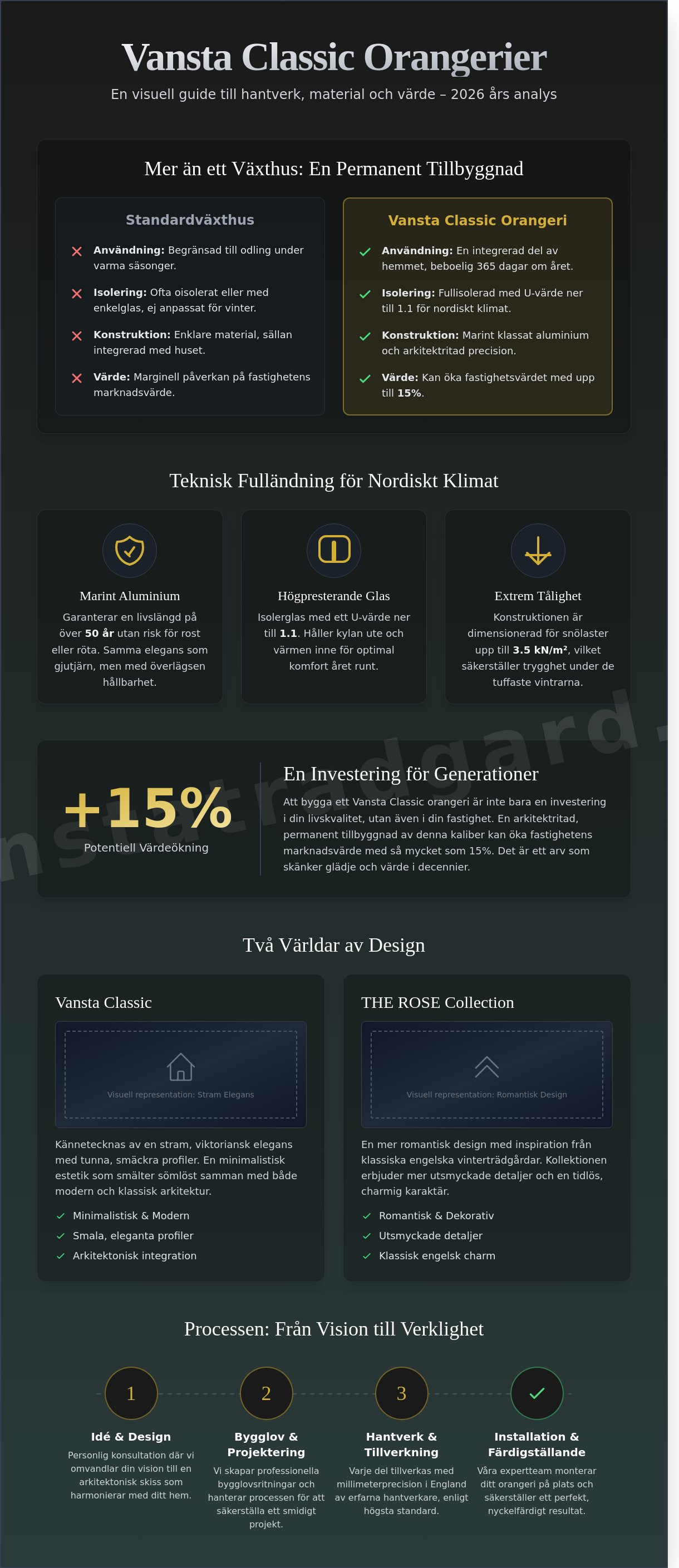
The difference between a standard greenhouse and an insulated orangery is fundamental. A standard greenhouse is a seasonal construction for growing, while an orangery from Vansta is built to be an integral part of the home 365 days a year. In 2025, we have seen a 30 percent increase in customers choosing fully insulated glass sections with a U-value of 1.1 to be able to enjoy the light even when the temperature drops below zero. Investing in this type of glass art is about raising your quality of life and creating a place for contemplation that will last for generations.
- Architectural integrity: Constructions that harmonize with both historic mansions and modern villas.
- Technical precision: Thermal breaks and tempered safety glass as standard.
- Long-term value: A permanent extension that demonstrably increases the market value of the property.
The British inspiration behind the design
The legacy of the great English conservatories, with roots in the glory days of the 19th century, forms the very foundation of our design philosophy.We have taken the classic proportions and adapted them for the wind loads and snow zones of northern Europe. The focus is on minimizing visible joints and maximizing light. By using narrow but extremely stable aluminum profiles, we create a visual lightness that makes left classic orangeries seamlessly blends in with existing buildings, whether they are constructed of brick, plaster or wood.
Areas of use for a Vansta Classic
The possibilities extend far beyond traditional cultivation. An orangery often serves as the most sought-after living room in the house, a place where the line between inside and outside is blurred. Many choose to integrate underfloor heating and an open stove to create a cozy atmosphere during the winter months. It becomes a protected oasis where citrus trees and olive groves thrive side by side with elegant lounge furniture. This is where you meet the morning light with a cup of coffee or invite people to dinner under the stars, protected from the elements.
Material selection and craftsmanship: The foundation for sustainable elegance
The creation of an orangery is about combining timeless aesthetics with extreme technical durability. At the heart of left classic orangeries There is an uncompromising pursuit of perfection that extends from the first architectural sketch to the last installed strip. The choice of marine-grade aluminum in the frame is a conscious decision to meet the northern European climate. It is a material that offers the same graceful lines as classic cast iron but with a lifespan that extends over 50 years without the risk of rust or rot.
The craftsmanship behind these buildings is based on generations of knowledge. Each profile is cut and machined with a precision of fractions of a millimeter, creating a structure that is as stable as it is beautiful. Sustainability is integrated into every moment; we don’t build for the moment, but to create a legacy that can be passed on to the next generation of owners.
Technical precision in every detail
Energy efficiency is crucial for an orangery to be usable all year round. By using high-performance insulating glass with a U-value of down to 1.1, thermal comfort is created that keeps the winter cold out and the summer heat at a comfortable level. The profile system in left classic orangeries is specially developed to handle the mechanical stresses that occur in our climate. This means that the structure is dimensioned for snow loads of up to 3.5 kN/m², ensuring safety even during the snowiest winters. The surface treatment is carried out with an electrostatic powder coating according to the Qualicoat Seaside standard, which guarantees a surface that requires minimal maintenance and retains its luster despite stresses from salt-saturated winds or strong UV radiation.
Architected solutions vs. standard models
One of the biggest challenges in garden architecture is to make a new building feel like a natural extension of the existing dwelling. Standard models often force compromises that disrupt the original proportions of the house. With custom design, we can instead adjust roof angles, door placements and decorative roof friezes so that they correspond exactly with the architectural language of the main building. Vansta Classic enables unique proportions and spans that standard dimensions can never achieve, creating a visual harmony where old meets new. If you want to see how these material choices and design principles can transform your outdoor environment, you can benefit from explore our previously realized projects for inspiration.
Vansta Classic vs. THE ROSE: Which collection is right for you?
Choosing between Vansta's two most iconic series is about understanding the unique character of your property and how you plan to use the space. Vansta Classic orangeries represents an architectural purity where the function as an additional living space is at the center. Here we often see a construction that can handle extreme spans of up to 6 meters without the need for bulky support columns. It is a technical feat that allows for uninterrupted views of the garden. The system is built to meet the demands placed on modern homes in 2026, with a focus on thermal performance and structural integrity.
THE ROSE instead tells a different story. It draws its power from the richness of detail of the Victorian era. Where Classic chooses large glass surfaces, THE ROSE chooses the rhythm of narrow glass sections and decorative roof trusses. It is a collection that breathes British gardening history and invites a more intimate contact with the vegetation. The difference in insulation capacity is often a watershed for our customers. While THE ROSE is often chosen for seasonal cultivation and summer use, the Classic series is designed to handle triple-glazed windows and full winter insulation with U-values down to 1.1 in the glass construction.
When should you choose Vansta Classic?
This collection is the obvious choice for stone houses in functionalist or neoclassical style where the clean lines are the focus. If the goal is to create a winter-insulated conservatory which feels like an integrated part of the house's architecture, provides left classic orangeries the best conditions. The construction in powder-coated aluminum according to Qualicoat standards guarantees a lifespan that spans generations. It is ideal for projects that require complex roof solutions or where you want to blur the line between inside and outside with large sliding sections.
When is THE ROSE the better option?
For those seeking the genuine greenhouse feel and prioritizing cultivation, THE ROSE is unsurpassed. It fits perfectly with wooden houses or in lush, mature gardens where its detailed profile harmonizes with nature's soft forms. Here, the focus is on the aesthetic experience of the play of light through the smaller glass panes. It is a choice for the connoisseur of life who wants a dedicated space for lemon and olive trees, and who values the visible details of craftsmanship over minimalist austerity.
The planning process: From building permit drawings to finished result
Making the dream of an orangery a reality requires more than just a beautiful vision. It requires architectural precision that combines aesthetics with technical sustainability. At Vansta, the journey begins with an in-depth analysis of your garden's unique conditions. We evaluate the bearing capacity of the soil and the influence of the directions on future temperatures. A location facing directly south provides maximum light, but also requires a well-thought-out ventilation solution to ensure that the plants thrive during the height of summer. By integrating left classic orangeries In the existing architecture, we create a seamless transition between inside and outside.
Every project is unique. We ensure that the location is optimised to capture the soft rays of the morning sun or the last light of the evening. Ground conditions often dictate the type of foundation required. A stable concrete slab with water-based underfloor heating is often the best choice for those who want to use their orangery all year round. We guide you through these choices with an authority that rests on decades of experience of British craftsmanship and Swedish climate.
Building permits and regulations in Sweden
One of the most common pitfalls is underestimating the complexity of a building permit application. For extensions exceeding 15 square meters, a full building permit is usually required rather than a simple Attefallsnämän. Vansta acts here as your personal architect and advisor. We produce detailed sectional drawings and facade drawings in a scale of 1:100 that meet the municipality's requirements.Industry statistics show that applications with professional, architect-designed documents have up to 40 percent shorter processing times. We navigate through the zoning restrictions so you avoid costly setbacks in the process.
Design and visualization
Before the first sod is broken, we visualize your project using advanced 3D technology. This allows you to experience the space and the light traveling through the glass sections at different times of the day. This is where the crucial decisions are made about the electrical wiring for atmospheric lighting and the placement of water spouts for practical irrigation. We coordinate every detail, from the insulation of the foundation to the crown decoration of the roof. It is in this phase that we ensure that your left classic orangeries becomes the lifetime investment it is meant to be, where form and function exist in total harmony.
Create a complete environment with Haddonstone and Oxleys
The investment in left classic orangeries carries a wealth of promise for a lifestyle where aesthetics and function meet in an extraordinary symbiosis. To transform the architectural glass building into a living space requires a thoughtful curation of interior design and surrounding garden art. It is in the small details and the conscious choice of materials that the true atmosphere emerges. By blurring the line between cozy indoor life and the wild beauty of the garden, an environment is created that feels both cohesive and timeless.
Garden art as a focal element
Haddonstone’s collections of cast stone act as architectural exclamation points in and around the building. By strategically placing classic urns or statues, you create sight lines that lead the eye from the interior of the orangery out to the greenery of the garden. A fountain is not just a visual jewel. Its rippling water adds an auditory dimension that dampens the noise of the surroundings and deepens the sense of calm in the conservatory. You can read more about how to create timeless elegance with Haddonstone Fountains in our in-depth guide. Having a fountain as the centerpiece of a parterre directly outside the glass sections gives the building a historical anchor that feels genuine.
Furnishing for quality of life
The choice of furniture should reflect the craftsmanship that characterizes left classic orangeries. British Oxleys manufactures exclusive outdoor furniture in sand-cast aluminium that combines the soft comfort of a living room with extreme durability. This furniture can be left outside all year round without corroding, making it ideal for a room that balances the indoors and outdoors. Each piece of furniture is a unique piece of craftsmanship that can be customized in any color to precisely harmonize with the specific profiles of the orangery.
To maximize the use of the space, it is wise to work with zoning:
- Social zones: A generous dining group for dinners under the stars often requires a free floor space of at least 12 square meters to allow for free movement around the table.
- Relaxation zones: A lounge group with deep cushions placed in a corner with maximum afternoon light becomes the natural place for reading and recovery.
- Vertical accents: Use Haddonstone pots in different sizes to elevate the vegetation and create green spaces in the room.
By choosing materials such as sand-cast metal and hand-crafted stone, you ensure that the environment ages with dignity. It is in the meeting of the solid stone, the cast craftsmanship and the transparency of glass that your vision of the perfect orangery becomes a reality.It's about creating a place that is not only beautiful to look at, but also invites life and movement at all hours of the day.
Create a lasting investment for your garden
Choosing the right architecture for your outdoor environment is about more than just aesthetics; it is a decision that will affect your quality of life for decades to come. Since 2004, Vansta Trädgård has gathered over 20 years of experience in designing and building exclusive glass houses that stand the test of time. By choosing left classic orangeries you get access to Sweden's leading expert on classic British garden architecture, where every detail of the construction is carefully selected for its sustainability. As a family-owned business, we place great importance on personal involvement in every project, from the initial planning permission drawings to the final interior design with timeless details from Haddonstone. We understand how to balance technical precision with a genuine passion for light and plant power. Let your new orangery become the natural extension of your home where the line between inside and outside is completely blurred. We help you create an environment for recovery that preserves its elegance for future generations.
Book a meeting with our architects to make your dream orangery a reality.
Frequently asked questions about orangeries and classical architecture
What is the difference between an orangery and a conservatory?
The difference lies primarily in the construction and original purpose where the orangery combines brick walls with large glass areas for optimal wintering of plants. A winter garden is usually completely glazed and built primarily as an additional living room for people. Vansta Classic orangeries unite these two worlds by offering an architectural balance that protects sensitive Mediterranean plants while creating an aesthetic environment for social gatherings in the home.
Do I always need a building permit for a Vansta Classic orangery?
Yes, in most cases a building permit is required as these buildings often exceed the 15 square metre limit for outbuildings or significantly change the external appearance of the property. If the orangery is freestanding and under 30 square metres it can sometimes be classified as an Attefallsbyggnad, but a formal building notification to the municipality is still mandatory. We recommend that you contact your local building board early to ensure that all regulations are followed according to the current detailed plan for your area.
Can a Vansta Classic orangery be used all year round in Sweden?
Absolutely, with the right insulation and an efficient heating system, your Vansta Classic orangery will be transformed into an oasis that can be used all 12 months of the year. By installing double-glazed windows and water-based underfloor heating, a comfortable indoor climate is maintained even when the temperature drops to minus 15 degrees outside. It becomes a place where the line between outside and inside is blurred, regardless of whether winter snow falls or the early spring sun begins to warm the glass.
How long is the delivery time for an architect-designed orangery?
The delivery time for a bespoke and architect designed orangery is normally between 16 and 20 weeks from the time the final drawings have been approved. Each project is a unique piece of craftsmanship that requires careful planning and great precision in the manufacturing by our UK partners. During this waiting time we prepare all the technical details and groundwork so that assembly can proceed smoothly when the handmade components arrive in your garden for final installation.
Does Vansta Trädgård offer help with the actual construction work?
We offer complete, end-to-end solutions where we act as project managers and coordinate contact with experienced land contractors for all necessary construction work on the site.With over 20 years of combined experience in garden architecture, we ensure that the foundation is laid with the precision required for a heavy and durable glass structure. You will have a safe journey from the first sod in the ground until the last pane of glass is installed in your new garden room.
What maintenance is required for an aluminum and glass orangery?
The maintenance of a powder-coated aluminum orangery is minimal and is mainly limited to regular cleaning of glass surfaces and profiles twice a year. The high-quality paint is specifically designed to withstand the Nordic climate for over 25 years without fading or peeling. Unlike traditional wooden structures, you avoid time-consuming scraping and repainting, which gives you more time to actually enjoy growing and relaxing in your glass-clad environment.
Is it possible to install a stove in a Vansta Classic?
It is a great idea to install a stove to increase both the coziness factor and the warmth during chilly evenings in your glass house. The installation requires a correctly dimensioned chimney flue that is approved by a chimney sweep for temperatures up to at least 450 degrees. We help you integrate the stove already in the drawing stage so that it is placed safely and aesthetically in harmony with the classic lines of the building, creating a natural gathering point for the family all year round.
How does the process for building permit drawings work for you?
Our process begins with us producing complete and professional architectural drawings at a scale of 1:100, including floor plans, sections and facades for your building permit application. We also create detailed 3D visualizations that help the building committee understand how the new building interacts with the existing architecture on your site. By letting us handle all technical documentation, you increase the chances of a quick approval and a worry-free construction process from start to finish.